As an Amazon Associate I earn from qualifying purchases. These links may earn this site a commission when you buy, at no extra cost to you.
Answering the need for strong, odor-resistant dish sponges that stay clean, this guide highlights five antibacterial-friendly options. These picks are best for households seeking durable scrubs, non-scratch gentle cleaning, eco-friendly materials, and silicone-based versatility. Use this to compare performance, materials, and potential limitations before purchasing.
| Product | Best For | Why It Stands Out |
|---|---|---|
| Scotch-Brite Odor Resist Non-Scratch Scrub Sponge (6 Pack) | Busy kitchens; frequent dishwashing | Odor-resist, non-scratch, dishwasher-safe; six sponges per pack for value |
| Scotch-Brite Odor Resist Heavy Duty Scrub Sponge (3 Pack) | Stuck-on messes; heavy scrubbing | Heavy-duty abrasive action with odor resistance; durable for tough jobs |
| Scotch-Brite Odor Resist Non-Scratch Scrub Sponge (2 Pack) | Gentle cleaning; pet messes | Smaller duo pack with odor resistance and easy cleaning |
| Geloo.Silicone Sponge Dish Brush (3 Pack) | Silicone alternative; non-scratch | Health silicone, heat resistant, versatile brushing and scrubbing |
| Natural Kitchen Sponges (Biodegradable & Compostable, 12) | Eco-conscious households | Plant fibers; biodegradable; ergonomic S-shape grip |
Scotch-Brite Odor Resist Non-Scratch Scrub Sponge (6 Pack)

The 6-pack of Odor Resist Non-Scratch Scrub Sponges is best for households needing frequent dish cleaning without scratching delicate dinnerware. The product emphasizes fast scrubbing and easy cleaning, with a claim that even egg and cheese residue rinses clean. Choose this if you want multiple reliable sponges for a busy sink and prefer a gentle touch on non-stick or polished surfaces.
Best for: high-volume dishwashing; non-scratch care for fragile cookware. Caution: non-scratch performance may be less aggressive on heavily baked-on grime compared to heavier-duty options.
Scotch-Brite Odor Resist Heavy Duty Scrub Sponge (3 Pack)

This trio targets heavy-duty cleaning tasks with tougher scrubbing power and odor resistance. It’s best for pots, pans, and stuck-on messes where more abrasion is beneficial. The sponge remains easy to rinse and resists odors after use, making it a practical choice for kitchens with frequent heavy cleaning demands.
Best for: stubborn grime on cookware; better for heavy-duty scrubbing than lighter sponges. Caution: may be less gentle on delicate surfaces than non-scratch variants.
Scotch-Brite Odor Resist Non-Scratch Scrub Sponge (2 Pack)

This smaller two-pack offers the same odor resistance and non-scratch features as the larger 6-pack, suitable for households needing a compact option or a spare set. The sponges are designed for fast scrubbing and easy cleaning, making them versatile for daily dishwashing and minor pet messes.
Best for: households wanting compact, non-scratch options. Caution: lower total sponge count means more frequent replacements for very busy sinks.
Geloo.Silicone Sponge Dish Brush (3 Pack)
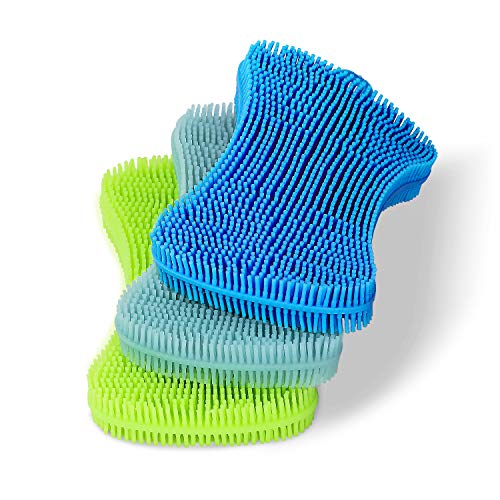
The Geloo silicone sponges offer a non-scratch alternative with flexible bristles for corner-to-corner cleaning. Made from food-grade silicone, these sponges are heat resistant and designed to resist sticking residues. Best for: gentle dishware cleaning, veggie scrubbing, and surfaces where non-scratch action is a priority. Caution: silicone mats can be less effective on very burnt-on residue compared with heavy-duty sponges.
Natural Kitchen Sponges (Biodegradable & Compostable, 12)
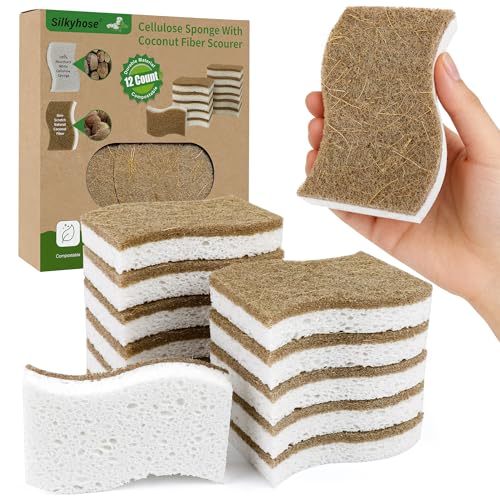
These eco-friendly sponges blend biodegradable white cellulose with coconut-fiber scrubbing material. They are compostable and designed to dry quickly to reduce the chance of odor formation. Best for: environmentally conscious households and those seeking renewable cleaning tools. Caution: performance may vary with very tough, baked-on residues compared with synthetic heavy-duty sponges.
SmilePowo 12 Pack Multi-Purpose Scrub Sponges

SmilePowo’s 12-pack features a non-scratch microfiber scrubbing side for dishes and glasses, plus a rough side for non-stick cookware. It’s a versatile choice for mixed cleaning tasks around the kitchen. Best for: households needing a dual-action approach to dishes and cookware. Caution: avoid using the rough side on very delicate surfaces to prevent scratches.
Buying Guide
What material should you choose?
- Non-scratch foams and microfiber sponges protect delicate surfaces but may wear faster on heavy, baked-on residue.
- Heavy-duty scrubbers offer extra abrasion for tough messes but can scratch soft finishes if misused.
- Silicone sponges provide long-wipe cleanup and good hygiene, though they can be less effective on stubborn residues.
- Biodegradable sponges appeal to eco-conscious buyers but may require more frequent replacement for heavy use.
How important is odor resistance?
- Odor-resistant options help reduce typical kitchen sponge smells between uses, beneficial for high-use households.
- Regular replacement and proper drying between uses remain essential to maintain hygiene.
What about safety and materials?
- Food-grade silicone and plant-fiber blends tend to be safer for contact with food and can be more environmentally friendly.
- Avoid sponges with unclear chemical additives if you have sensitive skin or frequent food prep near the sponge.
How should you maintain sponges?
- Rinse thoroughly after each use and wring out excess water to promote drying.
- Run sponges through a dishwasher cycle or sanitize periodically if the manufacturer supports it.
- Rotate between several sponges to extend overall life and reduce bacterial buildup.
Frequently Asked Questions
- What is the best sponge for antibacterial cleaning?
- Are silicone sponges better than cellulose?
- Can I put dish sponges in the dishwasher?
- How often should I replace my dish sponge?
- Do eco-friendly sponges perform as well as traditional ones?
- What should I avoid with sponges?
Sponges marketed as odor-resist or antibacterial typically use materials designed to limit bacterial growth and odors, such as polymer blends or silicone.
Silicone sponges are non-porous and often easier to sanitize, reducing bacterial growth. Cellulose sponges are biodegradable but may require more frequent replacement for hygiene concerns.
Some sponges are dishwasher-safe as noted by manufacturers. Always verify the product label before washing in a dishwasher.
Replacement frequency depends on use and material, but routine rotation and sanitation extend life while avoiding odor and bacterial growth.
Biodegradable and plant-fiber sponges can perform well for everyday dishes, though heavy-duty tasks may require traditional non-scratch or scrub sponges.
Avoid leaving a sponge wet in a sink or container for extended periods, as moisture encourages bacterial growth. Ensure proper drying after use.