
Affiliate disclosure: As an Amazon Associate I earn from qualifying purchases.
A shoe protector can be worth adding to a care routine, but the useful question is whether it suits the actual upper and the way you wear the shoes. A suede panel, a smooth leather overlay and an open mesh toe are different surfaces, even when they appear on the same sneaker. A broad material list on a spray bottle should not replace that inspection.
This guide retains five original water- and stain-repellent products whose exact listings match the shoe-care topic. It compares documented details, explains the limits of the claims and develops a practical buying process. No personal rain, stain or wear trial is claimed, and none of the selections is ranked from an invented performance score.
Start with the pair, rather than the spray
Read the shoe maker’s care guidance and identify the upper materials. If the maker recommends a specific type of treatment or advises against spraying a finish, use that information to narrow the choice. Do not assume a product approved for plain canvas also suits painted artwork, metallic trim or a delicate leather finish.
Then decide what you expect from protection. Reducing the chance of an everyday splash becoming a stain is different from keeping feet dry during prolonged rain. The Jason Markk Repel FAQ explicitly says that treatment does not make shoes fully waterproof. Construction, openings and exposure still matter.
- Everyday splash and dirt concerns: compare compatibility, application method and the care routine you can maintain.
- A valuable or delicate finish: settle the shoe maker’s advice and complete an inconspicuous test before broad application.
- Regular heavy rain: consider the footwear’s original weather protection and design, rather than asking a spray to solve every limitation.
- Existing stains: address cleaning under the shoe’s care instructions before considering a protective treatment.
Five verified original options
Crep Protect Shoe Protector Spray
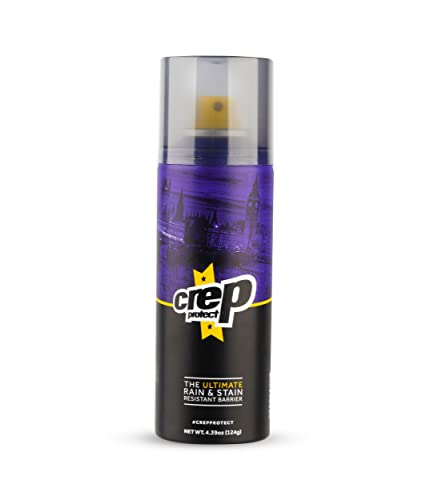
See Crep Protect Shoe Protector on Amazon
The original Crep Protect listing identifies a sneaker rain-and-stain treatment for materials including leather, nubuck, suede and canvas. The original product image matches the exact listing gallery. It remains relevant as an established shoe-care option, without turning seller wording into a guarantee that every treated shoe stays dry.
The maker’s product guidance calls for a colorfastness test, application from twenty centimeters in a ventilated area, ten minutes of drying and a second coat followed by another drying interval. Check the received label before treating a particular pair, and avoid oversaturation.
Reason to compare: a documented two-coat routine for common sneaker materials. Limit to remember: mesh remains permeable, and protection duration is not a fixed result for every shoe. Manufacturer pages and retailer wording give differing duration estimates, so this guide does not turn four or five weeks into a promised maintenance interval.
Choose it if its exact instructions and compatibility fit your pair and available treatment time. Do not buy it solely from a waterproof headline or assume the same result on a coated leather finish as on an absorbent fabric.
BERIOVE Protect Shoe Protector Spray, 6.7 oz

See BERIOVE Protect 6.7 oz on Amazon
The original BERIOVE selection is 6.7 oz, White, with water- and stain-repellent shoe treatment stated in the exact listing. It names leather, suede, nubuck and canvas among intended materials. These details confirm relevance, but they do not establish a head-to-head advantage over the other four choices.
The listing describes cleaning and drying the surface, spraying from seven to eight inches, waiting ten minutes, repeating and then waiting thirty minutes. Treat this as the seller’s stated sequence for this selection, and verify the bottle’s current directions. It is not a timing template for every spray in the article.
Reason to compare: a moderate original bottle size with a stated application sequence. What needs caution: claims about harmless chemistry or no possible discoloration are not adopted as independent findings. Complete a material test and follow handling directions even when promotional wording suggests unusually broad safety.
Compare the exact pack and the current offer, then decide whether its instructions are clear enough for your pair. A nano-technology description alone does not establish coverage per bottle, stain resistance under every spill or permanent protection.
Jason Markk Repel Spray, 5.4 oz

See Jason Markk Repel 5.4 oz on Amazon
The original selection is the 5.4 oz spray bottle, rather than a refill or a bundle. Its listing identifies a non-aerosol continuous-mist applicator and a reformulated water-based formula described as made without PFAS. Those are product-specific details, not evidence that every non-aerosol shoe spray has the same formulation.
Its directions emphasize clean, dry material, even application from six to eight inches and complete drying. The manufacturer’s current FAQ describes twenty-four hours or more of drying before a further coat. Plan around that guidance and the received label, rather than borrowing a ten-minute routine from another brand.
Reason to compare: a documented non-aerosol option with broad absorbent-material use information. Important exclusion: the exact listing does not recommend unsealed or vegetable-tanned leather. The word leather in a general material list does not remove that distinction.
If a particular formulation requirement matters, confirm that the received product is the version you intended. Made without PFAS should not be rewritten as safe to inhale, allergy-free or guaranteed suitable for every finish. Follow the actual directions and test the material.
X-Txxlplus Shoe Protector Spray, 10.15 oz

See X-Txxlplus Shoe Protector 10.15 oz on Amazon
The original X-Txxlplus selection identifies a 10.15 oz water- and stain-repellent spray. Its listing names suede, leather, nubuck, canvas, nylon and PU, and describes a clean, shake and spray sequence with a twenty-centimeter application distance.
It belongs in the comparison because the exact product is a shoe protector, but the promotional claims do not prove that it preserves every material’s appearance or performs in all weather. A statement about breathability should not become a quantified performance result without supporting test information.
Reason to compare: a larger original bottle and a stated multi-material intended-use list. What to verify: full drying instructions and any exclusions on the received package. The visible listing does not establish a complete timing schedule that can safely be filled in with another product’s numbers.
The listing specifically calls for a small-area test on sheepskin. Treat delicate material decisions with care rather than assuming a broad safe-for-all-materials slogan settles them. No universal non-toxic or permanent-waterproof assurance is made here.
COZGO Shoe Protector Spray, selected 10.15 fl oz

See COZGO Shoe Protector 10.15 fl oz on Amazon
The exact original COZGO link currently selects Multi-10.15floz. The title mentions other sizes, but those should not be counted as the package supplied by this original selection. Its shoe-care material list includes suede, leather, nubuck, canvas, nylon, mesh and knit.
The listing describes application from six to eight inches in a ventilated area, two coats with fifteen to thirty minutes between them and at least an hour before wearing. It also mentions drying after cleaning. Ensure the shoes are fully dry and use the current bottle’s directions rather than compressing the steps into a single generic waiting period.
Reason to compare: a larger selected package with a stated two-coat process. Limit to remember: the advertised four-to-six-week window is not a guaranteed result under your wear and cleaning conditions. The lotus-effect wording also does not prove that mesh shoes become sealed against prolonged soaking.
Do not treat natural-ingredient language as a safety certification or assume odor-free wording establishes a deodorizing treatment. Evaluate it as the verified original water- and stain-repellent product for its documented use.
Buying guide: the details that should decide the purchase
Look for the exact material and finish
Write down the materials on the pair you want to treat. If a retailer description says leather, ask what kind of leather and finish the shoe maker identifies. An exclusion for unsealed leather is more useful than a broad headline, because it tells you where the treatment should not be generalized.
For a mixed-material sneaker, consider each panel and decorative detail. If one area is unsuitable or its finish is unknown, do not assume that treating the entire shoe is appropriate. Resolve the care guidance first. A protector selected for one plain pair may not be the right choice for the next.
Separate resistance from complete waterproofing
Water beading on a treated surface is not a complete assessment of a shoe. Water can still reach the interior through openings or areas beyond the treated upper. A short demonstration with a splash does not establish performance over a long walk in persistent rain.
Set expectations around the footwear and the exposure you actually face. If wet feet are a recurring practical problem, review the shoe’s weather suitability before spending repeatedly on treatment. Choose a spray for its supported care role, rather than expecting it to redesign the shoe.
Protection does not remove an existing stain
The five retained products are repellent treatments. Do not use that role to imply they clean old oil marks, restore faded color or repair abrasion. Follow the shoe’s appropriate cleaning method and assess the clean, dry surface before applying a protector.
If a stain remains after permitted cleaning, decide whether further treatment is appropriate with the maker’s guidance. Repeatedly spraying the area is not a documented stain-removal method. Keeping cleaning and protection as separate steps makes it easier to understand what the product can reasonably contribute.
Choose an application method you can use correctly
Jason Markk’s non-aerosol applicator is a verified distinction in this original list. It may suit someone who prefers that dispensing format, but non-aerosol alone does not settle every handling or formulation question. Compare the received instructions, control of the mist and the practical work area available.
Use the label’s ventilation and handling guidance. Do not spray while wearing the shoes or aim the mist toward people. Keep the intended work area clear of items that should not receive treatment, and account for the full drying period before putting the pair back into use.
Compare size without inventing pairs-per-bottle figures
A larger bottle can look economical, but actual use depends on shoe size, material, coat count and dispensing technique. None of the five selections is compared here using an invented equal-dose test. A coverage claim for one product is not a reliable way to calculate another brand’s cost per pair.
For a sensible price comparison, match the same size and pack quantity, then include delivery charges if relevant. A title displaying several sizes can be misleading when the selected variant is smaller or larger. Confirm what is actually selected before comparing the displayed price.
Do not rank by technology vocabulary alone
Nano, invisible shield and lotus effect are prominent phrases in several listings. They do not provide a standardized scale for comparing products. Look for meaningful details such as material exclusions and clear instructions rather than deciding that the most elaborate slogan indicates the strongest treatment.
Likewise, ratings and review counts do not establish equal performance on your shoe’s finish. A review for a different size or a different material can provide context, but it does not replace exact-product guidance or an inconspicuous test on the pair you own.
Plan drying as part of the purchase
If you need to wear the pair immediately, compare the full treatment schedule before choosing. A product with a longer stated drying process may require using another pair while it sets. Quick-drying wording is not permission to ignore later coat intervals or final drying instructions.
Arrange the session when the shoes can remain undisturbed for the necessary period. Keep a note of which product and coat sequence you used. That prevents uncertainty later about whether a second coat was completed or whether the shoes were worn before the final drying stage.
Read formulation claims narrowly
A product-specific made-without-PFAS statement is useful if that is one of your selection criteria. It should not be transferred to the other brands in the list. Water-based, natural and low-odor language also describe different things; none should be treated as an automatic universal safety assurance.
If an ingredient requirement is important, look for clear current information from the maker. Do not infer the full formula from packaging color or the absence of a strong smell. Keep ordinary label precautions in the decision even when the marketing emphasizes gentle or harmless use.
A practical care session
- Identify the pair: check its material and finish, plus the shoe maker’s treatment advice.
- Read the protector label: confirm compatibility, distance, coat sequence and drying requirements.
- Prepare the shoes: use their permitted cleaning method and let them dry fully.
- Test discreetly: assess the intended test area after the required drying period before treating broadly.
- Apply evenly: follow the product’s method rather than adding extra liquid for imagined extra protection.
- Finish the waiting period: complete the stated process before wearing or exposing the pair to moisture.
A test area should help you assess the actual finish, not merely confirm that spray comes out of the bottle. Inspect for a visible change after drying, and stop if the result is unacceptable. A successful small test provides useful information but does not remove the requirement to follow the label over the rest of the shoe.
For several pairs, work with a short list showing the product and treatment date for each. Similar-looking sneakers may have different materials, and not every pair needs the same routine. Avoid applying several different protectors to the same pair simply to compare them without maker guidance.
Maintenance without a fixed calendar promise
Use the product’s reapplication guidance alongside actual wear and cleaning history. A pair worn occasionally indoors faces a different routine from a daily commuter pair. The old blanket four-to-six-week answer has been removed because it cannot describe all five products under all conditions.
Check the shoes after wear and deal with dirt using their permitted care method. When reapplication is needed, follow the treatment’s directions for a clean, dry surface. Do not keep building coats over visible dirt simply because the last treatment date seems old.
If the result disappoints, review compatibility, preparation, application and drying before assuming a different brand will solve it. Also review the exposure itself. Replacing one protector with another does not make open mesh footwear suitable for every soaking condition.
Keep the bottle and its readable directions together after the session. If several shoe-care supplies share a cupboard, distinguish the protector from cleaners and other treatments rather than remembering only the bottle color. Check the selected formula again when replacing it: a familiar brand name does not guarantee that a new package is the same version, size or dispensing format as the one you previously used.
Questions to settle before ordering
Will it keep white sneakers perfectly white? No such guarantee is established. Compatibility and proper treatment matter, while scuffs and wear remain separate care issues.
Must every product receive two coats? Follow its own complete directions. Several retained listings specify two coats, but their waiting periods differ.
Can it replace a shoe cleaner? These are protection choices, not verified stain-removal products. Clean appropriately before treatment.
Which should I choose? Start with the pair’s care requirements, then compare the exact material guidance, application format, selected size and drying schedule. A product you can use correctly is more useful than a broad promise unsupported by your footwear.