As an Amazon Associate I earn from qualifying purchases. These links may earn this site a commission when you buy, at no extra cost to you.
Answering the common cleaning question, which fiber cloth works best for cleaning, these microfiber cloths are designed for versatility and efficiency. They are ideal for quick-drying dishes, polishing mirrors, wiping down car interiors, and handling delicate surfaces without scratching. This guide features five widely recommended options, each chosen for durability, absorbency, and lint-free performance. Whether you’re a homeowner, car care enthusiast, or professional cleaner, you’ll find a suitable microfiber cloth here. The table below summarizes the five products to help you compare at a glance.
| Product | Material & Weight | Best Use | Notes |
|---|---|---|---|
| SIFANGKE Microfiber Cleaning Cloth | 85% polyester / 15% nylon | General cleaning, mirrors, electronics | Streak-free, reinforced stitching |
| HOMEXCEL Microfiber Cleaning Cloth 210GSM | 210 GSM microfiber | Windows, stainless steel, car interiors | Lint-free, non-abrasive |
| USANOOKS Microfiber Cleaning Cloth Grey | Premium microfiber, 2.5 mm thick | Car drying, polishing mirrors | Durable, long-lasting |
| Amazon Basics Microfiber Cleaning Cloths | Ultra-soft microfiber, 16×12 inches | Car drying, general use | Streak-free, lint-free |
| TEAWOO 10 Colors Microfiber Cloths | 87% polyester / 13% polyamide | Color-coded cleaning tasks | Bright color-fast dyes |
SIFANGKE Microfiber Cleaning Cloth—Assorted Colors

The SIFANGKE cloths are a versatile option for households that want color-coded cleaning rags. The 11.8″ x 11.8″ size fits most mid-sized tasks, from drying dishes to wiping countertops. The 85% polyester and 15% nylon blend provides a non-abrasive, lint-free experience on delicate surfaces, helping to reduce streaks on glass and stainless steel. Best for: general home cleaning, kitchens, and light car detailing. Limitation: color assortment may require separate storage if you use many cloths per task.
HOMEXCEL Microfiber Cleaning Cloth 210GSM
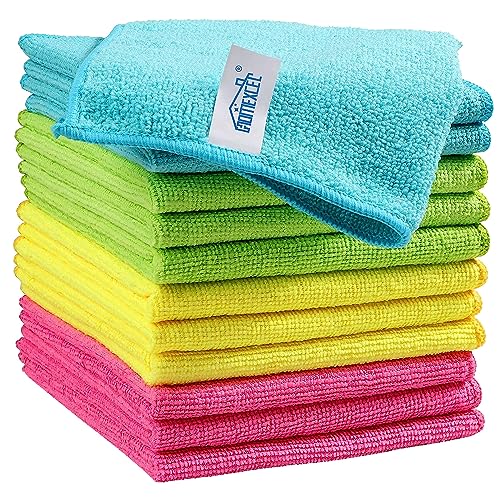
HOMEXCEL’s 210GSM microfiber towels deliver a robust cleaning performance with a soft touch. They are designed for streak-free results on kitchen counters, windows, mirrors, stainless steel, and car interiors. The towels are lint-free and gentle on delicate surfaces, making them suitable for electronics screens and coated metals. Best for: daily kitchen and home cleaning, car detailing. Limitation: thickness and density may feel heavier for very quick wipe-downs when dry.
USANOOKS Microfiber Cleaning Cloth Grey
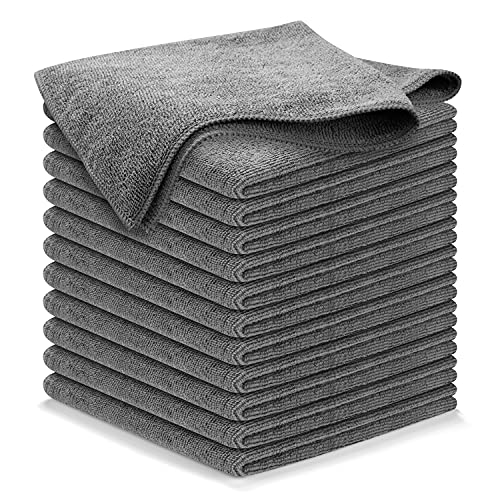
USANOOKS emphasizes grip and durability with a 2.5 mm thick design that traps up to 8x–10x its weight in liquid. These towels are designed to resist linting, scratching, pilling, or shedding, which helps maintain a mirror-like shine on smooth surfaces. Best for: car care, heavy spills, and fast drying. Caution: very thick towels may feel stiff until they are broken in with washing.
Amazon Basics Microfiber Cleaning Cloths

Amazon Basics offers a broad 24-pack of 16″ x 12″ microfiber cloths in multiple colors. They are designed to be ultra-soft, non-abrasive, and lint-free for streak-free cleaning on cars, boats, and other surfaces. Best for: large cleaning projects or beginners building a starter kit. Limitation: generic performance may vary slightly batch-to-batch compared with premium brands.
TEAWOO 10 Colors Microfiber Cloths

TEAWOO provides a color-coded system with 10 colors, supporting organized cleaning across kitchen, bathroom, car, and glass tasks. The blend (87% polyester, 13% polyamide) balances absorbency with durability, delivering rapid drying and minimal residue. Best for: households that want color separation to prevent cross-contamination. Limitation: colors may bleed slightly if washed with certain detergents; follow care instructions for longevity.
Buying Guide
What should I look for in a microfiber cleaning cloth?
Key factors include fabric blend, thickness, and absorbency. A blend around 80–90% polyester with a small amount of nylon or polyamide provides softness and lint-free performance. Thickness, often measured in GSM or millimeters, influences absorption and durability. Higher GSM generally means more absorption and longer life, but it may feel heavier for light tasks.
Are color-coded cloths worth it?
Yes, color coding helps prevent cross-contamination between kitchens, bathrooms, cars, and electronics. Choose color-fast dyes that resist fading after many washes to keep the code clear over time.
How should I care for microfiber cloths?
Wash on a gentle cycle with mild detergent, avoiding fabric softeners and bleach, which can reduce absorbency. Air-dry or tumble-dry on low heat. Washing with other microfiber items or in hot water can help maintain lint-free performance and prevent pilling.
Which cloth is best for car care?
Cloths with higher GSM, thicker weave, and non-abrasive finishes are preferable for car exteriors and glass. Look for products advertised as scratch-free, lint-free, and designed for polishing or drying surfaces.
How many cloths do I need?
A starter set usually includes at least four colors for different tasks, plus a few extra for drying and detailing. A larger pack is beneficial for households with frequent cleaning or multiple vehicles.
Frequently Asked Questions
- What makes microfiber effective for cleaning?
Microfiber combines fine fibers and high absorbency to trap dirt, dust, and liquids without leaving streaks or lint on surfaces.
- Can microfiber replace paper towels?
Yes, microfiber can replace disposable towels for most tasks, reducing waste and cost over time when cared for properly.
- Is it safe to use microfiber on electronics screens?
Yes, if the cloth is lint-free and used dry or with a small amount of mild cleaner; avoid applying harsh chemicals directly.
- Do thicker microfiber cloths perform better?
Thicker cloths typically hold more moisture and may provide faster drying, but for delicate surfaces, a softer, lighter cloth can be preferable.
- How often should microfiber cloths be replaced?
Replace when they show persistent thinning, fraying, loss of absorbency, or visible shedding that affects cleaning results.