
Answering the top buyer question, these food-safe adhesives are suitable for repairs that may contact food surfaces or occasional culinary use. This guide highlights five reliable options and explains who benefits most from each choice. Ideal buyers include crafters repairing mugs and dishes, homeowners fixing ceramic decor, and professionals needing compliant bonding for incidental food contact. Below, find quick product notes, a handy comparison table, and practical buying tips to help you choose with confidence.
| Product | Brand | Best For | Key Benefit |
|---|---|---|---|
| Permabond ET5147 | Permabond | Food-contact incidental use on metal, wood, and composites | FDA-compliant formulation with strong bond and versatile substrates |
| Gorilla 2 Part Epoxy | GORILLA | General repairs needing quick set and gap filling | Clear finish and 5-minute set for fast projects |
| Ceramic Glue, Best Super Clear Glue for Porcelain | ATLASBOND | Ceramics: mugs, dishes, porcelain repairs | Clear, strong bond with food-safe formula |
| Ceramic Glue Repair Kit | Vigorder | Fragile ceramic repairs in bathrooms/kitchens | Fast cure and heat/water resistance |
| Ceramic Glue, Clear Super Ceramic Glue | SWIFFAR | Pottery and porcelain repairs and crafts | Crystal-clear bond with durable, heat-resistant performance |
Permabond ET5147 Food Grade Epoxy Adhesive

Best for: Applications with incidental food contact on metals and composites. This two-part epoxy is notable for strength and versatility across substrates. It is designed to meet FDA 175.105 and 175.300 requirements, which supports safe use where incidental food contact may occur. Choose this if you need a dependable bond on metal surfaces such as stainless steel or mild steel, and you want a robust cure for high-stress joints. Caution: Not intended for frequent or direct food contact surfaces.
Gorilla 2 Part Epoxy

Best for: Quick repairs where a strong, clear bond and gap filling are needed. The 5-minute set time allows repositioning and project speed, while the epoxy dries clear for a neat finish. Best used on furniture, ceramics, and subtle wood-to-plastic bonds where visibility matters. Limitation: Not explicitly labeled for food contact, so reserve for non-food-contact surfaces or masked areas.
Ceramic Glue, Best Super Clear Glue for Porcelain

Best for: Delicate porcelain and mug repairs where a shade-free bond helps preserve appearance. This adhesive claims a food-safe formula, aiding tasks involving dishware and tableware. Best used for clear-dry repairs on china and ceramic decor where aesthetics are important. Caution: Check compatibility with high-temperature exposures in outdoor settings if used for hot beverage containment.
Ceramic Glue Repair Kit
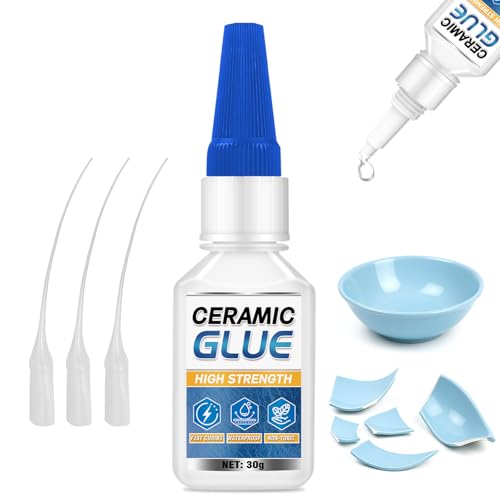
Best for: Quick, reliable repairs of fragile ceramics in kitchens and bathrooms. The kit emphasizes fast curing—15 to 30 seconds—and water and heat resistance, making it suitable for ceramic mugs, dishes, and small pottery repairs. Limitation: Not all kits are explicitly labeled for direct food contact; use with care on items that frequently contact food.
Ceramic Glue, Clear Super Ceramic Glue for Pottery
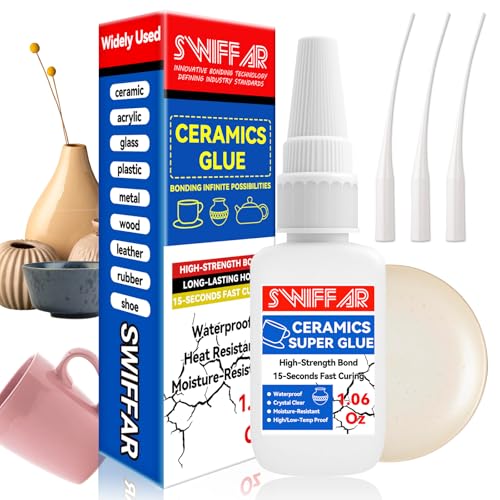
Best for: Pottery and porcelain repairs where a crystal-clear finish matters. This glue is designed to deliver a strong, long-lasting bond on ceramic crafts, mugs, and dishes, with resilience to moisture and heat. Choose this if you value a clean, nearly invisible repair in decorative items. Limitation: Performance claims rely on typical ceramic substrates; test on porous surfaces first.
Buying Guide: Key Purchase Considerations
- Food contact safety: If incidental contact with food is possible, prioritize adhesives specifically labeled for FDA compliance or incidental food contact, like Permabond ET5147.
- Substrate compatibility: Consider the material you’re bonding (metal, ceramic, glass, wood, plastic) and choose an adhesive with proven adhesion to those surfaces.
- Set time and cure: Faster sets save time but may reduce repositioning time. For delicate ceramics, longer open times can help align pieces precisely.
- Water and heat resistance: For bathrooms, kitchens, or outdoor use, select glues with moisture tolerance and heat resistance to prevent brittleness or failure.
- Clarity and aesthetics: Clear or colorless formulas are ideal for visible repairs on porcelain, mugs, and dishware to minimize sightlines of repairs.
- Application considerations: Check cap design, viscosity, and application tips (e.g., anti-clog caps) to ensure consistent flow and ease of use.
- Supplier notes: Some items are explicitly for ceramic repairs rather than direct food-contact surfaces. Use them accordingly and verify labeling if direct contact is frequent.
Frequently Asked Questions
- What is the safest epoxy for incidental food contact?
– Epoxies labeled for incidental food contact, such as Permabond ET5147, are designed for non-dining surfaces that may touch food occasionally. - Can I repair a mug with epoxy glue?
– Yes, but ensure the product is rated for incidental food contact and use only on the exterior surface or areas that won’t touch hot beverages directly. - How fast does ceramic glue cure?
– Some glues cure in seconds to minutes, with full strength reached in several hours. Always follow manufacturer guidelines for curing times. - Is a clear epoxy better for ceramic repairs?
– Clear formulas help maintain appearance on porcelain and mugs, concealing the repair line for a cleaner look. - Should I use silicone sealant instead of epoxy for food-contact items?
– Silicone sealants can be food-safe and heat resistant, but they behave differently than epoxy in bonding strength. Use silicone where a seal rather than a rigid bond is needed. - What should I avoid when repairing dishes?
– Avoid direct food contact surfaces unless the adhesive explicitly allows incidental or direct contact; ensure cured products fully meet safety guidelines.