As an Amazon Associate I earn from qualifying purchases. These links may earn this site a commission when you buy, at no extra cost to you.
Answering the common question “which glass cleaner should I use for my fireplace?” this guide highlights five top options that deliver clear, streak-free results on ceramic and high-temperature glass. These cleaners are chosen for different needs, from heavy soot removal to gentle upkeep. Best for homeowners seeking a practical blend of power and safety, and for those with cast iron or steel fireplace components. The table below helps compare key picks at a glance.
| Product | Best For | Notes |
|---|---|---|
| Rutland Hearth and Grill Conditioning Glass Cleaner | Heavy buildup on ceramic glass | Silicone coating helps future cleanups |
| Quick N Brite Fireplace Glass Cleaner Kit | Smudge-free, versatile glass surfaces | Includes cloth and sponge |
| MEECO’S RED DEVIL 701 Wood Stove Glass Cleaner | Creosote, soot on wood/pellet stoves | Ready-to-use spray |
| Rutland White Off | White residue on gas fireplace glass | Ammonia-free formulation |
| Sylvan Hills Fireplace Glass Cleaner | Tough stains and deep discoloration | Fast-acting, streak-free |
Rutland Hearth and Grill Conditioning Glass Cleaner

Brand: Rutland Products. Features a high-temperature glass formula with a silicone layer that helps keep glass cleaner longer and eases future cleanups. The micro scrubbers are designed to avoid scratching ceramic glass while removing soot, creosote, and buildup. Best for homeowners with frequent maintenance needs on ceramic glass surfaces in fireplaces and wood stoves. Limitation: may leave a translucent silicone film that some users notice as a protective residue rather than a bare-clean finish.
Why choose this: It’s the go-to for ongoing maintenance, particularly when the glass is exposed to high heat and residue. The silicone layer can make subsequent cleanups faster and easier, which is useful for regular fire users or households with unattended stoves.
Quick N Brite Fireplace Glass Cleaner Kit
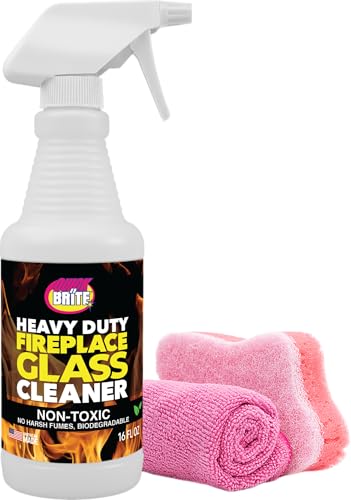
Brand: Quick ‘n Brite. This kit helps remove creosote, smoke residue, soot, ash, and carbon deposits from various glass surfaces. It’s suitable for cool glass and works on gas stove cooktops, hearth doors, and other ceramic glass. It includes a sprayer for even application and a scrub sponge for cleaning. Best for: quick, all-around glass cleaning with minimal effort. Limitation: effective cleaning depends on not letting glass get overly hot before cleaning; repeated applications may be needed for extreme buildup.
Why choose this: It offers a practical, all-purpose solution that can be used on multiple glass surfaces in and around the fireplace. The included applicator and sponge simplify the process for first-time users or casual cleaners.
MEECO’S RED DEVIL 701 Wood Stove Glass Cleaner

Brand: Meeco’s Red Devil. This 2-pack (16 fl oz each) provides a robust formula designed to remove creosote, smoke, soot, and dirt from glass surfaces on wood, pellet, coal stoves, and fireplace inserts. Ready-to-use trigger spray delivers basic spray-and-wipe use with a clear, streak-free finish. Best for: households with multiple stoves or frequent cleaning needs. Limitation: industrial-strength cleaners can be stronger than necessary for light maintenance; use as directed to avoid overspray on non-glass components.
Why choose this: It’s ideal for larger households or seasonal use where a higher-volume cleaner is beneficial and where removing baked-on buildup is a priority.
Rutland White Off
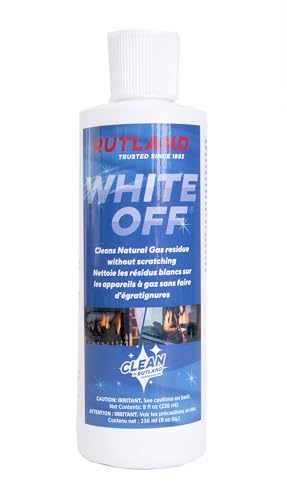
Brand: Rutland Products. This ammonia-free cream cleaner is designed to remove white residue from gas log fireplace glass doors. It cleans without scratching or micro-pitting and is safe for cooktops, stainless steel, and fiberglass. Best for: users dealing with white mineral buildup on gas fireplaces. Limitation: may require more effort on very stubborn deposits compared to stronger solvent-based cleaners.
Why choose this: It provides a safer, gentler option for sensitive surfaces and finishes while effectively removing a common white haze that appears on gas flame glass.
Sylvan Hills Fireplace Glass Cleaner

Brand: Sylvan Hills. Features a professional-strength carbon dissolver designed to break down creosote, soot, and carbon deposits for a streak-free finish. The spray-and-sit formula reduces scrubbing time, and the final result is a crystal-clear, residue-free surface. Best for: tough, baked-on stains on wood, pellet, and coal stoves. Limitation: may require waiting a short period after application before wiping for best results.
Buying Guide: What to Consider When Choosing a Fireplace Glass Cleaner
What type of buildup do you typically see—creosote, soot, smoke, or mineral residue? For heavy creosote, select a cleaner with stronger solvents and a ready-to-use spray for easier handling. If you only deal with white haze or mineral deposits, a gentler, ammonia-free cream can prevent surface micro-scratching.
- Surface compatibility: Check if the cleaner is suitable for ceramic glass, glass doors, and metal frames. Some formulas are specifically designed for high-temperature glass on stoves, while others are gentler for glass doors in gas fireplaces.
- Application and cleanliness: Consider sprays with included applicators or ready-to-use trigger mechanisms. For stubborn stains, look for products that advertise “sit time” or “carbon dissolve” action.
- Film and residue: Some products leave a protective or ease-of-clean layer; this can speed future cleanups but may feel different to the touch. Decide if you want a film that helps future cleaning or a completely bare-glass finish.
- Safety and materials: Ammonia-free options are safer for certain surfaces and household members. Take note if you have stainless steel, cast iron, or fiberglass components nearby.
- Usage scenarios: If you have multiple fireplaces or stoves, a larger bottle or refill might be more cost-efficient for ongoing maintenance.
How to Use Fireplace Glass Cleaners Effectively
Always follow product directions. For most cleaners, ensure the glass is cool before applying. Apply a small amount to a sponge or cloth, wipe in a circular motion, and then buff with a dry cloth for a streak-free finish. For heavy buildup, repeat or let the cleaner sit as directed before wiping. If a cleaner recommends spraying from a distance, adhere to that guidance to avoid overspray on surrounding surfaces.
Safety Tips for Fireplace Cleaning
Wear gloves to protect skin and provide adequate ventilation. Avoid mixing cleaners; some combinations can release fumes. Keep cleaners away from children and pets, and store in a cool, dry place away from direct heat sources.
Frequently Asked Questions
- Can I use any household cleaner on fireplace glass?
Only use cleaners designed for high-temperature glass or ceramic glass to prevent damage and ensure a safe, streak-free result. - Is it necessary to remove soot before cleaning?
Yes. Wipe off loose soot first to improve cleaning effectiveness and reduce residue. - What should I do if cleaner leaves a film?
Buff with a dry microfiber cloth and, if needed, reapply a small amount and wipe again. - Are ammonia-free options safer for surfaces?
Ammonia-free formulas reduce the risk of damage to non-glass surfaces and are gentler for indoor air quality. - How often should I clean fireplace glass?
Frequency depends on usage. Heavy users may clean weekly during peak heating periods; lighter use may only require monthly upkeep. - Can I use these cleaners on metal parts around the fireplace?
Only if the product specification states compatibility; otherwise, avoid contact with metal finishes to prevent damage.