As an Amazon Associate I earn from qualifying purchases. These links may earn this site a commission when you buy, at no extra cost to you.
Answering the needs of labs that require minimal fiber residue, these wipes are designed for precision cleaning, delicate surfaces, and cleanroom environments. Ideal buyers include electronics labs, pharmaceutical facilities, and semiconductor operations seeking lint-free performance. The top five products below offer low-lint construction, good absorbency, and practical packaging for quick cleanups.
| Product | Size | Material Type | Best For |
|---|---|---|---|
| Medline Delicate Task Wipes | 4″ x 8″ | Low-linting nonwoven | Precise instrument cleaning; quick lab wipe-downs |
| AAwipes Cleanroom Wipes 4×4 | 4″ x 4″ | 55% cellulose / 45% polyester, hydro-entangled | Laboratory surfaces and precision components |
| ES EVVIVA SCIENCES Cleanroom Wipes 9×9 | 9″ x 9″ | Cellulose-polyester blend | Electronics, lab glassware, delicate surfaces |
| Synvicovan Cleanroom Wipes 9×9 | 9″ x 9″ | 55% cellulose / 45% polyester | Electronics, optics, and laboratory surfaces |
| Ferrochef Cleanroom Cloth Wipes 9×9 | 9″ x 9″ | Polyester cleanroom cloths | Lab procedures requiring lint-free disposables |
Medline Delicate Task Wipes

Product features indicate low linting quality to minimize residue when cleaning precision instruments. The pop-up box design supports quick access during lab cleanups, and the 4″ x 8″ wipe size is well-suited for reaching into small spaces or around delicate components. Best for labs needing fast, fiber-minimizing wipes for routine instrument maintenance. A potential limitation is the box size if you need very large sheets for expansive surfaces.
Best for: labs that require compact, low-lint wipes for precision tools and small-area cleanups.
AAwipes Cleanroom Wipes 4×4

These wipes use a hydro-entangled nonwoven blend of 55% cellulose and 45% polyester, offering strong wet and dry performance and good absorbency. They are designed for all-purpose wiping, including precision components and lab apparatus. They present a cost-effective option for repeat use in cleanrooms while maintaining lint-free results. Caution: ensure compatibility with solvents in use, as solvent compatibility isn’t specified.
Best for: general-purpose lab cleaning where affordability and lint-free performance matter.
ES EVVIVA SCIENCES Cleanroom Wipes 9×9
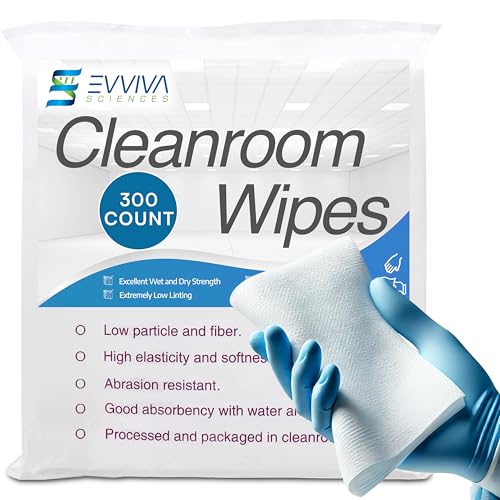
Low-lint performance aims for nearly streak-free cleaning in clean environments. The cellulose-polyester blend provides durability and decent absorbency, supporting both wiping and solution application. Not intended for pharmaceutical or medical use, which is important for environment-specific compliance. Caution: not a medical-grade wipe, so verify your lab’s regulatory requirements before use.
Best for: electronics and glassware cleaning where streak-free results are critical.
Synvicovan Cleanroom Wipes 9×9

Made from a hydroentangled 55% cellulose / 45% polyester blend, these wipes offer a soft, smooth surface with tear resistance and lint-free performance. They are designed for precision cleaning in electronics, optics, and lab instruments. Best for: labs needing reliable lint-free wipes for delicate components. Limitation: may be less suitable for heavy solvent use without confirming chemical compatibility.
Best for: protecting sensitive electronics and optics during cleaning tasks.
Ferrochef Cleanroom Cloth Wipes 9×9

These wipes are disposable microfiber cloths with laser-sealed edges, designed for precision cleaning in lab and semiconductor environments. The high-density polyester fabric provides gentle contact and lint-free results for delicate surfaces. Each pack contains 100 wipes, suitable for large-scale use. Caution: ensure the wipes meet your facility’s solvent compatibility needs before extensive use.
Best for: large labs or production settings needing a dependable, lint-free disposable wipe for sensitive equipment.
Buying Guide
Key considerations for selecting low-lint wipes in a lab setting include fiber content, lint performance, absorbency, compatibility with cleaning agents, and packaging design. For electronics and optics, prioritize lint-free and anti-shedding properties. For general lab surfaces, balance cost with durability and absorbency. Cleanroom grade wipes offer tighter control over particles, but not all jobs require ultra-cleanroom credentials. Consider how often wipes are used, the size of surfaces, and whether single-use or reusable options best fit your workflow.
What to ask before buying
- Is the wipe lint-free under lighting and magnification used in your work?
- What solvents or cleaners will you use, and are the wipes compatible?
- Are your tasks more suited to larger 9×9 wipes or smaller 4×4/4×8 sheets?
- Do you need bagged, cored, or pop-up packaging for quick access?
- Is a cleanroom-grade wipe necessary for your process?
Best practices for using low-lint lab wipes
- Use a dedicated wipe for each surface to avoid cross-contamination.
- Fold wipes to expose clean edges as you clean; avoid reusing contaminated areas.
- Store wipes in their original packaging or a sealed container to prevent dust uptake.
- Dispose of used wipes according to your lab’s waste guidelines.
FAQ
- What makes a wipe “low lint”?
- Are these wipes suitable for electronics labs?
- Can I reuse these wipes?
- What should I consider about packaging?
- Are all wipes safe for chemical solvents?
Low lint wipes minimize shedding and fiber transfer to surfaces, reducing residue during cleaning.
Yes, many listed wipes are designed for electronics and precision components, offering lint-free performance.
Some wipes may be reusable under specific conditions, but most listed are disposable cleanroom wipes intended for single-use.
Pop-up boxes or bags affect accessibility and contamination risk; choose based on workflow and workspace size.
Not always; verify chemical compatibility with your cleaning agents before use in sensitive applications.