
The right miter saw blade can dramatically improve the quality of crosscuts, miters, and bevels in wood projects. This guide highlights five high-performing blades designed for wood, across a range of tooth counts, kerfs, and arbors. Each option emphasizes clean finishes, durability, and smooth operation to support professional and hobbyist woodworking alike.
Summary of Selected Products
| Product | Brand | Arbor | Teeth |
|---|---|---|---|
| WEN BL1280 12-Inch 80-Tooth Fine-Finish Blade | WEN | 1 inch | 80 |
| Diablo D1060X Fine Finish Blade | Diablo | 5/8 inch | 60 |
| FOXBC 12 Inch 80 Tooth Fine Finish | FOXBC | 1 inch | 80 |
| WEN BL1200 12-Inch 100-Tooth Ultra-Fine | WEN | 1 inch | 100 |
| TOYAKI 10-Inch 120-Tooth Fine Finish | TOYAKI | 5/8 inch | 120 |
WEN BL1280 12-Inch 80-Tooth Fine-Finish Blade
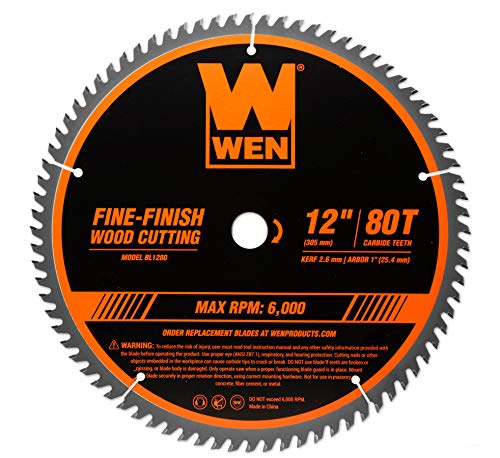
The WEN BL1280 is a 12-inch, 80-tooth carbide-tipped blade designed for fine finishes on both hard and softwoods. It uses a 1-inch arbor and handles up to 6000 RPM, delivering ultra-thin kerf cuts (about 2.6 mm). The high tooth count supports clean crosscuts with minimal chipping and edge tear-out, making it suitable for cabinetry and fine trim work.
Key features include a thin kerf for reduced waste and fast, precise cuts, plus carbide teeth engineered for wood applications. The blade’s heat and corrosion resistance help maintain consistent performance during extended use, especially on dense lumber. This blade is a strong option for finish work where a smooth surface is essential.
Diablo D1060X Fine Finish Blade

The Diablo D1060X blends high tooth count with Hi-ATB geometry, delivering ultra-smooth finishes and precise cuts with less need for sanding. The TiCo Hi-Density carbide teeth extend blade life and cutting efficiency, while the Perma-Shield coating resists heat, corrosion, and gumming—keeping performance consistent through long sessions and varied wood types.
Designed for softwood and hardwood alike, this blade minimizes chipping on laminates and veneered surfaces, making it a practical choice for cabinetmaking, furniture, and trim tasks. The combination of durability and finish quality helps reduce rework and labor costs over time.
FOXBC 12 Inch 80 Tooth Fine Finish Blade

The FOXBC 12-inch blade features 80 teeth with an ATB grind and a 1-inch arbor. The fine finish design is optimized for crosscuts and miters, producing smooth surfaces with minimal burn and tear-out. Laser-cut stabilizer vents help trap noise and vibration, contributing to cooler operation and reduced blade warp during precise woodworking tasks.
With a thin kerf and quality carbide, this blade balances speed and accuracy, suitable for trim work, cabinetry, and furniture components where crisp, clean edges are paramount.
WEN BL1200 12-Inch 100-Tooth Ultra-Fine

The WEN BL1200 offers a 12-inch, 100-tooth carbide-tipped design for ultra-fine finishes on wood. The blade’s 1-inch arbor supports robust stability at high RPM (up to 6000), delivering exceptionally smooth crosscuts with a very thin kerf (approximately 2.8 mm). The high tooth count minimizes tearing and produces superior surface quality, especially on pale woods and veneers.
Ideal for finish carpentry, cabinetry, and decorative trim, the blade reduces sanding time and yields professional results across a range of soft and hardwoods while maintaining long blade life through carbide durability.
TOYAKI 10-Inch 120-Tooth Fine Finish Blade
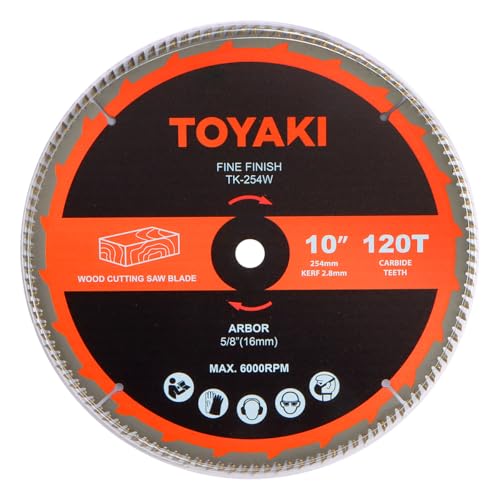
The TOYAKI 10-inch blade features a high 120-tooth count for fine finish performance, designed for miter saws, table saws, and circular saws with a 5/8-inch arbor. The tooth pattern emphasizes smooth, precise cuts with reduced vibration, making it well-suited for delicate trim, moldings, and cabinetry where edge quality matters most.
The fine-cut capability is complemented by a relatively thin kerf and a design that minimizes heat buildup, contributing to consistent results across long jobs and repeated crosscuts in hardwoods and softwoods alike.
Buying Guide: Key Purchase Considerations
- Tooth count and geometry: Higher tooth counts produce finer finishes but cut more slowly. Hi-ATB and ATB geometries improve smoothness and edge quality on wood surfaces.
- Kerf width: Ultra-thin kerfs reduce waste and require less power, but the blade should still feel stable. A 2.4–2.8 mm kerf is common for finish blades.
- Arbor size: Most miter and table saw blades use 5/8-inch or 1-inch arbors. Confirm your tool’s arbor compatibility before purchasing.
- Material and coating: Carbide-tipped teeth offer longevity; coatings like Perma-Shield help resist heat, corrosion, and gumming during long sessions.
- RPM rating: Ensure the blade’s RPM rating matches or exceeds your saw’s maximum RPM to avoid glazing, excessive heat, or warping.
- Intended use: For cabinetry, trim, and fine finish work, prioritize blades with consistent edge quality and reduced tear-out. For general rough cuts, a blade with fewer teeth might be faster but rougher.
- Vibration control: Features like stabilizer vents and laser-cut design help manage vibration, improving accuracy and blade life.
- Maintenance and care: Keep blades clean and free of pitch. Store blades properly when not in use to prevent warping and corrosion.
Selecting the right blade depends on your typical projects—cabinetry and trim benefit from 60–100 tooth blades with carbide teeth for smooth finishes, while rough-cutting applications can tolerate blades with fewer teeth for faster throughput. Always verify compatibility with your miter saw or table saw and consider a dedicated blade for specific tasks to maintain optimal results over time.