
Looking for the best mop for kitchen floors? This guide highlights practical, efficient options that suit different cleaning needs—from hands-free wringing to spray-mop convenience. Best for busy households, pet owners, and allergy-conscious cleaners, these picks emphasize water-first cleaning and easy maintenance. Below, you’ll find five top products with clear why-this-is-best statements, plus a concise buying guide and FAQs to help you decide.
Summary table of chosen products:
- O-Cedar EasyWring Microfiber Spin Mop & Bucket System
- CLDREAM Spray Mop With 800 ml Refillable Bottle
- KeFanta Self-Wringing Twist Mop With Long Handle
- EXEGO Microfiber Spray Mop With Reusable Pads
- O-Cedar MicroTwist MAX Microfiber Twist Mop
O-Cedar EasyWring Microfiber Spin Mop & Bucket System

Best for: households needing hands-free wringing and thorough dirt pickup with plain water. The built-in wringer reduces splashes, and the splash guard helps transport the bucket between rooms. The mop head is machine-washable and reusable, with refills recommended every few months for optimal results. Safe for all hard floors, including finished wood, tile, and vinyl.
Why this selected: The combination of hands-free wringing, splash control, and washable microfiber makes it a reliable, low-maintenance option for daily kitchen cleaning. The system minimizes chemical use by relying on microfiber’s ability to trap dirt with water alone.
Caution: The bucket system can be heavier when full; consider storage space and mobility in small kitchens.
CLDREAM Spray Mop With Large 800 ml Bottle
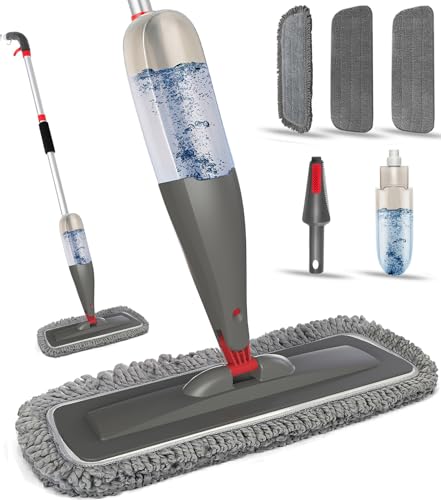
Best for: quick, spray-and-mop cleaning without a bucket. The 800 ml refillable bottle lets you mix your own solution, enabling custom cleaning strengths for kitchens with spills or grease. The extra-large mop head provides faster coverage and easier reach of baseboards and corners.
Why this selected: It excells in homes that prefer spray cleaning and want the flexibility to use water or mild solutions. The large reservoir reduces refill interruptions during larger kitchen cleans.
Caution: This model emphasizes spray action; if you need ultra-strong scrubbing power, you may want a separate scrub pad for stubborn spots.
KeFanta Self-Wringing Twist Mop With Long Handle

Best for: tall users and spaces where bending is less convenient. The 57-inch long handle reduces the need to stoop, and the built-in wringer keeps hands dry. The microfiber plus scrub pad combination helps tackle stubborn kitchen stains on tile and vinyl.
Why this selected: The extended handle and effective wring mechanism make it a good choice for kitchens with large floor areas or users who prefer minimal bending. The included scrub pad helps deal with tougher grime without resorting to chemicals.
Caution: Some users may prefer a larger mop head for big kitchens, as this model emphasizes a balance of length and head size.
O-Cedar MicroTwist MAX Microfiber Twist Mop

Best for: users who want strong bacteria control with water-only cleaning and an oversized mop head. The mops remove a high percentage of bacteria using only water, and the easy-to-wring feature helps maintain dry hands while cleaning. Refillable, machine-washable refills keep maintenance simple and economical.
Why this selected: Its larger head covers more floor area per pass, making it efficient for kitchen spaces. The hands-free wring and reusable refills support repeated use with less waste.
Caution: Refills are washable but may wear over time; monitor microfiber integrity for best results.
Buying Guide: Key Considerations For Your Kitchen Mop
Choosing the right mop for a kitchen floor depends on floor type, cleaning frequency, and user preference for ease of use. Consider mop style, water usage, and maintenance when comparing options.
What type of mop fits your kitchen?
There are three main types: spin mops with buckets, spray mops, and traditional foldable mops. Spin mops offer hands-free wringing, spray mops enable quick mist cleaning, and traditional mops may require more effort but can be very economical.
How important is water and chemical use?
Many modern microfiber mops clean effectively with plain water, reducing chemical exposure. Sprays provide control over cleaning solution concentration, which is useful for grease-heavy kitchens.
Head size and reach matter
A larger mop head reduces the number of passes needed, but a longer handle helps with back comfort and baseboard access. Adjustable handles can improve ergonomics for different users.
Refills, maintenance, and durability
Look for machine-washable heads, sturdy wringing mechanisms, and readily available refills. Durable microfiber captures dust and grime efficiently, extending interval times between deep cleanings.
Best all-around choice for most kitchens
For many households, a hands-free wringing model (like the EasyWring) paired with a high-capacity spray option (like the CLDREAM) meets daily kitchen needs. For users needing extra reach, KeFanta’s long handle and the MicroTwist MAX offer a good balance of reach and cleaning power.
Maintenance tips for longevity
Rinse and air-dry mop heads after use to prevent odor buildup. Replace mop head refills every few months as recommended by the manufacturer to maintain cleaning efficiency.
FAQ: Quick Answers For Kitchen Mop Questions
- Which mop is best for a busy kitchen with grease? A spray mop with a large refillable bottle, like CLDREAM, allows quick mist-cleaning and lets you tailor the cleaning solution to grease-heavy areas.
- Do I really need a bucket with a wringer? Not always. If you prefer quick mopping, a spray mop may suffice. A wringing bucket is beneficial for traditional mopping and heavy dirt.
- Are microfiber mops safe for hardwood kitchens? Yes, microfiber mops are generally safe for sealed hardwood floors when used with minimal moisture and no harsh chemicals.
- How often should mop refills be replaced? Refill recommendations vary, but typically every 3–6 months with regular use helps maintain cleaning performance.
- Is a longer mop handle better? A longer handle reduces bending, improving comfort for taller users and larger spaces.
- Can these mops clean baseboards? Yes, several models feature wide heads and swiveling heads that reach baseboards and corners effectively.