As an Amazon Associate I earn from qualifying purchases. These links may earn this site a commission when you buy, at no extra cost to you.
Answering your search for organic, eco-friendly dish sponges, this guide highlights five top options. Each sponge is designed to reduce plastic waste, dry quickly to prevent odors, and protect delicate cookware. Best for eco-conscious cooks, small households, and those who want compostable cleaning tools that perform well on grease and grime. The summarized table below helps you compare core features at a glance.
| Product | Brand | Material Highlights |
|---|---|---|
| Natural Kitchen Sponges, Biodegradable & Compostable | Silkyhose | Biodegradable cellulose, coconut fiber scrubber |
| Isshah Plant-Based Kitchen Sponges | Isshah | Wood cellulose, sisal hemp fibers, coconut husk |
| AIRNEX Natural Kitchen Sponges (12 Pack) | AIRNEX | Biodegradable cellulose, coconut fiber scrubber |
| LILAC 12 Pack Natural Cellulose Sponges | LILAC | Natural wood pulp cellulose |
| AIDEA Sponges Non Scratch, 24Count | AIDEA | White cellulose, sisal fibers |
Natural Kitchen Sponges By Silkyhose
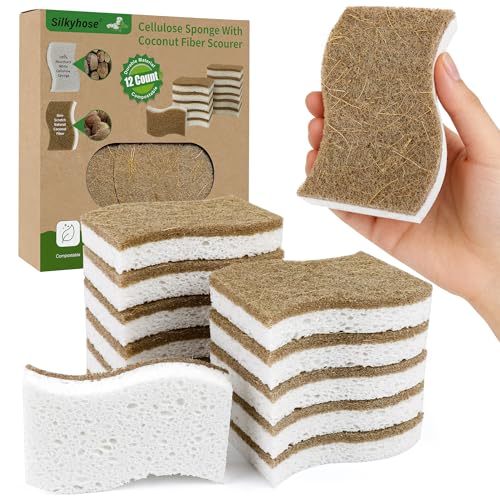
Best for households aiming to minimize plastic waste while maintaining effective dish cleaning. These sponges combine biodegradable white cellulose with coconut fiber scrubbing for versatile cleaning power. The plant-based composition supports an eco-friendly kitchen routine, and the porous structure helps the sponge dry between uses, reducing odor risks. The ergonomic S-shaped design improves grip, making scrubbing easier on pots, pans, and dishes. Use this option if you want a straightforward, compostable sponge that performs well on everyday messes without scratching delicate surfaces.
Caution: While durable for daily use, the natural fibers may wear faster with very heavy, burnt-on residue. Replace when the scrubber becomes flattened or discolored.
Isshah Plant-Based Kitchen Sponges

Best for shoppers seeking FSC-certified, PETA-approved eco sponges with natural fibers. Isshah sponges use wood cellulose on the core and sisal hemp fibers with coconut husk on the scrubbing layer, delivering solid cleaning power without scratching surfaces. They are designed for longevity, reducing the frequency of replacements. Ideal for busy households that want a durable, plant-based option for dishes, countertops, and bathroom cleaning as needed.
Limitation: The dual-fiber construction may feel stiffer to some users during initial use; allow a short break-in period to soften the scrub layer.
AIRNEX Natural Kitchen Sponges

Best for readers who want fast-drying, odor-resistant sponges with a non-scratch performance. AIRNEX sponges combine biodegradable cellulose with a coconut fiber scrubber, delivering effective grease removal on pots and pans without harming non-stick cookware. The breathable, plant-based materials help the sponge dry quickly, reducing lingering odors between uses. Choose this if you value a balance of cleaning power and quick-dry design.
Caution: The scrub layer is not as aggressive as heavy-duty commercial scrubs; for stubborn burnt-on residue, pre-soak or pair with a separate scrub pad.
LILAC 12 Pack Natural Cellulose Sponges

Best for households prioritizing compostable, non-scratch cleaning tools that are safe for delicate surfaces. LILAC sponges use 100% natural wood pulp cellulose, free from plastics and harsh chemicals. Their scratch-free design protects non-stick cookware, glass, ceramics, and fine china, while the porous cellulose structure provides strong absorbency and helps produce a rich lather with minimal soap. Ideal for everyday dishwashing and light cleaning in bathrooms and kitchens.
Limitation: Being completely natural, they may degrade faster with heavy usage; monitor for signs of wear and replace as needed.
AIDEA Sponges Non Scratch

Best for cooks needing a non-scratch option that still handles tough grime. AIDEA sponges pair white cellulose with sisal fiber, providing sturdy cleaning power while protecting delicate cookware, glass, and ceramics. The high-density sponge maintains rebound resilience after repeated use, making it suitable for everyday dishwashing, bowls, and more. Helpful for households where delicate surfaces are a priority and scratches must be avoided.
Caution: The combination of fibers may feel stiff for some users at first; wash and test on a small area before broad use.
Buying Guide: Practical Considerations For Organic Dish Sponges
What materials matter most?
Look for natural cellulose cores paired with plant fibers (such as coconut fiber, sisal hemp, or coconut husk). These materials are biodegradable, compostable, or recyclable and typically dry faster than synthetic sponges, reducing odor risk.
Non-scratch vs. scrubbing strength
Choose non-scratch sponges for non-stick cookware and glassware, or when cleaning delicate surfaces. If you deal with stubborn grease, opt for a sponge with a tougher scrub layer, but be mindful of potential surface scratching on sensitive items.
Drying time and odor control
Sponges with porous structures and breathable designs dry rapidly, helping to prevent mildew and odors. Quick-dry designs are especially helpful in humid kitchens.
Durability and replacement frequency
Longer-lasting plant-based sponges reduce replacement frequency. However, natural fibers may degrade faster under heavy use, so replace when signs of wear appear (flattened scrubbing layer, tearing, or persistent odor).
Certifications and ethics
FSC certification, PETA approval, and clear compostability claims reinforce environmental responsibility. If these factors are important, verify the sponge’s labeling and supplier claims before purchasing.
Practical usage tips
- Rinse after use and squeeze to remove excess water to speed drying.
- Store in a dry area away from standing water to extend life.
- Keep separate sponges for different tasks (dishes vs. bathroom) to minimize cross-contamination.
FAQs
- Are organic dish sponges truly compostable?
Many are designed to be compostable under industrial or home composting conditions, but always check the packaging for specific compostability claims and local disposal guidelines.
- Do natural sponges work as well as synthetic ones?
Yes, for most everyday cleaning tasks. Plant-based sponges are effective on grease and grime and are gentler on delicate surfaces when used correctly.
- How often should I replace natural sponges?
Replace when the sponge shows wear, persistent odor, or reduced cleaning performance. Generally, weekly to monthly replacement is common depending on usage.
- Can I machine-wash natural sponges?
Most natural sponges are not recommended for machine washing; hand rinse and air dry to extend life unless the manufacturer specifies otherwise.
- Are there any drawbacks to choosing natural sponges?
Natural fibers may degrade faster with heavy, burnt-on residue or harsh cleaners. Pre-soaking and pairing with appropriate cleaners helps mitigate this.
- Which sponge is best for non-stick cookware?
Non-scratch sponges with soft cellulose cores are best for non-stick surfaces, reducing the risk of scratches during routine cleaning.