As an Amazon Associate I earn from qualifying purchases. These links may earn this site a commission when you buy, at no extra cost to you.
Propane and other combustible gas leaks pose serious safety risks in homes, RVs, and workshops. The right propane leak detector helps you identify leaks quickly, triggers alarms, and guides you to the source. This guide reviews five reliable options designed to detect propane and related gases, highlighting their sensing range, alarms, and ease of use. Use the buying guide to compare pickup, sensitivity, and practical deployment to fit kitchens, basements, or garages.
| Product | Brand | Key Benefit |
|---|---|---|
| PT199 Natural Gas Leak Detector | TOPTES | Rapid 0.5s detection with visual and audible alarms |
| PT520A Natural Gas Detector | TOPTES | 17-inch gooseneck for hard-to-reach spots |
| Xalire Gas Leak Detector | Xalire | AC powered, 85dB alarm with real-time LED display |
| VITITE Gas Leak Detector | VITITE | Mini portable with carrying pouch and quick 0.5s response |
| PT205 Natural Gas Detector | TOPTES | %LEL detection with clear visual/audible alerts |
Choosing a propane leak detector involves considering sensor sensitivity, response time, form factor, power needs, and how the device fits your space. The selected models cover handheld, plug-in, and extended-reach designs to accommodate kitchens, basements, RVs, and storage areas. Below are five detailed product sections to help you compare performance, setup, and usability.
PT199 Natural Gas Leak Detector
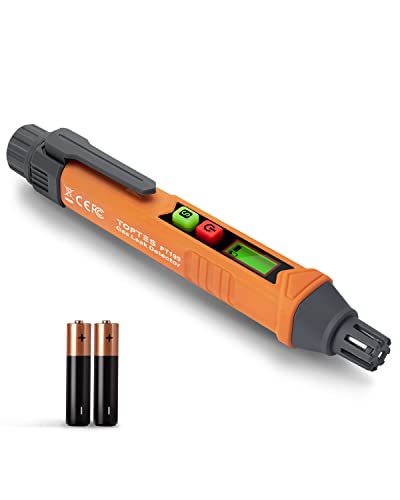
The PT199 detects natural gas, methane, propane, butane, LPG, and more, pinpointing leaks to reduce explosion risk. It provides both visual and audio alarms within 0.5 seconds of detection. An LCD screen turns red at high gas levels for immediate awareness. This model runs on two included AAA batteries, with a 30-second warm-up and a low-battery indicator. It auto-powers off after five minutes of inactivity. Compact and portable, it’s suitable for quick spot checks around stoves, meters, and storage cabinets in homes and RVs.
PT520A Natural Gas Detector

The PT520A offers a 17-inch gooseneck probe to reach tight spaces such as pipelines, storage rooms, and basements. It detects methane, propane, natural gas, LPG, and more, with a rapid 0.5-second response and a 75dB audible alarm accompanied by seven colored bars that rise with concentration. Detection range spans 50-10,000 ppm (Methane), and the device can locate gas sources at close distances (1-5 cm). Its extended reach is ideal for RVs, kitchens, and industrial settings requiring precise source tracing.
Xalire Gas Leak Detector

This plug-in detector covers home and RV needs, monitoring natural gas, propane, and other flammable gases. It detects multiple gases, including methane, LPG, LNG, butane, and sewer gas, making it a versatile safety tool for various environments. Real-time LED display shows gas concentration, and the 85dB alarm provides clear early warnings. The AC-powered design makes it a reliable, always-ready option for kitchens, garages, or utility rooms where continuous monitoring is advantageous.
VITITE Gas Leak Detector

The VITITE detector emphasizes a compact, pocket-sized design with a carry pouch for portability. It detects methane, natural gas, propane, butane, LPG, LNG, gasoline, and sewer gas with a quick 0.5-second response and an 85dB audible alarm. It’s powered by AAA batteries and includes a green button to adjust sensitivity, enabling detection of smaller leaks. This model suits everyday safety checks around outlets, kitchens, and vehicles where mobility is beneficial.
PT205 Natural Gas Detector

The PT205 expands detection to include a wide range of gases, with %LEL monitoring from 1%LEL to 10%LEL (100ppm-5,000ppm for methane). It offers rapid 0.5-second detection and combined visual and audible alarms. A red LCD display indicates high concentrations, supporting risk assessment and quick response. Like other TopTes models, it requires about a 30-second warm-up and uses two included batteries. This detector is well-suited for homes and RVs requiring detailed explosion-risk evaluation.
Buying Guide: Key Purchase Considerations
- Sensing capability: Look for detectors that identify propane, methane, natural gas, LPG, and related fuels. Some models also indicate LEL concentration or provide multi-gas detection for broader safety coverage.
- Response time and alarms: Fast response (0.5 seconds or faster) with audible (dB level) and visual alerts helps you locate leaks quickly. Consider models with LED displays or TFT screens for real-time concentration readings.
- Form factor and reach: Handheld units are convenient for quick checks; gooseneck or extended probes reach hard-to-access spaces, while plug-in detectors offer constant monitoring in kitchens and utility rooms.
- Power and battery life: Battery-powered devices are portable and disaster-ready, but plug-in devices provide continuous monitoring. Check warm-up time and auto-sleep features to maximize battery life.
- Durability and safety features: Look for rugged housings, flame-retardant materials, and clear indicators of level changes. Some models include sensitivity adjustments for detecting smaller leaks.
- Ease of use and maintenance: Simple operation, auto-calibration, and accessible replacement batteries improve reliability. A carrying pouch or clip adds convenience for RV or field use.
- Reuse and compatibility: If you need ongoing home safety coverage, consider devices with wide gas compatibility and the ability to monitor multiple spaces without frequent replacement.
When selecting a propane leak detector, balance sensitivity with practicality for your environment. For kitchens and living areas, a compact handheld detector with rapid alarms may suffice. For basements, garages, or RVs, a longer-reach gooseneck or plug-in option can provide more comprehensive coverage. Always follow manufacturer instructions for calibration, battery changes, and placement to maximize safety and effectiveness.