
Finding the right recycling bins for schools helps educators teach environmental responsibility while keeping classrooms, hallways, and cafeterias organized. This guide highlights durable, classroom-ready options and explains who they’re best for. It covers multiple waste streams, built-in features, and practical limits to help administrators choose equipment that fits space and budget needs.
Overview: Top picks for schools include widely stackable and durable bins for classrooms and common areas, color-coded options for easy sorting, and sets designed to maximize space in busy environments. The following table summarizes five recommended products to jump-start your planning.
| Product | Capacity | Best For | Key Benefit |
|---|---|---|---|
| Rubbermaid Commercial Products 18 GAL Stackable Recycling Bin | 18 gallons | Large classrooms, staff rooms | Post-consumer recycled resin; easy stacking |
| Rubbermaid Commercial Products 14 GAL Stackable Recycling Bin | 14 gallons | Smaller classrooms, hallways | Lightweight, space-efficient |
| Acrimet 4-Piece Wastebasket Set (4 Colors) | 6.75 gallons each | Multi-material sorting in offices, schools | Color-coded, universal recycling symbol |
| Recycle Stickers for Trash Bins (4 Pieces) | Depends on bin | Any indoor/outdoor bin | High-visibility labeling; weather-resistant |
| Sturdy Essentials 6 Gallon Stackable Bins | 6 gallons each | Compact classrooms, food service prep | Space-saving design; open-front access |
Rubbermaid 18 GAL Stackable Recycling Bin

Brand: Rubbermaid Commercial Products. Features include post-consumer recycled resin suitable for commercial recycling use, built-in handles for easier lifting, and a stack-and-nest design to boost productivity in busy spaces. Best for: Large classrooms, media centers, or staff lounges that require durable, reusable containers and easy space management. Limitation: Higher capacity may be bulkier in very small rooms; confirm doorway access before purchase.
Rubbermaid 14 GAL Stackable Recycling Bin

Brand: Rubbermaid Commercial Products. Features mirror the 18 GAL version: post-consumer recycled resin, built-in handles, and stack-friendly design. Best for: Medium-sized classrooms or offices that need a compact, durable recycling option. Limitation: Smaller capacity means more frequent emptying in high-traffic areas.
Acrimet 6.75 Gallon Four-Pack Recycling Bins

Brand: Acrimet. Includes four color-coded bins for Metal, Paper, Glass, and Plastic with universal recycling symbols. Best for: Classrooms or offices implementing multi-stream sorting; suitable for small to medium classrooms and common areas. Limitation: Plastic construction may show wear in high-traffic kitchens or art rooms without protective mats.
Recycle Stickers for Trash Bins (4 Pieces)
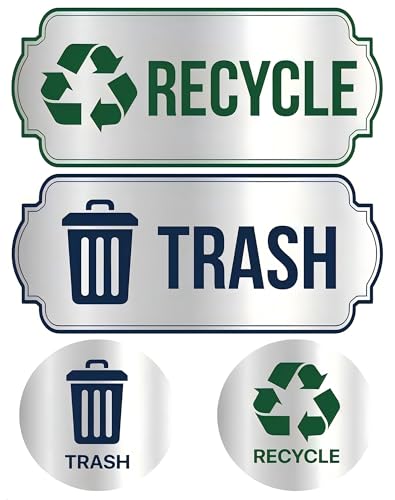
Brand: CLVJQ. Includes two recycle labels and two trash signs with high-visibility colors and universal symbols. Best for: Any indoor/outdoor bins used in schools, cafeterias, or maintenance areas. Limitation: Stickers may require reapplication in outdoor settings or after surface cleaning; choose weather-resistant options if outdoor use is frequent.
Recycling Rules 6 Gallon Stackable Bins (Pack of 4)

Brand: Recycling Rules. Four-pack with stackable and nestable design for space efficiency. Best for: Households, classrooms, and small offices implementing a simple single-stream or dual-stream system. Limitation: Offer focuses on basic labeling and stacking; may need additional color-coding for multi-stream sorting in larger school settings.
Buying Guide: Key Considerations For Schools
Durability and safety matter most in school environments. Look for smooth edges, food-grade or classroom-safe materials, and a design that minimizes injuries during quick trash disposal. Consider bin weight, ease of cleaning, and whether the lid is needed to control odors in lunchrooms or science labs.
What capacity fits your space?
Smaller classrooms benefit from 6–14 gallon bins, while larger rooms or common areas can use 18 gallon or multi-bin sets. For multi-stream sorting, sets with color coding help students distinguish recycling from trash quickly.
Are stackable designs essential?
Stackable bins save space in crowded areas like hallways and supply closets. If you have limited storage, choose bins that nest when not in use and stack securely when full.
Is labeling critical for student understanding?
Clear symbols and color-coding reduce sorting errors. Add universal recycling symbols and bold colors to support quick decisions, especially for younger students.
What about budget and maintenance?
Durable materials, post-consumer recycled resins, and simple liners reduce long-term costs. Consider easy-clean surfaces and compatible liners to speed up daily routines for custodians and teachers.
Indoor vs. outdoor use
Outdoor bins should be weather-resistant and UV-stable. For indoor spaces, ease of cleaning and compact fits are often the priority.
Safety and accessibility
Bins with built-in handles reduce strain during emptying. Open-front designs allow quick disposal in classrooms and cafeteria lines, helping maintain smooth flow during peak times.
Maintenance tips
- Empty and clean bins regularly to prevent odors and pests in cafeterias and kitchens.
- Use liners appropriate to the bin size to avoid overflow and spills.
- Label bins at student eye level to reinforce sorting habits.
FAQ
- What capacity is best for a typical classroom? A: 6–14 gallons covers desks and small groups without dominating the room.
- Should I choose a set or single bins? A: Sets support multi-stream sorting and save space, which is helpful in schools.
- Are color-coded bins necessary? A: They simplify sorting for students and staff, particularly in high-traffic areas.
- How can I prevent bin odors? A: Use lids in lunchrooms and keep liners fresh; clean bins regularly.
- What features are most important for teachers? A: Durable material, easy-to-clean surfaces, and accessible handles.
- Do outdoor bins require special materials? A: Yes, look for UV resistance and weatherproof construction for outdoor classrooms or courtyards.