
Rust buildup inside gas tanks can impair fuel flow and engine performance. This guide highlights five dependable rust removers suited for automotive tanks and metal parts, with clear guidance on who each product is best for. Solutions range from water-based, non-toxic formulas to heavy-duty rust removers. Use these options to prepare metal surfaces before sealing or coating to prevent future corrosion. The table below compares core suitability to help you choose quickly.
| Product | Best For | Notes |
|---|---|---|
| Evapo-Rust ER012 Heavy Duty | General rust removal on auto parts and household items | Non-toxic, water-based, no scrubbing |
| CRC Evapo-Rust (32 oz) | Smaller rusted components and tools | Reusable, acid-free, non-corrosive |
| Evapo-Rust Original Heavy Duty (5 Gallons) | Bulk rust removal for larger parts | Water-based, non-toxic |
| POR-15 Rust Remover (32 oz) | Delicate metals, quick rust dissolution | Fast-acting, reusable, biodegradable |
| WD-40 Specialist Rust Remover Soak (1 gal) | Heavy rust on older parts | Biodegradable, avoids acids |
The five selections above emphasize rust removal compatibility with gas tanks and metal components, while balancing ease-of-use and environmental considerations. The following sections provide detailed product insights to help you decide which rust remover best fits your project, from small parts to bulk tank cleaning tasks.
Evapo-Rust ER012 Heavy Duty – 128 oz.

Best for: Home garages and hobby shops handling mixed metal parts, including auto components and household items. This non-toxic, water-based rust remover works without scrubbing and is easy to use on automotive parts, tools, and antiques. It is non-corrosive and free of acids, odors, solvents, or fumes, making it suitable for indoor use when your gas tank or nearby metal pieces show surface rust. When cleaning gas tank components, it’s ideal for treating rusted intake or fuel-system hardware before final sealing or coating.
Why chosen: Its balance of safety and effectiveness supports quick rust removal without aggressive solvents. It is especially helpful for hobbyist repairs where odor control matters and where you want to minimize surface damage during rust removal. Caution: Ensure parts are compatible with a water-based solution and rinse thoroughly before sealing.
CRC Evapo-Rust, 32 oz

Best for: Small to medium rusted parts such as fuel line fittings, clamps, and components removed from a gas tank during refurbishment. This reusable, acid-free rust remover provides non-corrosive rust removal suitable for delicate parts. It can help de-rust metal surfaces without introducing harsh chemicals that could affect adjacent non-rusted areas.
Why chosen: The reusable aspect reduces waste over time, and its safe chemistry supports frequent use in a home workshop. Limitation: The 32 oz size is best for smaller jobs; large tank projects may require additional quantities.
Evapo-Rust The Original Heavy Duty – 5 Gallons

Best for: Projects involving larger gas tank components or multiple parts, where bulk rust removal is required. The original heavy-duty solution is non-toxic and water-based, enabling prolonged immersion without harsh fumes. It’s ideal when you need to treat several fuel-system parts or large metal surfaces before sealing or repainting.
Why chosen: The 5-gallon size provides substantial coverage and long-term usage for repeat projects. Caution: Properly cover and ventilate your work area; although non-toxic, it is a chemical treatment that should follow usage guidelines for immersion and rinsing.
POR-15 Rust Remover – 32 Fluid Ounces
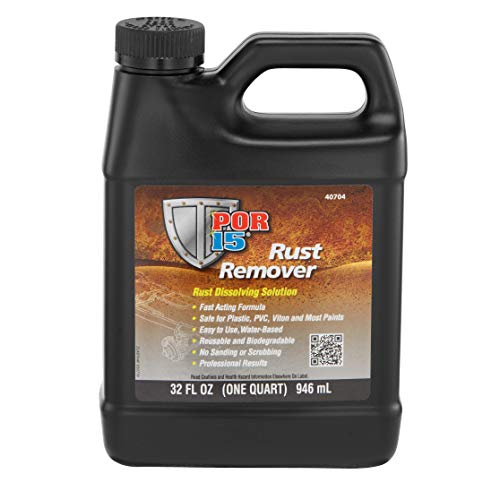
Best for: Surfaces where fast rust dissolution is needed with minimal scrubbing, including gas tank components that may be challenging to scrub. POR-15 Rust Remover is water-based, reusable, and biodegradable, and it won’t damage most plastics or paints. It works effectively on light to heavy rust when submerged or fully immersed.
Why chosen: It offers a rapid rust removal option with chemical formulation designed to minimize mechanical effort. Limitation: For best results, rusted areas must be adequately submerged to allow full dissolution.
WD-40 Specialist Rust Remover Soak – 1 Gallon

Best for: Heavy rust on older or larger metal parts, including gas tank hardware that benefits from an extended soak. This soak uses biodegradable ingredients to dissolve rust and restore metal appearance without acids or caustic chemicals. It is designed for industrial-strength rust removal with minimal effort.
Why chosen: The soak approach suits bulky items or deeply rusted sections where surface cleaning isn’t enough. Caution: Soak duration may vary by rust depth; follow product guidance for immersion times and complete rinse before reuse or sealing.
Buying Guide: Rust Removal For Gas Tanks And Metal Parts
What should I consider before buying?
Rust removers vary in aggressiveness, safety, and compatibility. For gas tanks, choose a product that is non-corrosive and safe for metals that contact fuel, plastics, or coatings. Water-based formulas reduce fumes and are easier to handle indoors. Consider whether you need a one-time treatment or a reusable solution for multiple parts.
Is immersion or surface application better?
Immersion works well for larger rusted sections or complete parts, especially with bulky tanks. Surface application and soaking are better for small components and delicate hardware. For tanks, immersion often provides more uniform rust removal prior to sealing.
Safety and handling
Even non-toxic rust removers require ventilation and protective gear. Read the label for contact with fuel systems, plastics, and coatings. Rinse thoroughly after treatment and allow parts to dry before applying sealants or paints.
Compatibility with coatings and seals
After rust removal, ensure parts are fully dry and compatible with your chosen sealant or coating. Some rust removers may leave residues that interfere with bonding. If you plan to reseal a gas tank, follow the manufacturer’s guidance on cleaning and prepping surfaces.
Frequently Asked Questions
- What is the safest rust remover for gas tanks? Look for water-based, non-acidic formulas that are labeled as non-toxic and non-corrosive. These reduce fumes and are easier to handle indoors.
- Can I use rust remover on a fuel tank without removing it? Removal from tanks often requires disassembly. Use products suitable for immersion when tank parts can be fully immersed or soak components separately as directed.
- Do rust removers prevent future rust? Many products are followed by sealants or coatings designed to inhibit corrosion. Always apply a compatible protective coating after drying.
- How long should rust remover sit on metal? Time varies by product and rust severity. Follow label directions; some rust may require 20 minutes, while others require longer immersion for deeper rust.
- Are there consumer alternatives to professional tank cleaning? Yes. Water-based rust removers from reputable brands offer home-use options that are effective for small to medium projects and can be safer for DIY enthusiasts.
All products listed are chosen for practical rust removal within gas tank contexts, balancing safety, effectiveness, and ease of use. For best results, combine rust removal with proper cleaning, drying, and sealing steps tailored to your vehicle’s fuel system.