As an Amazon Associate I earn from qualifying purchases. These links may earn this site a commission when you buy, at no extra cost to you.
Looking for safe, kid-friendly scissors for arts and crafts? This guide highlights top picks that are designed for small hands and developing motor skills. Each option emphasizes blunt tips, durable blades, and easy handling to reduce accidents during cutting practice. Best for preschoolers and early elementary students who are learning to cut with confidence. This list compares suitability for classrooms, homeschooling, and single-child use.
Summary of chosen products:
- Crayola Toddler Safety Scissors (3pk) – ideal for toddlers and classrooms, multiple blade styles
- LOVESTOWN Toddler Safety Scissors (4 pcs) – color-coded, metal-free option for early learners
- Fiskars Training Scissors for Preschoolers – built for guided training with a lever and spring
- Channie’s Safety Scissors for Small Hands (2 pack) – age-appropriate grip and blunt tips
- Westcott 5″ Hard Handle Kids Scissors (2-pack) – durable, ambidextrous use
Crayola Toddler Safety Scissors: 3pk For Toddlers

Best for: Parents and teachers introducing paper cutting to toddlers in preschool or early learning centers. The set includes straight, wavy, and zigzag blades, allowing varied textures for art projects. Plastic blades and rounded tips reduce finger injuries, making it a safer first step for little artists.
Why selected: A trusted brand offering a versatile 3-pack with multiple cutting styles in a single purchase. The blunt design supports safe practice while still enabling creative expression. Ideal for classrooms with several children or at-home art stations.
Caution: Plastic blades are designed for soft materials; avoid using these on thick cardboard or heavy-duty projects.
LOVESTOWN Toddler Safety Scissors: 4 Pack

Best for: Small-group activities in classrooms or at-home centers where color-coded tools help kids identify their own supplies. The four colors support independent practice and organization.
Why selected: These dual-color units are metal-free with ABS blades and rounded tips, supporting safe cutting of paper and even playdough. The design minimizes risk of injury and helps reduce sharing concerns during group crafts.
Caution: ABS blades are optimized for light cutting; avoid heavy materials or thick stacks to prevent jamming or dulling.
Westcott 5″ Hard Handle Kids Scissors: 2-Pack

Best for: Bright, durable scissors that can survive daily classroom use and homeschooling sessions. The set offers ambidextrous handling through molded, symmetrical grips.
Why selected: Extra-strong stainless steel blades with rounded tips support reliable cutting through paper and simple craft materials. The ambidextrous design makes them suitable for both left- and right-handed kids.
Caution: Not designed for heavy-duty materials beyond standard scrapbook paper and light craft supplies.
Channie’s Safety Scissors For Small Hands
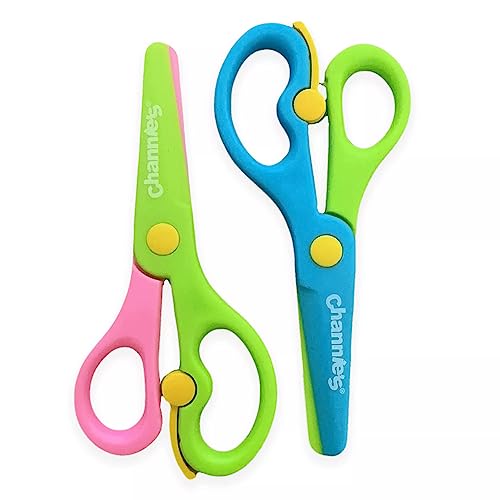
Best for: Preschoolers ages 3-5 who need a comfortable grip and built-in safety features to practice confident cutting. The small handles fit little hands well and support precise movement.
Why selected: Specifically designed for early learners with blunt tips and sturdy plastic construction, aiding hand-eye coordination. Durable enough for repeated use in classroom crafts and at-home projects.
Caution: Made primarily of plastic; may wear with heavy use or cutting thicker materials beyond paper and thin cardboard.
LIVINGO 5″ Small School Scissors
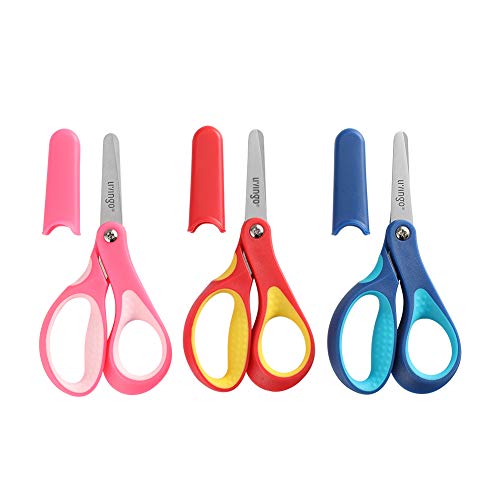
Best for: Active classrooms or homeschooling setups where multiple children share a set of scissors. The 3-pack offers a practical balance of cost and utility.
Why selected: Features blunt blades with a protective cover and stainless steel construction for durability. Suitable for cutting paper, foam sheets, and light poster board.
Caution: Blunt blades require careful handling during aggressive cutting to avoid fraying or resistance in thicker materials.
Buying Guide: Key Purchase Considerations
What should you look for in safety scissors for kids?
- Age appropriateness: Choose blunt tips for younger children and gradually introduce sharper safety features as skills improve.
- Blades and material: Plastic blades are safer for toddlers; stainless steel blades offer longer life for older kids. Look for anti-rust coatings for classroom use.
- Grip design: Ambidextrous and cushioned handles reduce fatigue and improve control.
- Storage and safety: A protective cover or sheath helps keep blades protected between uses.
- Use case: Classrooms usually benefit from color-coded sets and multiple blade styles; home kits may prioritize compact sizing and color variety.
- Durability versus cost: Higher durability reduces replacement frequency in busy learning environments.
FAQ
- What age should kids start using safety scissors?
Typically around age 3-5, depending on dexterity and supervision. - Are blunt-tip scissors safer for beginners?
Yes, blunt tips reduce the risk of poking or poking; they’re best for early practice. - Should I choose plastic or stainless steel blades?
Plastic blades are safer for very young children; stainless steel lasts longer for older kids. - Do left-handed children need special scissors?
Ambidextrous or left-handed designs help ensure comfortable use for all kids. - How many scissors should be in a classroom kit?
One per child is ideal, with a few extras for shared crafts and replacements. - Can safety scissors cut through cardboard?
Most basic safety scissors cut paper and light cardboard; heavier materials may require sturdier tools.