As an Amazon Associate I earn from qualifying purchases. These links may earn this site a commission when you buy, at no extra cost to you.
Direct answer: If you need compact, reliable dust collection for woodworking, this guide highlights five small, practical options that fit tight spaces, connect to common tools, and keep your shop cleaner. These picks are best for hobbyists with limited floor space, small shops, and those wanting easy portability or wall-mount options. Below, you’ll find quick-fit summaries and a Buying Guide to help you compare performance, setup, and maintenance considerations.
| Product | Best For | Key Benefit |
|---|---|---|
| WEN DC1300 | Medium setups with two tools | High airflow and dual inlets |
| DEWALT DXVCS002 | Pro-style separation with portability | Efficient cyclone pre-separator |
| WEN DC3401 | Small workshops with mobility | 12-Gallon bag, compact base |
| WEN DC3474 | Wall-mount flexibility | 7.4-Amp induction motor, wall-ready |
| VEVOR 560 CFM | Budget-friendly, versatile | 2.5-micron filtration and large bag |
WEN DC1300 1,300 CFM Dust Collector

The WEN DC1300 is a powerful, compact option suitable for shops that need real air movement with robust dust collection. It circulates up to 1,300 CFM and includes dual 4-inch inlets to support two tools at once. A 50-gallon vertical collection bag minimizes frequent emptying and supports longer run times between dumps. Best for: hobbyists or small shops running two tools concurrently, who want strong airflow without taking up a lot of floor space. Caution: heavier unit; plan for secure placement and mobility needs in tight spaces.
DEWALT Dust Separator with 6 Gallon Tank

This DEWALT unit acts as a high-efficiency cyclone pre-separator. It captures wood chips and debris before they reach your vacuum, reducing filter clogs and maintenance costs. It suits workshops that use handheld vacuums or fixed vac systems and want to cut suction loss from clogged filters. Best for: users prioritizing cleaner vac filters and lower ongoing costs. Limitation: 6-gallon tank means more frequent emptying in dusty sessions.
WEN Woodworking Dust Collector DC3401
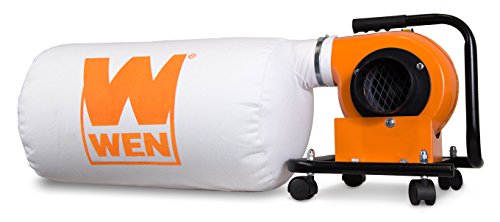
The DC3401 provides a compact 12-gallon bag with a mobile base. It delivers up to 660 CFM from a 5.7-amp motor, connecting via a 4-inch dust port. It’s a practical choice for small shops needing a portable, easy-to-store unit with straightforward setup. Best for: single-tool workflows or tiny shops seeking mobility without sacrificing basic suction. Caution: less power than larger WEN models; might struggle with multiple simultaneous tools.
WEN DC3474 7.4-Amp Dust Collector

The DC3474 uses a 7.4-amp induction motor and a 9-inch impeller to move up to 600 CFM. A 4-inch dust port expands compatibility with common woodworking tools, and an optional wall-mount option helps reclaim floor space. Best for: garages or small shops needing a wall-mount-ready, more durable option that maintains adequate suction. Caution: wall mounting requires secure mounting hardware and proper spacing for service access.
VEVOR Dust Collector, 1 HP

The VEVOR unit offers 560 CFM suction with a 2.5-micron bag for fine filtration. It ships with a large 21-gallon bag, making it suitable for medium-duty projects. Best for: budget-conscious buyers needing steady performance and finer filtration for dust control. Caution: while cost-effective, it may not match higher-end brands in long-term filter life or stability during heavy use.
Buying Guide: How To Choose A Small Woodworking Dust Collector
- Airflow needs: Determine your typical tool lineup and total CFM you require. Higher CFM is better for multiple tools or larger shavings, while smaller shops can manage with lower CFM if usage is occasional.
- Portability vs. fixed installation: If space is limited, consider mobile bases or wall-mount options. For more permanent setups, a stationary model with wheels can still offer flexibility.
- Filtration level: Micro or 2.5-micron filtration helps capture finer dust, improving air quality and reducing respiratory irritation. Balance with bag capacity for fewer dumps.
- Maintenance and emptying: Larger collection bags mean fewer interruptions but take more floor space. Pre-separators and cyclone options can extend filter life and maintain suction.
- Tool compatibility: Look for standard 4-inch ports and flexible hoses to connect to common woodworking tools and shop vacs. Consider included hoses and adaptors.
- Space and safety: Wall-mounted or ceiling-mounted options save floor space but require secure mounting and safe clearances around electrical outlets and outlets for dust collection lines.
FAQ
- What size dust collector is best for a small woodshop?
For a small shop, a unit offering 600–1,300 CFM with a 4-inch port often provides a good balance of suction, portability, and space efficiency.
- Is a cyclone separator worth it for a small shop?
Yes, cyclone pre-separators reduce filter loading and maintenance by diverting debris away from the main unit, which helps sustain suction and extend filter life.
- Should I prefer mobile or wall-mount dust collectors?
Choose mobile models for flexibility in a multi-tool setup; choose wall-mount for tight spaces and a tidier shop layout.
- Do I need micron filtration in a small dust collector?
2.5–5 micron filtration is beneficial for reducing fine wood dust in the air, which improves air quality and reduces respiratory exposure.
- How often should I empty the collection bag?
Empty as needed based on fill level and debris type; larger bags reduce frequency but require more space and more effort to dispose of dust.
- Can these units handle drywall or concrete dust?
Most small woodworking dust collectors are designed for wood dust; check each model’s filtration and port compatibility before broad use with other materials.