As an Amazon Associate I earn from qualifying purchases. These links may earn this site a commission when you buy, at no extra cost to you.
Looking for a spray cleaner that effectively cleans air conditioner coils? This guide highlights five strong options, suitable for homeowners, DIY enthusiasts, and HVAC pros. Each product targets dirt, grease, and mineral buildup on evaporator and condenser coils, helping restore efficiency and improve indoor air quality. The top picks are chosen for performance, ease of use, and availability in spray-foam formats that minimize rinsing.
| Product | Brand | Key Benefit | Best For |
|---|---|---|---|
| Frost King ACF19 Foam Coil Cleaner | Frost King | Heavy-duty foam that dissolves stains, loosens dirt, and neutralizes odors | Homeowners and DIYers with mixed coil types |
| Arm & Hammer Biodegradable HVAC Coil Cleaner Foam (AHCC-19) | Arm & Hammer | Self-expanding, biodegradable formula that cleans coils and improves air quality | Eco-conscious buyers and regular maintenance |
| Simple Green Foaming Coil Cleaner 20oz Aerosol | Simple Green | Self-rinsing on condensate-producing coils; NSF registered | Food-processing areas and professional settings |
| PURAFILTER 2000 Coil Cleaner Foaming Spray | Purafilter | Professional-grade cleaner with strong foaming action to lift heavy soils | Commercial or frequent maintenance |
| BERIOVE Foaming AC Coil Cleaner, 19oz | BERIOVE | High-efficiency foam with no-rinse design for evaporators | Quick maintenance and DIY use |
Note: Each product supports coil cleaning for evaporators and/or condensers and is designed to improve heat transfer, reduce energy waste, and remove odors. The following sections describe five selected options in detail to help you choose the best fit for your setup.
Frost King ACF19 Foam Coil Cleaner
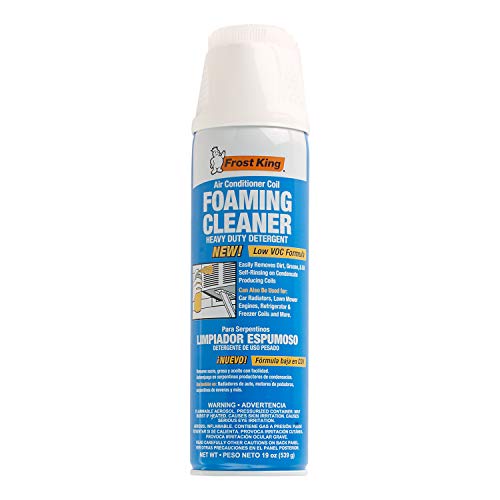
Frost King ACF19 is a heavy-duty foam cleaner that dissolves stains, removes grease and oil, and loosens dirt. It can clean coils, fan blades, and reusable air filters, while also neutralizing odors from standing water in drain pans. Best for: homeowners cleaning a mixture of evaporator and condenser coils in residential systems. Limitation: foam cleaning may require a light rinse on certain coil surfaces or components with persistent grime.
Arm & Hammer Biodegradable HVAC Coil Cleaner Foam Aerosol Spray (AHCC-19)

This biodegradable, self-expanding foam spray is designed to clean coils and extend the life of HVAC units. It emphasizes odor-neutralizing power and improved indoor air quality. Best for: eco-conscious buyers and regular maintenance in homes or small commercial spaces. Limitation: no-rinse claims may vary with evaporators in high-heat conditions; verify with your unit’s drain system.
Foam Blaster AC Coil Cleaner by Leak Saver (No Rinse)

Leak Saver’s Foam Blaster uses high-pressure spray to penetrate deep into coils and expand into a dirt-dissolving foam. It deodorizes and cleans evaporators (no rinse) and condensers (light rinse). Best for: HVAC professionals or DIYers who want effective, fast-acting cleaning with minimal rinsing. Limitation: evaporator use requires condensate rinsing to ensure debris removal in heavy grime scenarios.
Simple Green Foaming Coil Cleaner 20oz (Pack of 3)

Simple Green offers a professional-strength, self-rinsing formula for condensate-producing coils, helping to keep equipment at optimum performance. It also carries NSF registrations for use in facilities with food processing considerations. Best for: facilities requiring a non-fragranced, no-rinse option and professional environments. Limitation: fragrance in some variants may be milder; ensure compatibility with your unit’s materials.
Leak Saver Foam Blaster AC Coil Cleaner 3-Pack

This three-pack variant from Leak Saver provides the same high-pressure foam action for penetrative cleaning of evaporators and condensers. Best for: professional or multi-unit maintenance projects where multiple coils require simultaneous cleaning. Limitation: no-rinse option requires careful application to avoid moisture-related issues in sensitive spaces.
Buying Guide: Key Considerations for Coils and Cleaning
- Coil Type and Location: Evaporators vs. condensers may require different rinsing approaches. No-rinse formulas suit evaporators, while condensers often benefit from light rinsing.
- Foam Action vs. Liquid: Foaming cleaners penetrate deeper into coils, while liquids may be easier to rinse in some setups. Choose based on access and disposal options.
- Biodegradability and Odor Control: Biodegradable options can be preferable for indoor environments; odor-neutralizing formulas improve indoor air quality.
- Rinse Requirements: Some no-rinse formulas are designed for quick maintenance; others caution about rinsing in certain configurations. Consider your drain pan and condensate system.
- Compatibility and NSF/Regulatory Needs: For food-processing or clean-room environments, verify any NSF registrations and material compatibility with coils, fans, and filters.
- Application Method: Aerosol foams, dense sprays, and bulk foaming cleaners require different application tools. Ensure you have appropriate applicators and PPE.
Frequently Asked Questions
- What is the best spray cleaner for home use on AC coils?
– For home use, Frost King ACF19 or BERIOVE Foaming AC Coil Cleaner offer strong foaming action with no-rinse options on evaporators, making them convenient for DIY maintenance. - Do no-rinse coil cleaners work on condensers too?
– No-rinse formulas are primarily designed for evaporators. Condensers may require light rinsing to remove loosened dirt and product residue. - Are biodegradable coil cleaners better for indoor air quality?
– Biodegradable formulas can reduce chemical exposure and are often paired with odor-control benefits, which can improve indoor air quality in occupied spaces. - Can I use these cleaners on all coil materials?
– Most cleaners are designed for common metals used in AC coils, but always check the product’s material compatibility and follow manufacturer guidelines. - Is a professional HVAC cleaner necessary for large systems?
– For multi-unit or commercial-scale systems, using professional-grade foaming cleaners with appropriate equipment can improve cleaning efficiency and safety. - How often should coils be cleaned?
– Cleaning frequency depends on usage, environment, and maintenance schedules; high-dust or high-humidity areas may require more frequent cleaning.