As an Amazon Associate, this site earns from qualifying purchases. This guide includes affiliate purchase links; recommendations reflect documented features and their limits.
The most useful microfiber cloth is the one you can assign to a job, keep clean and replace with a fresh cloth before you carry dirt somewhere else. For everyday home tasks, we would start with a general cleaning cloth and add a separate glass cloth only when mirrors and windows are a regular frustration.
These three choices solve different purchasing problems: stocking several rooms, trying a single cloth, or keeping a dedicated finishing supply. This is a comparison of documented formats and care requirements, not a cleaning-power contest or a claim that we tested them in our own homes.
Choose by the job you keep repeating
Think about yesterday's cleanup rather than every possible mess a seller lists. Crumbs beside the toaster, fingerprints on a refrigerator and a bathroom mirror need different handling even if a cloth could physically touch all three.
For most households, spare cloths matter more than an impressive fiber claim. You need somewhere for clean cloths, somewhere for used cloths and a way to tell a bathroom cloth from a kitchen one.
Buy a smaller pack when you are still working out whether microfiber fits your laundry routine. Buy a larger pack when the actual problem is running out of fresh cloths halfway through cleaning.
| Exact choice | Documented format | Choose it when | Main compromise |
|---|---|---|---|
| MR.SIGA SJ21580 | 24 square cloths; 12.6 in; four colors | You want several separate assignments | Storage and laundering volume |
| E-Cloth General Purpose | Green single cloth; 12.5 in square family size | You want to start with one general cloth | You need extra cloths for separate zones |
| MR.SIGA SJ21615 | 12 glass cloths; 13.7 × 15.7 in | You want a dedicated polishing stage | Specialist supply rather than spill stock |
MR.SIGA SJ21580: for a practical room-by-room supply
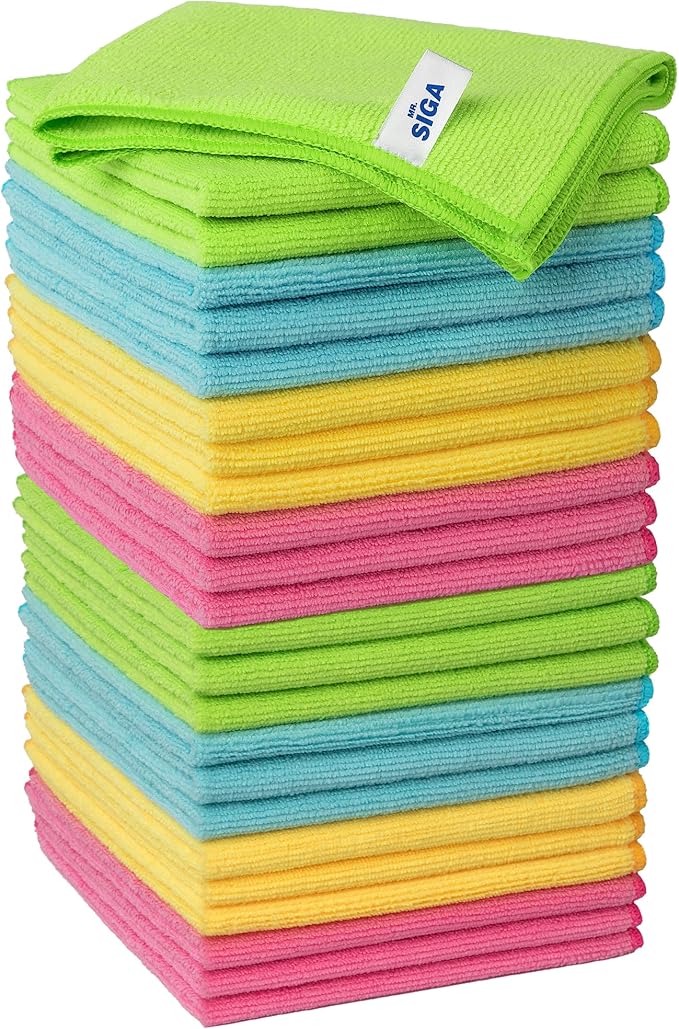
The 24-pack makes sense when you want to stop borrowing the same damp cloth from room to room. The manufacturer identifies four colors and a 12.6-inch square format, which gives you a simple way to create assignments without buying several unrelated packs.
One possible system is kitchen surfaces, bathroom surfaces, general dusting and a spare category for jobs that leave visible dirt. The exact colors do not matter; a small note inside the cleaning cupboard matters more than everyone guessing what pink means.
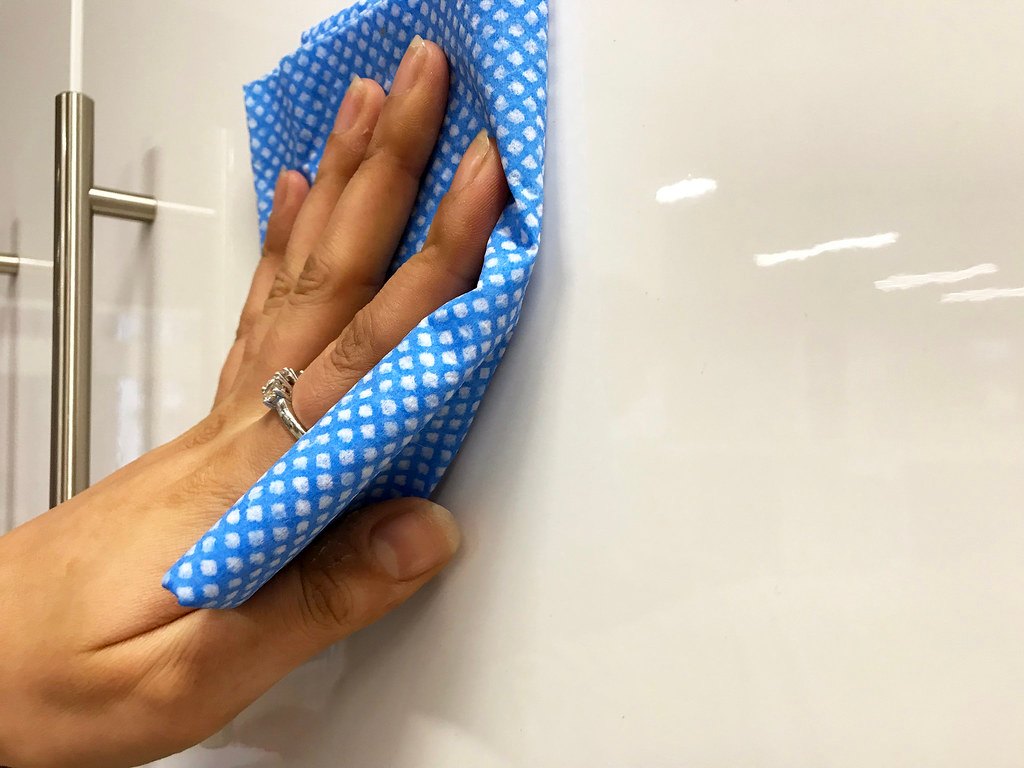
A square cloth is easy to fold into a smaller pad, so you can turn to another face while wiping a cupboard front. That does not make eight clean rooms out of one cloth, because dirt and liquid can move through the fabric.
Skip this pack if you barely have space to dry two cloths or if a large supply encourages you to leave dirty ones in a heap. Twenty-four neglected cloths are not an improvement over a few that get washed and dried promptly.
E-Cloth General Purpose: for starting with a single cloth

A single General Purpose Cloth is a sensible entry point if you are replacing a worn cloth or trying a more organized wiping routine. The linked green one-pack belongs to E-Cloth's General Purpose family; the manufacturer's page may show a different default color.
E-Cloth documents the family at 12.5 inches square and supplies specific care instructions. That is useful when you want to know what to do after cleaning, rather than guessing that every microfiber cloth accepts the same wash.
We would buy this for one clearly defined role, such as wiping suitable cabinet fronts or a bathroom vanity, and keep a separate cloth for another zone. If you need to clean three rooms today, the small package is a limitation rather than a sign of premium performance.
Do not choose it because you expect water and a cloth to handle every stain, disinfect a surface or replace every product label. Follow the surface maker's directions and use the cleaning or disinfection method the particular job requires.
MR.SIGA SJ21615: for a separate glass finishing step

The Ultra Fine 12-pack is the specialist option here: MR.SIGA describes it for glass and polishing, with a larger rectangular format. It is a better fit for someone who wants a recognizably different cloth beside the mirror than for someone looking only for general spill rags.
Give one clean cloth the job of finishing already-clean glass rather than dragging a kitchen cloth across the mirror. Keeping that role separate helps you avoid carrying grease or cleaner residue from an earlier task into the final wipe.
The larger shape can cover your hand comfortably, but it also needs folding when you work around faucets or small panes. Twelve glass cloths may be unnecessary in a small apartment with only one mirror to maintain.
Skip this pack as your only cleaning supply if most of your work is messy counters and spills. The manufacturer does not provide a standardized head-to-head absorption result against the other two choices, so there is no basis here to claim that one holds more liquid.
A folding plan is useful only while the cloth stays suitable
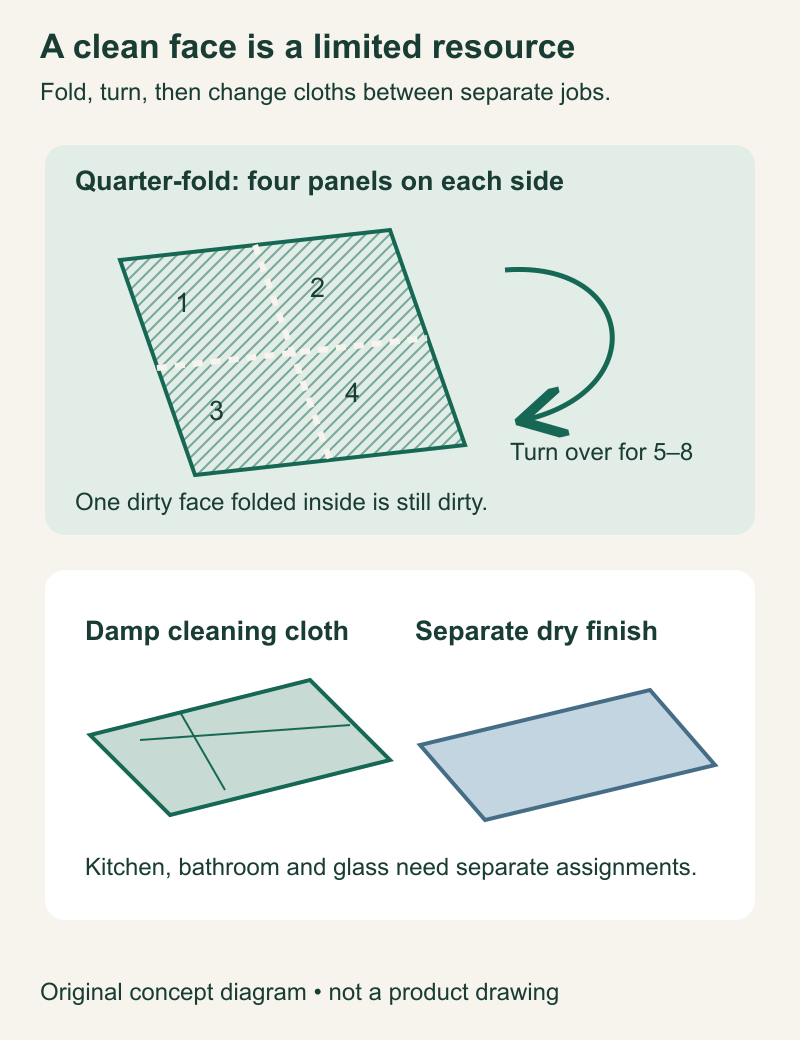
Lay the cloth flat, fold it in half and fold it again to make a hand-sized pad. Turning and unfolding can expose another face, which makes it easier to see where you have already worked.
Stop using that cloth when it becomes gritty, heavily soiled or wrong for the next area. A clean-looking fold is not proof that the whole cloth is clean, and a cloth used around the toilet should not move on to the kitchen.
Check the surface and the laundry before you stock up
A cloth can collect abrasive particles even when its fibers feel soft. Remove loose debris as the surface instructions allow, inspect the cloth and test an inconspicuous area when the material or finish is unfamiliar.
Do not assume a household cloth is suitable for a camera lens, coated display, specialty stone or a finish that specifies its own cleaning method. The item's instructions take priority over a broad list of suggested uses on a cloth page.
Read each package's care label and keep it with your laundry notes. E-Cloth's listed washing guidance applies to that cloth family; it should not silently become the wash recipe for every item in your cupboard.
Drying space deserves a place in the decision, too. A pack is easier to live with when used cloths can dry separately before laundering and fresh ones stay protected from splashes beside the sink.
When none of these is the right purchase
Keep the cloths you already own if they still suit the surface and you can maintain them properly. A new bundle will not fix a recurring smear caused by using too much cleaner, wiping with a soiled cloth or finishing while the surface is still dirty.
For a small home, the single E-Cloth is the cautious start; for a busy rotation, the MR.SIGA 24-pack is the practical format choice. Add the Ultra Fine glass pack when a separate polishing supply solves a real problem, rather than because a bigger collection looks like a better cleaning system.
Build a supply around your wash day
Count the distinct jobs between laundry days before choosing a pack size. If you clean the kitchen most evenings and the bathroom once during the week, a single multipurpose cloth still needs a sensible rotation rather than one assignment that constantly changes.
You can make that rotation visible with two small containers labeled clean and used. Keep the used container in an appropriate utility area, and let the household know that a cloth returned there is waiting for care rather than ready for the next wipe.
For glass, start by solving the process with one separate clean finishing cloth you already own. If that arrangement makes the job easier but you keep running out of suitable cloths, a dedicated glass pack has a clearer reason to exist in your cupboard.
When replacing an old supply, change only enough to learn what works with your grip, surfaces and laundry habits. A small deliberate purchase leaves room to adjust, while a large mixed drawer can make the original problem harder to identify.
Labeling the storage spot makes the routine easier to share, especially when several people handle household chores in different rooms.
Sources and scope
- MR.SIGA SJ21580 product specifications — 24 count, 12.6 inch square, colors, composition
- E-Cloth General Purpose family and care — Family dimensions and care; manufacturer default color differs from linked green variant
- MR.SIGA SJ21615 glass cloth specifications — 12 count, rectangular dimensions, stated glass/polishing role
- Amazon US exact package identity — Exact listing title and selected package
- Amazon US exact package identity — Exact listing title and selected package
- Amazon US exact package identity — Exact listing title and selected package
Research-based editorial comparison. No ownership, laboratory testing or hands-on experience is implied.