Confirm what the wood look represents
A wood-pattern floor beside the kitchen can look much like the boards in another room while requiring different care. Before choosing a cleaner, identify whether the installed product is luxury vinyl plank and obtain its actual manufacturer’s care information.
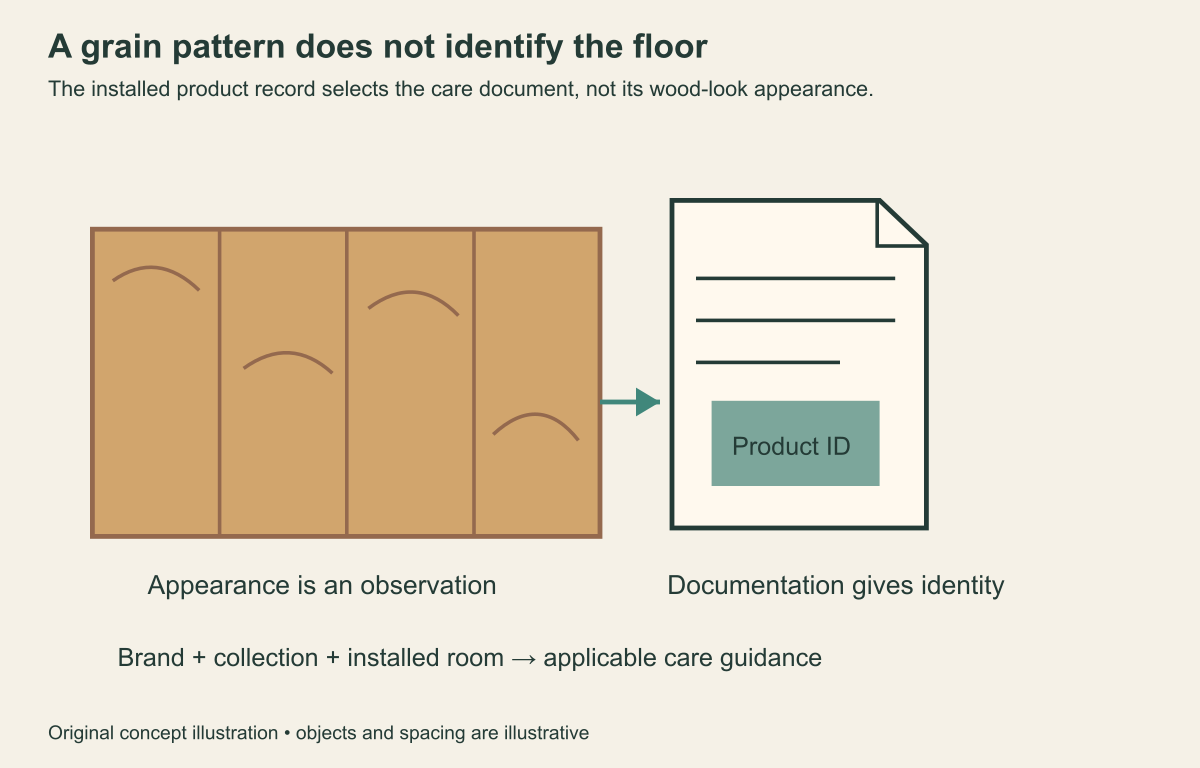
Use the installation record, leftover labeled material, or installer’s documentation rather than the photograph on a product bottle. The appearance of a grain pattern does not establish the floor’s construction, finish, or permitted cleaning method.
When you find a box label, save the collection and product identifier with the room name rather than only photographing its decorative color name. Two rooms can share a similar oak appearance while their installation records point to different products and different care documents.
Shaw’s published luxury-vinyl guidance provides a concrete manufacturer example in this article. Its stated methods and exclusions should be applied to the relevant Shaw floor guidance, while another brand’s installed product needs its own instructions.
Picture an entry route that runs across the kitchen’s plank-pattern surface and then meets a different bathroom floor. Treat that boundary as a change in care requirements until the products on both sides have been identified.
Remove the ordinary loose soil first
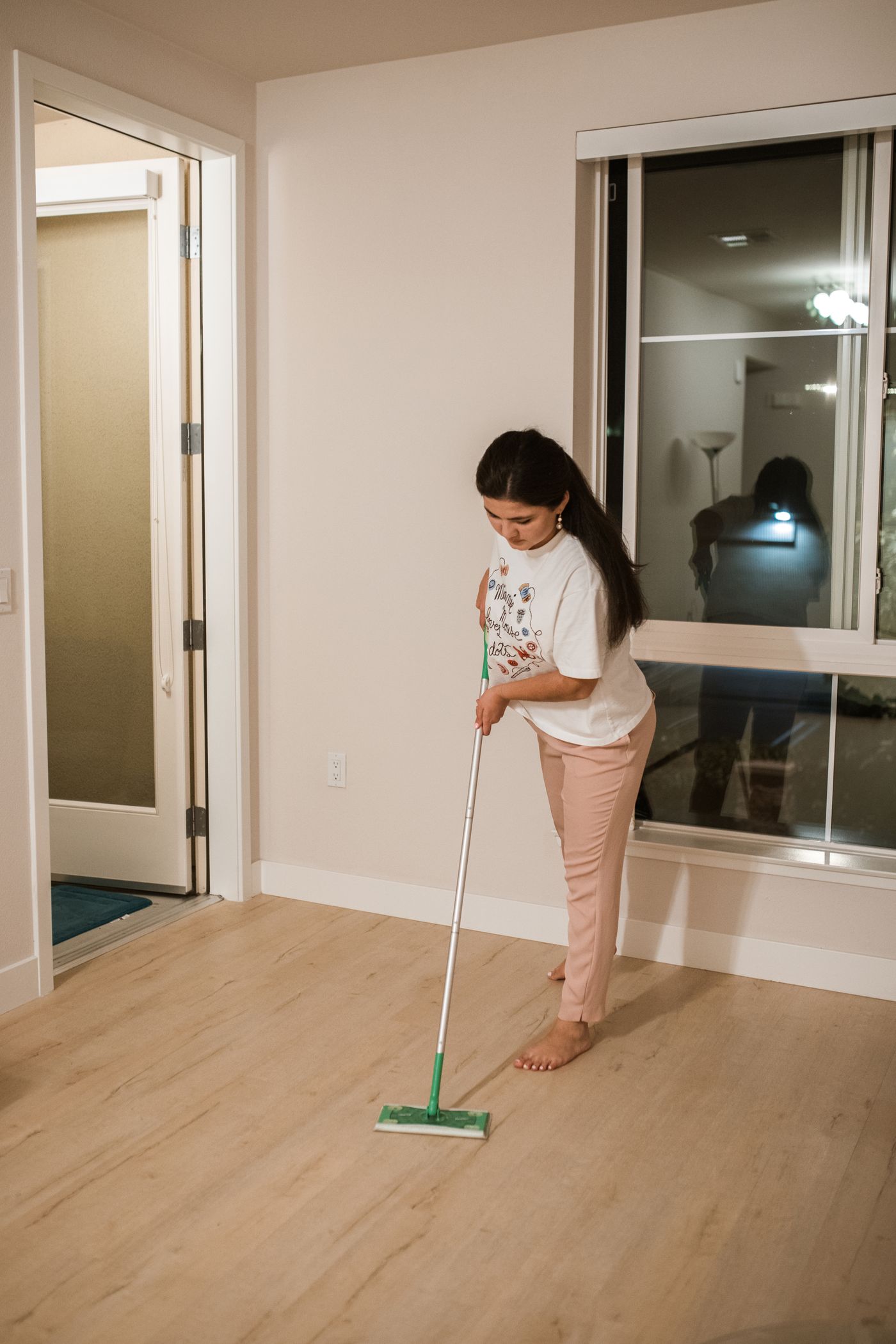
Shaw’s basic maintenance guidance begins with removing dirt and grit by sweeping or dust mopping and wiping spills promptly. This separates loose material from the later question of whether the floor needs an approved wet-cleaning process.
Look at where material gathers in your room: the entry, beneath dining chairs, or around a frequently used cabinet. Those locations can help you plan a useful route without repeatedly cleaning areas that did not need the same attention.
Choose a suitable tool according to the floor and equipment instructions, including any required attachment or setting. A cleaning device suitable for a neighboring carpet does not automatically have the right contact arrangement for this floor.
Arrange a clear working route and keep the tools distinguishable from those used on other surfaces. A pad with an unknown history needs its own condition and care check before it becomes part of the floor routine.
Do not use added liquid as a shortcut for dealing with loose debris. Complete the permitted preparation first so the following process addresses the actual remaining soil rather than an unexamined mixture of dust and cleaner.
Match the cleaner to the documented floor
Shaw directs users toward its recommended neutral-pH cleaner and advises consulting the complete care guide. Its current page warns against abrasive cleaners, ammonia-based products, vinegar-based products, and harsh chemicals that can damage the luxury-vinyl surface.
That warning is a reason to verify the product you have, including its complete name and directions. A general homemade recipe or a bottle labeled for floors should not override the installed product’s exclusions.
Keep cleaner, polish, and other surface treatments distinguishable when reading a label. A product intended to add a finish or shine introduces a different question from a product used for ordinary cleaning.
If a previous occupant used another treatment, ask what it was before adding something new. Provide the product information to the floor manufacturer when the prior care history leaves a compatibility question unresolved.
Avoid assuming that a stronger concentration will solve a stubborn mark. The permitted preparation and application remain specific requirements even when a spot is more noticeable than the rest of the room.
Read the wet-cleaning step as a complete method
Shaw says periodic wet cleaning can help maintain appearance and calls for vacuuming or dusting beforehand with a suitable neutral-pH cleaner. This article does not set a universal amount of liquid, pad dampness, or drying time for every luxury-vinyl installation.
Follow the exact floor and cleaning-product directions together, including any limitations at edges, joints, or transitions. A product’s broad water-related marketing claim does not supply missing instructions for an installed room.
Think through the whole route before starting so necessary areas remain managed while the procedure is completed. In a kitchen, the path to the refrigerator or doorway may need attention when choosing the working sequence.
If the relevant instructions require rinsing, include it deliberately rather than treating it as an optional second pass. Shaw’s page also calls for expedited drying when rinsing is necessary after wet cleaning, making completion conditions part of its guidance.
Do not add an unfamiliar machine or heat-based process simply because the floor has a vinyl label. Verify the exact tool and method against the installed product’s care instructions before introducing a different cleaning process.
Keep an isolated spill an isolated question
Name the spill if you can and record where it landed, then use the applicable floor and product guidance for that identified material. A small mark beside the table should not automatically turn into a whole-room chemical treatment.
Shaw’s general page recommends prompt blotting of spills with a clean white absorbent cloth or paper towel. For a spot requiring a different treatment, consult the specific care guidance rather than treating every stubborn mark as the same substance.
Do not copy an advanced solvent method from an abbreviated description into an unknown floor’s routine. The product, spot, conditions, and manufacturer’s scope need to match before such a procedure is appropriate.
Photograph a persistent mark with a wider view of its location and a close view in consistent light. This gives a flooring professional context without requiring you to scrape the area or experiment with a succession of cleaners.
If the mark is actually a changed surface, damaged joint, or other material problem, seek an assessment of that condition. Cleaning cannot be assumed to reverse damage simply because both appear as a visible difference.
Check the entry and furniture arrangement
Shaw recommends entrance mats to reduce tracked soil and moisture, with a caution about latex or rubber backings that can discolor its luxury vinyl. Match any mat to the floor’s actual requirements rather than assuming a non-slip backing is automatically compatible.
Look at whether the mat is positioned where people actually enter and whether its own care keeps collected material from being transferred onward. A decorative mat beside the traffic route may not address the material coming through the door.
Furniture contact points deserve a separate check under the floor’s instructions. When chairs move frequently, their contact surfaces and the observed floor condition provide a specific maintenance question to review.
Do not solve a chair or heavy-furniture problem by choosing an improvised pad without confirming the relevant requirements. The floor’s support and protection guidance addresses a different task from choosing a cleaner.
Keep the room’s actual use in the cleaning plan instead of relying only on a fixed calendar interval. A quiet spare room and the entry to a busy kitchen do not necessarily need the same attention at the same time.
Keep a usable care record
A short record should identify the installed floor, its care document, the selected cleaner, and the compatible cleaning tools. Add specific unresolved questions rather than writing a broad note that the floor is waterproof and easy to clean.
When another person takes over, show the floor boundary and the tools intended for each area. That handoff reduces the chance that a method from the bathroom or another plank-looking floor is silently applied here.
If the surface responds unexpectedly, record the exact product, preparation, method, and observed change for the maker or installer. A description of the actual sequence is more useful than a list of products you might try next.
The useful routine preserves the installed product’s requirements while addressing real soil and use. Start with identified material, complete the permitted method, and let unresolved surface conditions receive the appropriate assessment.
Sources and scope
Sources checked October 14, 2026. This guide uses documented information; it does not claim independent product testing or professional inspection.