Cleaning, sanitizing, and disinfecting describe different jobs, even when the bottles sit on the same store shelf. Choose the job you need first, then check whether the product and surface can support it.
For ordinary household dirt, a sensible cleaning routine is usually the starting point. You do not have to turn every crumb, fingerprint, or dusty shelf into a disinfecting project.
What the three words mean
CDC describes cleaning as removing dirt, impurities, and most germs from surfaces. Sanitizing reduces germs to specified safe levels, while disinfecting uses an appropriate process to kill most germs remaining on a surface.
The practical distinction is that removing a sticky spill and completing a labeled disinfecting treatment are different tasks. A surface can look better without having received the product's required disinfecting process.
An ordinary detergent should not be assumed to be a disinfectant because it smells strong or produces foam. EPA's registered-product information separates disinfectants by their approved uses and organisms, with the product label supplying the conditions.
That does not make ordinary cleaning a lesser achievement. It means you should describe what you did accurately and avoid treating a cleaning product as if it had claims its label never made.
Start with a question about the mess
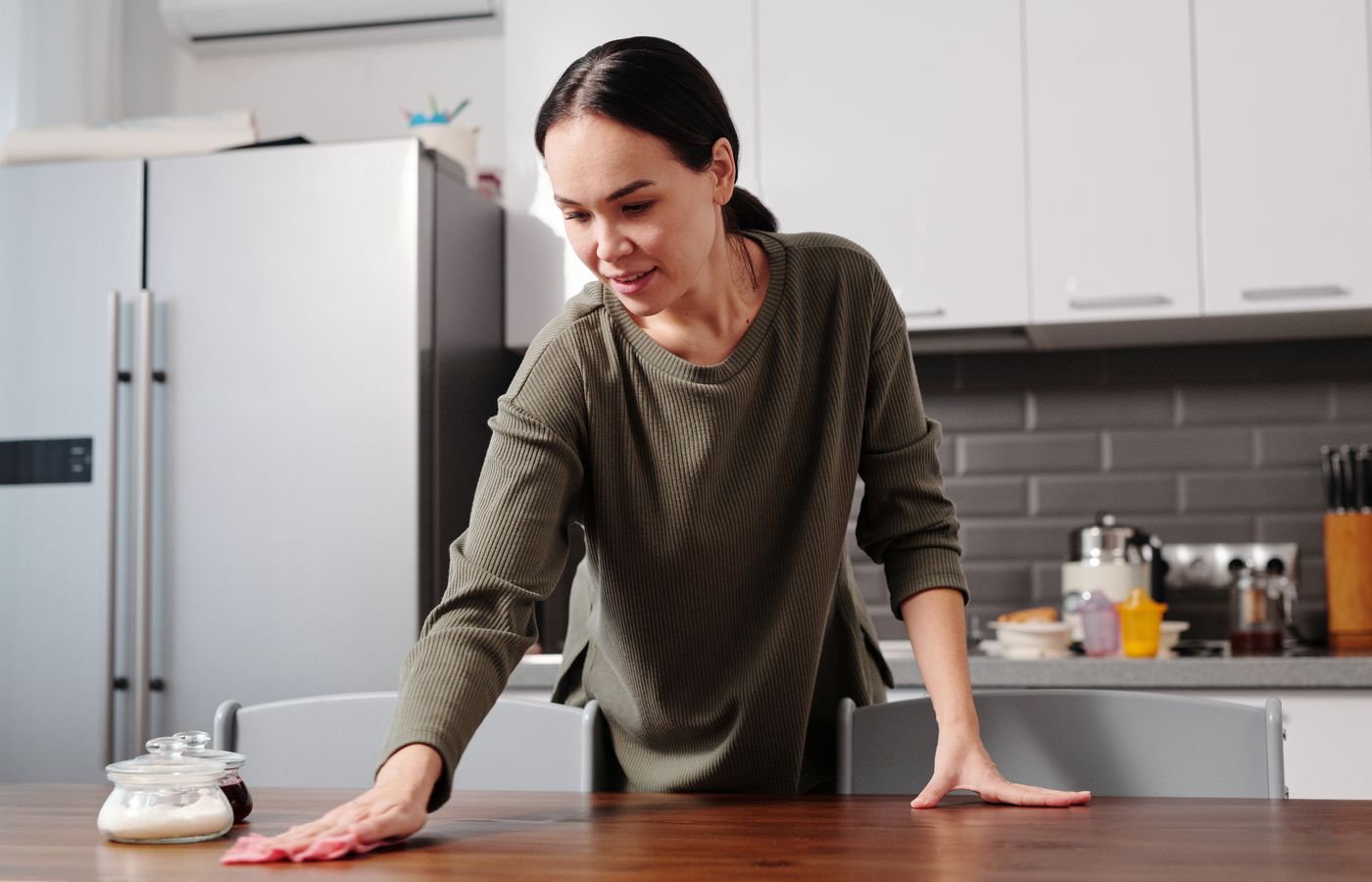
Before opening a bottle, ask what you are trying to remove or address. A dusty bookcase, a splash of cooking oil, and a surface involved in a household illness are not interchangeable situations.
For the bookcase, the immediate problem is dust on a particular finish. Your first decision is which cloth and surface-safe method can remove it without scratching or soaking the material.
For a cooking-oil splash, the problem includes residue and whatever food-contact requirements apply to that surface. The counter's care instructions and the cleaner's label matter more than an impressive-sounding product name.
When someone is ill, use current public-health guidance and a suitable labeled product for the relevant surfaces. A general home-cleaning article cannot identify every illness-specific requirement or replace advice given for someone's individual situation.
Clean before the extra treatment
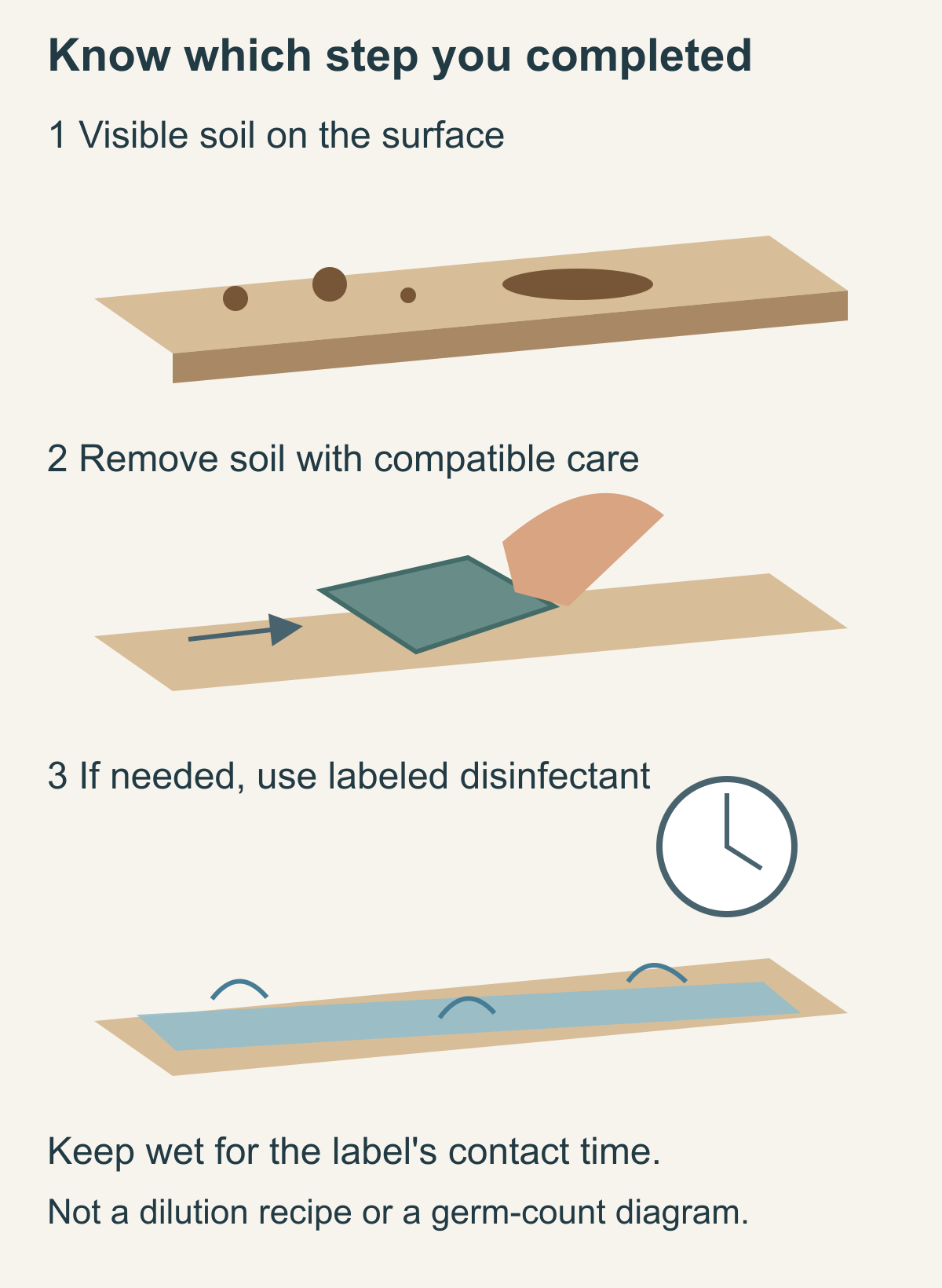
CDC recommends cleaning surfaces before sanitizing or disinfecting them. The preparation is part of the process, not an optional step that disappears when you buy a product with a stronger claim.
Imagine crumbs and greasy streaks on a counter. Clearing the objects, removing loose debris, and cleaning the surface lets you see the area you intend to treat rather than spraying over an uneven layer of leftovers.
Read the product's actual instructions even if the front says it cleans and disinfects. A combined product can still have specific directions for soil removal, application, and the treatment you want to claim.
Keep the routine manageable by working on one suitable section at a time. That makes it easier to apply the correct instructions and avoid forgetting which area has received which step.
Read the label as a sequence
Start with the intended surface and use, then look for the preparation, dilution if any, application method, and required finish. For a disinfectant, check the label's contact time and whether it calls for a rinse afterward.
CDC says a disinfected surface should stay wet for the specified contact time. Wiping the product off immediately because you prefer a dry-looking counter can leave the required process unfinished.
Suppose you have only a short break before cooking. If the labeled process cannot be completed in that window, reorganize the timing instead of pretending that a quick spray is equivalent.
A small kitchen timer can help you keep track of the actual product's required interval. Set it from the label each time; this guide does not provide one number that fits every disinfectant.
Match the surface before choosing the chemical
Make a short list of the materials in the area: stone, finished wood, coated metal, tile, or another identifiable surface. "Kitchen" tells you where something is, but not which cleaner its finish can tolerate.
For a natural-stone counter, consult the stone or countertop supplier's care guidance before applying an unfamiliar product. For an appliance, check its specific finish instructions rather than assuming all shiny metal needs the same treatment.
If you cannot identify the surface, slow down and find the documentation or ask its manufacturer. An inconspicuous test may reveal a visible problem, but it does not establish every hidden or long-term compatibility question.
Keep electronics in their own category. Follow the device manufacturer's cleaning directions instead of carrying a wet-surface routine from the counter directly onto a keyboard, screen, or charging port.
Organize the work so cloths stay purposeful
Use a simple household separation between kitchen, bathroom, and general cleaning cloths. The colors are just reminders you choose; they do not give the cloth a sanitizing property or make it clean itself.
Put used cloths in a designated place instead of folding them into the clean supply. That small storage decision reduces the chance of grabbing a visibly dirty cloth during the next task.
If a pad or wipe has become too dirty for its intended use, replace it according to the product's instructions. Do not assume that pushing the same material across more surfaces creates the same result everywhere.
The goal is a routine you can recognize at a glance. A complicated color system that nobody in the household remembers may be less useful than three clearly labeled containers.
Keep safety directions alongside the cleaning directions
Never mix cleaning products, and follow the label's ventilation and protective-equipment instructions. Store the products where children and pets cannot access them, in containers that preserve the product identity and instructions.
Set up the job before you wet a floor or place supplies in a walkway. Think about who needs to pass through the room and whether the area can remain undisturbed while you complete the labeled process.
Do not use a disinfecting product on a person or pet. Household surface treatment and personal care are different applications, even when a familiar brand sells products in both categories.
If a label is unreadable, the container is unidentified, or a product has been mixed with something unknown, do not invent a use for it. Find the appropriate identification or disposal guidance before returning it to your cleaning kit.
Use a short decision note for repeat jobs
For a frequently cleaned surface, write down its material and the maker's approved care method. Add the exact product name only after you have checked that the product's directions fit that use.
A useful note might say "sealed counter: manufacturer-approved routine cleaning; separate labeled treatment when required." It should not say "always disinfect everything," because that hides the decision you need to make.
If you change products, revisit the note rather than carrying the old contact time or dilution forward. Similar bottles can have different directions, and a familiar routine should not outrun the current label.
Shared households benefit from leaving the note where the supplies live. The next person can follow the same material-specific approach without guessing what you meant by "the usual cleaner."
Know when this guide is too general
Flood contamination, persistent moisture problems, large mold areas, and specialized illness situations need their own guidance. Do not apply a routine surface-cleaning explanation to a damaged building or a contamination problem it was never designed to address.
Likewise, healthcare facilities, food businesses, and workplaces may have specific procedures. The household examples here are not a substitute for those documented requirements or an assurance of compliance.
For everyday home upkeep, a clear purpose and a compatible method are the useful starting points. Clean the dirt you can identify, add sanitizing or disinfecting when the situation calls for it, and finish the actual instructions instead of relying on how the room smells.
Sources and scope
- CDC When and How to Clean and Disinfect Your Home
- CDC Cleaning and Disinfecting with Bleach
- EPA Selected Registered Disinfectants
Sources checked October 14, 2026. This guide uses documented information; it does not claim independent product testing or professional inspection.