Work on the fabric, not the idea of pet hair
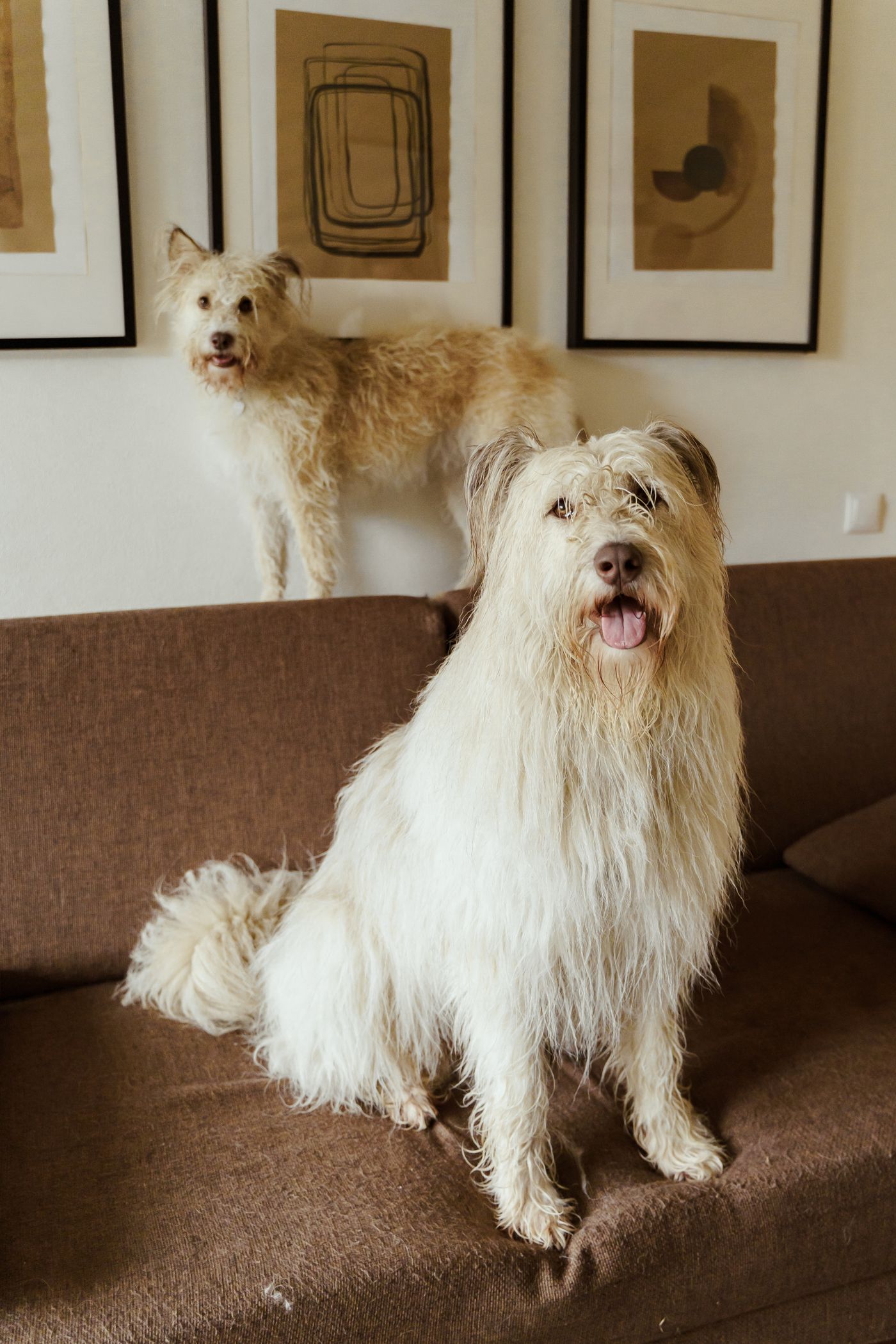
Two dogs use the same sofa every afternoon, but hair gathers differently on the flat seat, the seam beside the arm, and the loose throw. Before choosing a removal tool, identify those separate surfaces and their care requirements rather than treating the whole seating area as one material.
Pet hair is the immediate task, while stains, odors, and a damaged fabric are separate questions. A liquid cleaner or aggressive brush should not become the default response to visible hair that may have an appropriate dry-removal method.
BISSELL’s couch-care guidance starts with the furniture tag and separates removal of loose debris and pet hair from later cleaning. Its tool examples belong to the documented equipment and suitable upholstery, rather than establishing permission for every rotating attachment on every sofa.
This article helps plan a fabric-compatible route and compare the observed result. It does not provide independent tool testing, a universal pet-hair winner, or an instruction to use a household lint tool directly on an animal.
Separate the fitted upholstery and the throw
Find the sofa’s cleanability information and the label on any removable throw or pillow cover. A washable accessory can provide a different care route from the fitted upholstery beneath it.
Keep those pieces identified while preparing the work, especially when several fabrics share the same color. The throw’s familiar washing history does not establish a washing method for a cushion cover with an unrelated code.
BISSELL’s guidance specifically calls for checking the labels on loose blankets and pillowcases rather than assuming all are machine washable. It also distinguishes removable sofa cushions from items that can simply be put into a washing machine.
If the sofa’s tag is missing, ask the maker or retailer for the exact fabric guidance before trying a new contact method. The purpose is to preserve the identified textile while removing ordinary surface material, not to see which tool can make it look different fastest.
Move only loose pieces that can be handled appropriately under their instructions. A large fitted component, mechanism, or powered furniture part needs its own guidance rather than becoming an improvised step in a hair-removal task.
Identify the tool’s permitted contact
For a vacuum tool, confirm the exact attachment, machine compatibility, and upholstery method in the relevant instructions. A narrow opening and a powered rotating brush introduce different contact questions even when both fit the hose.
BISSELL describes a small rotating brush tool and a crevice tool as distinct parts of its couch-cleaning example. That distinction illustrates surface and seam access, without making its specific method transferable to an unidentified fabric or unrelated vacuum.
Inspect the intended contact surfaces in the machine’s prescribed safe state before use. Retained debris, damage, or a part that does not match the documented attachment can change the choice even when the tool’s broad name sounds right.
Do not press harder merely because hair remains visible after one permitted pass. Check whether the tool and method are suitable for the particular pile, seam, trim, or loose material before increasing force or repeating the process.
If the instructions permit a preliminary assessment on a less conspicuous area, follow its scope carefully. Stop if the textile responds unexpectedly rather than treating a small area as a reason to continue through visible parts of the sofa.
Read adhesive-tool claims narrowly
An official 3M Pet Hair Roller marketing sheet describes an adhesive roller for removing hair from fabric clothing. It is a dated product-description example, not proof that every adhesive roller is safe on every upholstery finish or pile.
Match any proposed roller to its actual product directions and the furniture’s requirements before using it on the seating surface. An item’s marketing category does not replace a compatibility check for a delicate, coated, or loosely constructed fabric.
Keep adhesive contact distinct from mechanical brushing or vacuuming when reading the tool instructions. A household can own all three types without having permission to apply each one to the same textile.
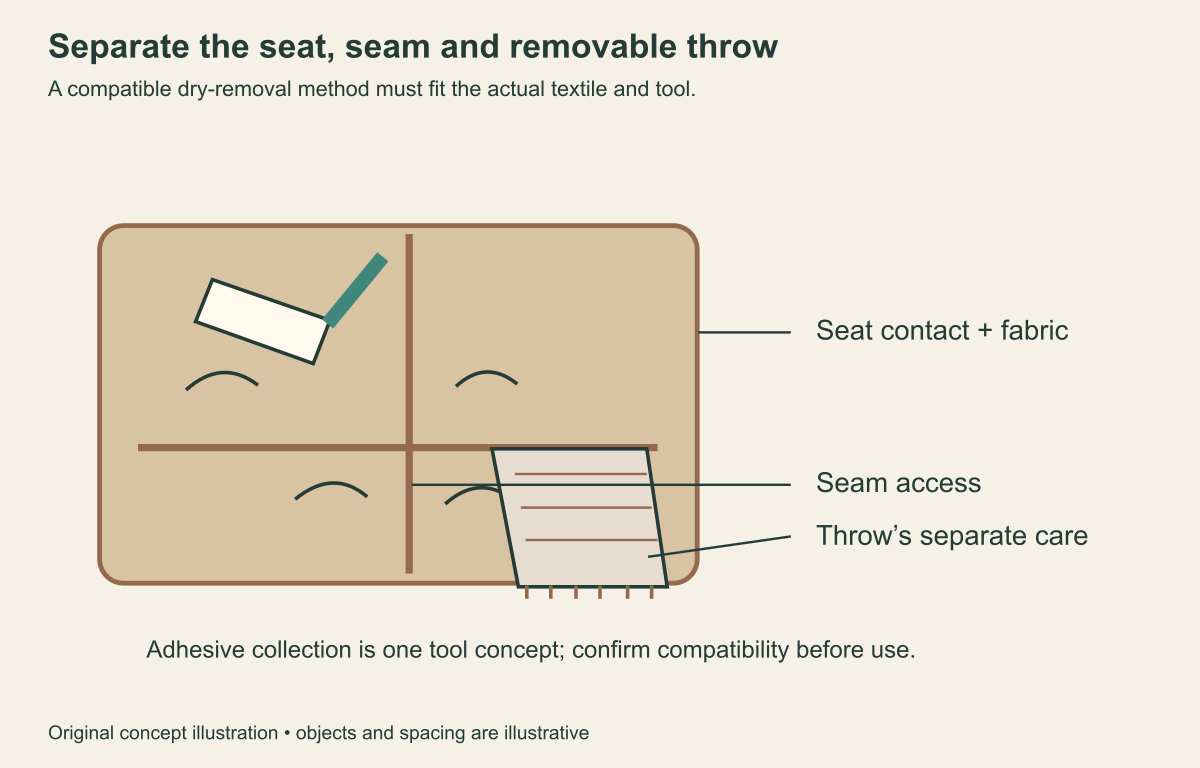
If the product’s stated applications do not include your intended material or leave the furniture’s condition unresolved, ask the makers or choose another supported method. Do not turn a strong pickup claim into an assumption that stronger adhesion will improve the result safely.
Observe the actual surface after the supported process rather than scoring the tool only by material collected. A roller covered with hair has shown collection, while the textile’s condition still needs its separate observation.
Divide the sofa into reachable sections
Plan one seat area, one accessible seam, and the loose accessories as separate parts of the route. That makes it easier to keep track of completed work and avoid repeatedly treating the same easy section while missing the arm boundary.
For the seam, consider whether the compatible tool can reach without stretching the upholstery or forcing a retaining feature. A narrow gap is an access question, not permission to pry it open with a cleaning attachment.
Keep the actual pet outside the working area while the household tool is being used as instructed. Cleaning equipment and adhesive rollers have their own intended applications; the furniture task should not become a grooming experiment.
Do not shake or brush material into another cleaned section as an improvised way to finish the first. Follow the selected tool’s collection and care process so the route has a clear destination for removed material.
If the tool requires a change or care step during the task, include it before moving to the next section. The observed state of a working surface matters more than completing the whole sofa with one unchanged accessory.
Compare the same area after the permitted process
Use similar lighting and the same viewing position to assess the defined seat or seam after the task. A change in direction of textile pile can alter appearance, so do not interpret every lighter patch as measured hair removal.
Record whether visible loose hair remains, whether access was incomplete, and whether the material’s condition changed unexpectedly. Those observations give the furniture or tool maker a more specific question than a general complaint that the sofa attracts hair.
Keep unrelated stains and odors out of the hair-removal conclusion. A surface with less visible hair has not received a separate verified stain treatment or a demonstrated sanitizing process.
If the remaining hair is in an area the approved tool cannot reach, identify that limit before choosing another method. A different attachment is useful only after its contact and compatibility questions are resolved.
Do not claim a comparative winner from one household’s undocumented result. The useful personal observation is which supported method addressed this specific textile and accessible task without an unexpected response.
Make the next session easier to prepare
Keep the confirmed tool and the relevant furniture care information together so the next route begins with the same identified material. Store attachments and used supplies in the condition their instructions require, rather than relying on a tidy-looking basket.
If a loose throw is part of the seating arrangement, give it its own documented care and return routine. Its condition should not remain unknown when it is placed back over a sofa section that has just been addressed.
Observe where hair repeatedly gathers and prepare those actual locations for the next ordinary task. The seam beside the favored seat may need attention at a different practical time from an unused decorative pillow.
If the textile, furniture cover, or tool changes, review compatibility before carrying over the previous routine. A similar color or familiar room does not preserve the old contact decision automatically.
The useful result is less visible loose hair on an identified fabric, with a supported method and clear tool care. Keep removal, textile condition, and any separate stain problem distinguishable so each receives the right next step.
Sources and scope
Sources checked October 14, 2026. This guide uses documented information; it does not claim independent product testing or professional inspection.