Start when the bottle is still closed
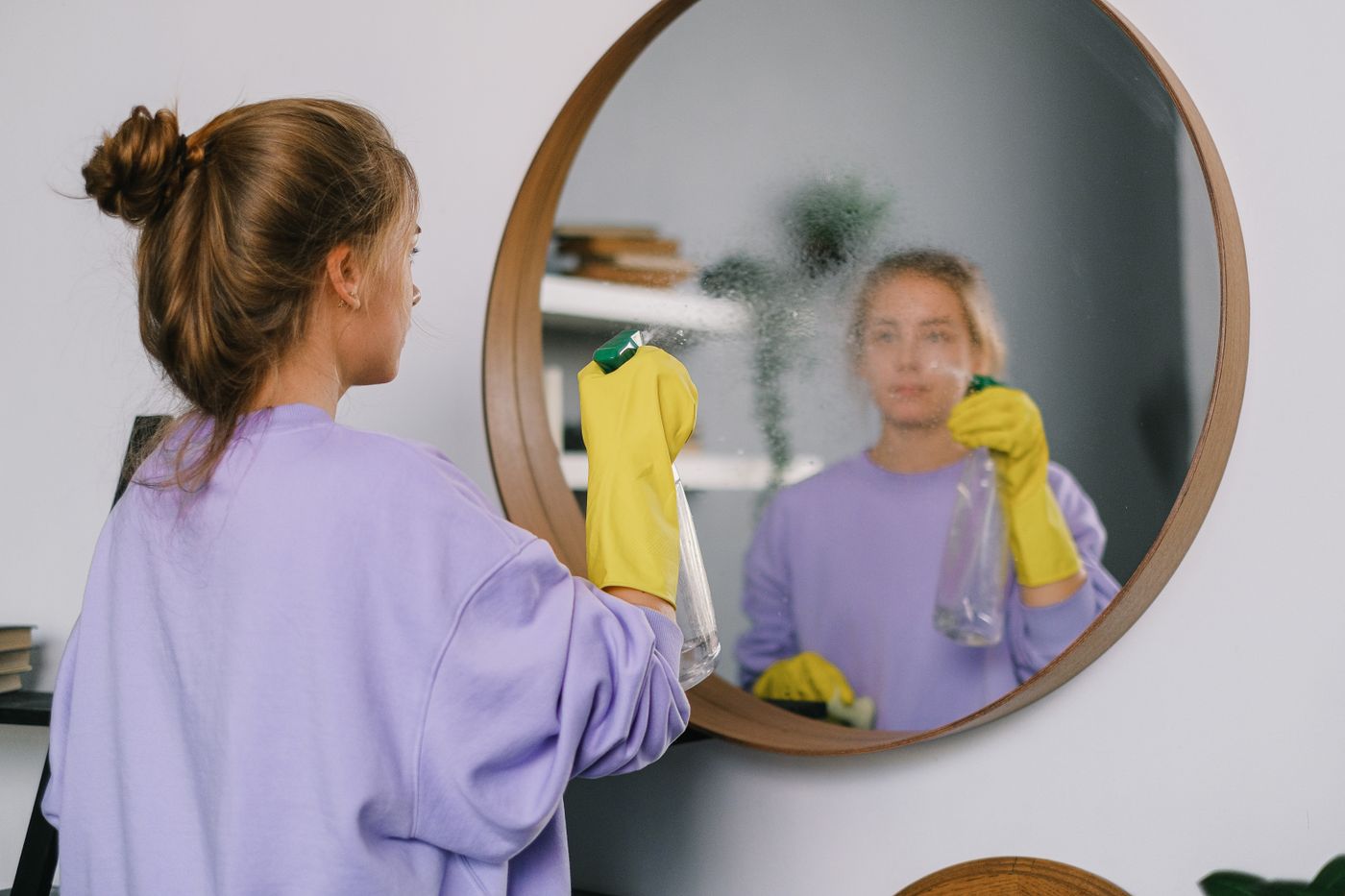
An unlabeled spray bottle near a mirror might contain glass cleaner, diluted cleaner, or something left from an earlier task. The first useful cleaning decision is to identify its contents, not to see whether one spray makes the mirror look clearer.
Poison Control recommends retaining original containers and labels because transferring products can lead people to mistake chemicals for drinks. An unknown bottle also removes the connection between its contents and the directions needed for the surface in front of you.
Set aside an unidentified product and resolve its identity through the appropriate household or manufacturer information. A familiar scent, liquid color, or spray pattern cannot substitute for the missing product information.
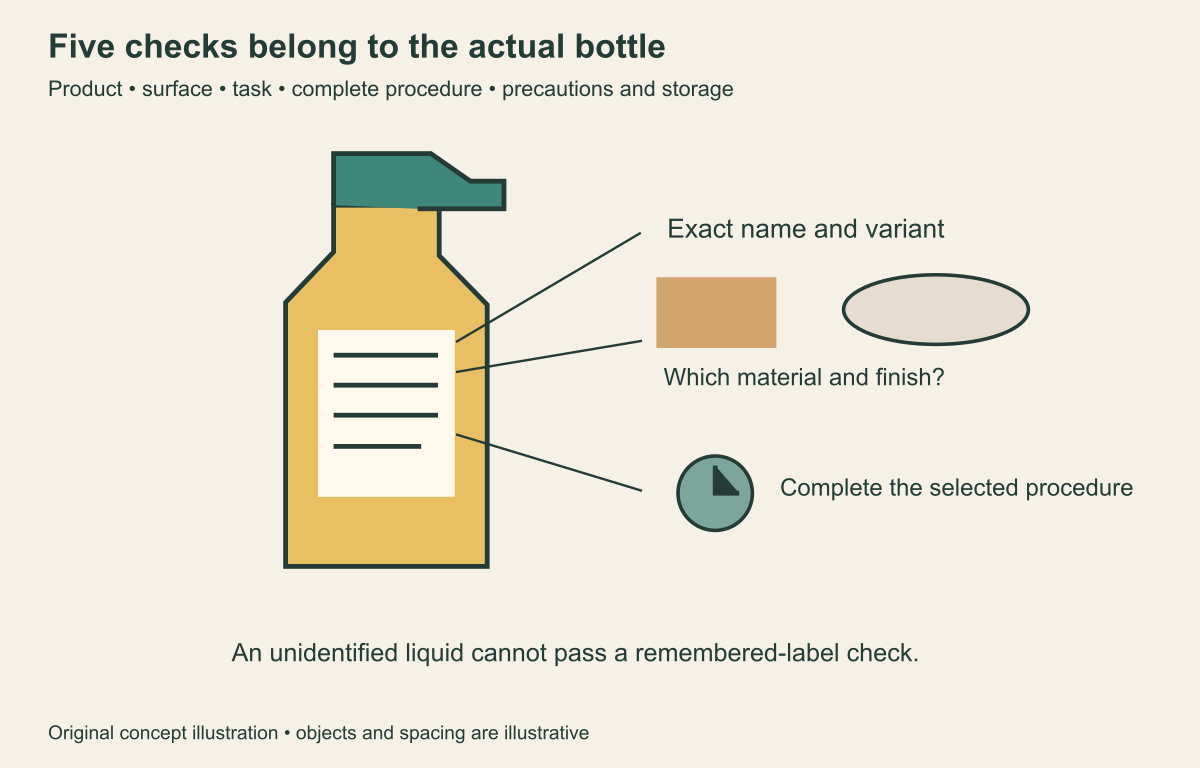
For an identified bottle, read five things before use: the exact product, permitted surface, intended task, complete procedure, and precautions with storage. These checks turn label reading into a practical decision instead of a quick glance at a marketing phrase.
First check: which exact product is this
Read the full name and variant, then find the directions on the bottle you actually have. Similar packaging can represent different formulations, intended tasks, or concentrations, so a remembered instruction from another bottle needs verification.
The Clorox Disinfecting Bleach product page itself directs users to their product label for dosing and says directions can vary by use. That makes the bottle’s identity especially important when an online article describes a different task or package.
A larger bottle is not necessarily permission to use the same measuring habit from an older container. Confirm the actual instructions rather than scaling an amount from the bottle’s appearance or the size of its cap.
If the label is damaged or you cannot read it, seek the exact current information from the manufacturer. Provide the complete product name and relevant identifying details rather than searching for a broad term like bathroom cleaner.
An ingredient page can help identify what a product contains, but it does not replace its directions for use. Keep the contents question separate from the procedure question when following an online link or a package code.
Second check: what will the product touch
Identify the material and finish, including neighboring surfaces that might receive product during the task. Cleaning a mirror over a stone vanity can involve both the glass and the counter, even if the front label emphasizes only the glass.
Clorox’s named Disinfecting Bleach page excludes several materials, including marble, quartz, brass, mirrors, painted surfaces, and unsealed wood. Those specific exclusions illustrate why a product’s broad household description cannot override its surface restrictions.
Do not apply that list as a universal compatibility chart for every bleach product or every cleaner. Read the exact bottle and the surface maker’s guidance together, because either side may impose a requirement the other does not address.
Suppose a cleaner is suitable for the sink basin but not the adjacent cabinet finish. Plan the application so the unsupported surface is not treated simply because it sits beneath the same faucet.
Look at the actual boundary: the basin rim, the narrow strip of counter behind it, and the cabinet edge underneath. Naming those three contact areas makes the compatibility question more precise than assuming everything around the faucet belongs to one surface category.
If you cannot identify the counter or finish, stop at that missing fact. A hidden-area test can be useful when the appropriate instructions permit one, but it does not turn a known prohibited application into an approved method.
Third check: what result are you asking for
Name the immediate task before reading its directions: remove soil, address a stated disinfecting need, or perform another specifically labeled use. The goal determines which procedure on a multiuse product is relevant.
Clorox’s page distinguishes laundry directions from directions for disinfecting hard, nonporous surfaces. Following a laundry sequence beside a countertop would combine two procedures the manufacturer has presented separately.
A cleaner-looking surface is an observation about appearance, not proof that a labeled disinfecting procedure has been completed. Conversely, a disinfection claim does not tell you whether the product is appropriate for an unidentified decorative finish.
If a household has a specific health-related cleaning requirement, follow relevant public-health and product instructions for that situation. Do not replace those instructions with a general housekeeping shortcut or a scent-based judgment.
Write the selected task at the top of a short note if the label is crowded. This helps prevent switching from one set of directions to another halfway through reading the bottle.
Fourth check: what is the whole procedure
Read the selected directions from beginning to end before opening the bottle, including any preparation, dilution, application, required contact, rinse, and drying steps. Some of those steps may not apply to your product, which is exactly why you must read rather than assume them.
The named Clorox page’s hard-surface procedure includes prewashing, the specified solution, required contact, rinsing, and air drying. This article does not supply a universal dilution or contact time; the exact current label governs the intended use.
Think through where each required step will happen and whether you have the needed supplies. If the directions require a subsequent rinse, a cleaning route planned without that step is incomplete before you even start.
Do not make a stronger solution or extend a procedure merely because the soil looks stubborn. That changes the instructed use and can introduce a compatibility or exposure question that your original reading did not answer.
Use the product’s stated measurement method rather than an unmarked kitchen container chosen for convenience. Keep any preparation and resulting solution identified as the product directs, without replacing a readable label with a household nickname.
Fifth check: what conditions and precautions apply
Clorox’s specific bleach guidance warns against mixing with ammonia or acidic products and directs users to label precautions, gloves, ventilation, and keeping it away from children and pets. These are conditions for the named product, not optional additions after checking its cleaning claim.
Read any first-aid and storage information on the actual bottle before working, so it remains available if needed. This guide does not replace product-specific emergency directions or advice from a poison center or medical professional.
Consider the room’s practical constraints before beginning the instructed procedure. A plan that requires ventilation or a clear working area needs those conditions arranged at the start, rather than discovered halfway through application.
Do not leave the opened bottle where someone could mistake it for another household item. Return it to its instructed storage arrangement after the task instead of treating a newly cleared counter as a permanent product shelf.
Keep multiple products from turning into an improvised mixture through the cleaning sequence. If the next planned treatment introduces a different chemical, verify the applicable directions rather than assuming separately labeled products are compatible together.
Use a short note to catch a mismatch
A good task note identifies the actual bottle, confirmed surface, selected use, and the procedure you must complete. It should point back to the directions rather than replacing them with a simplified recipe copied from memory.
For a crowded bathroom vanity, you might notice that the available bottle excludes the mirror or the counter. That is a successful label check: choose a supported alternative or obtain the missing surface guidance before treating either object.
For an unfamiliar product, the useful manufacturer question names the exact variant and asks whether it is permitted for the identified finish and intended task. Include the conflicting instructions if the product and surface guidance do not appear to agree.
The five checks are complete when you can identify the product, surface, goal, procedure, and conditions without guessing. A bottle that fails one check should not pass the others simply because it has been used somewhere in the home before.
Sources and scope
- Poison Control: why container transfers are dangerous
- Clorox Disinfecting Bleach,Unscented official product guidance
Sources checked October 14, 2026. This guide uses documented information; it does not claim independent product testing or professional inspection.