Confirm the finish before following the grain
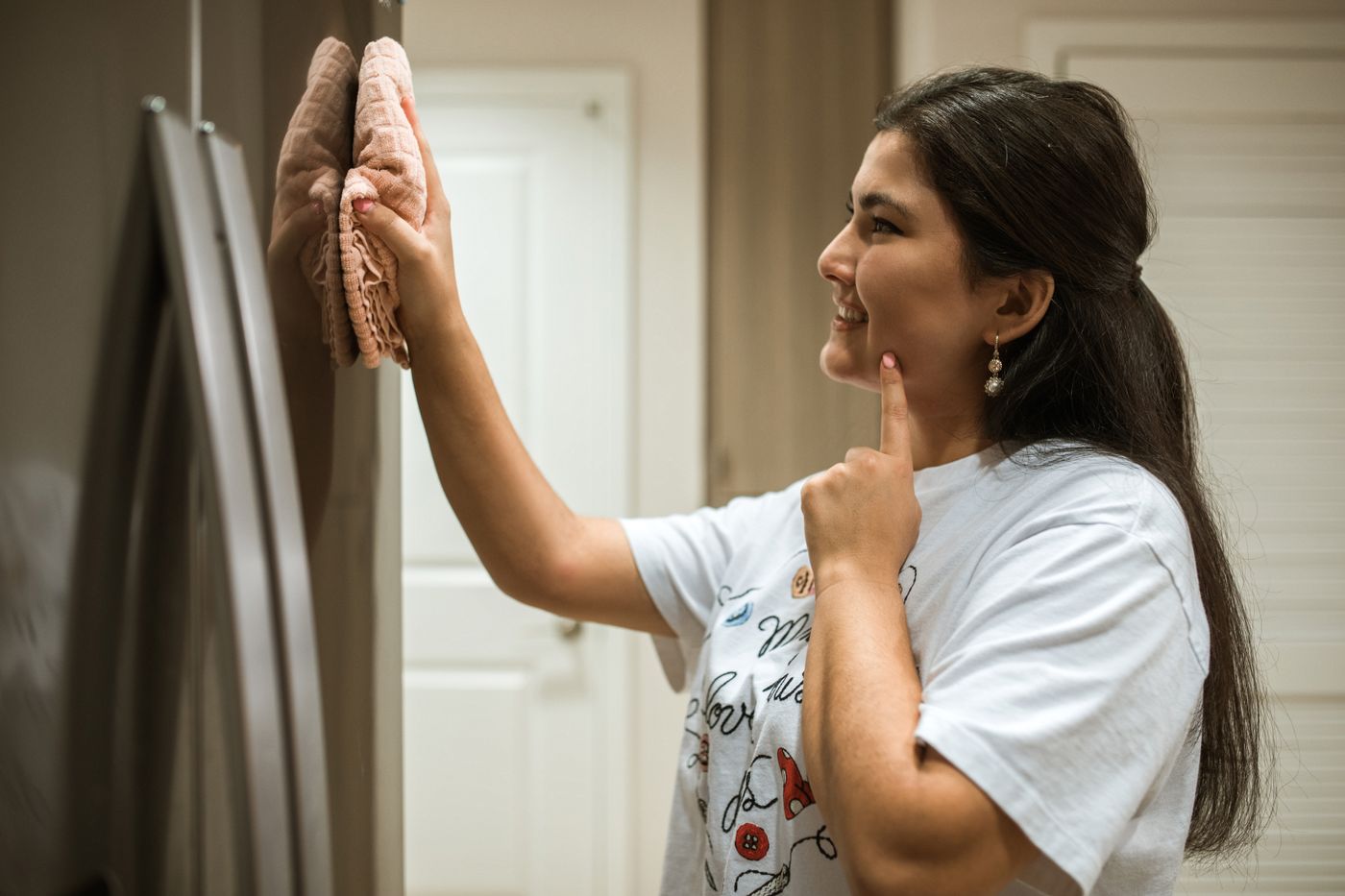
The refrigerator door looks like stainless steel, but its care information identifies a fingerprint-resistant clear coat. That detail can change the permitted cleaner, so reading the finish name is the first step before polishing an apparent metal surface.
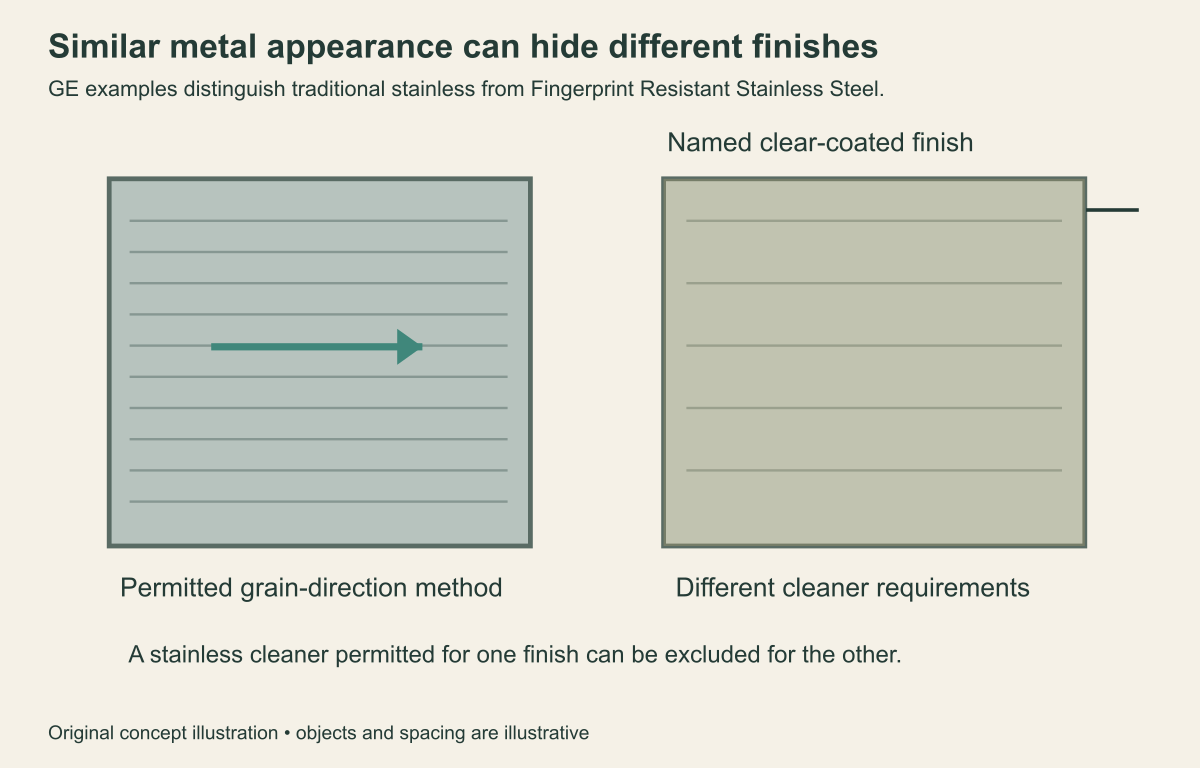
GE’s published guidance distinguishes its traditional stainless-steel cleaning example from its Fingerprint Resistant Stainless Steel finish. The second has a clear coat and a different care method, showing why appearance alone should not choose the bottle.
This guide uses those GE instructions as specific examples, without promising compatibility for every brand, coated metal, appliance handle, or decorative finish. Find the exact appliance and finish information before applying either method to the door in your kitchen.
Treat the broad metal panel, handle, control area, and surrounding trim as potentially different care surfaces. A product suitable for one identified part does not automatically belong on everything attached to the same appliance.
Find the model and finish record
Use the appliance model, purchase information, or manufacturer documentation to identify the actual finish. A note that says silver refrigerator leaves the distinction between bare-looking stainless and a protective surface treatment unresolved.
Check whether the door and other visible parts have separate instructions in the guide. A mixed-material handle or a control panel can require a different method from the main metal-looking sheet.
If a previous occupant supplied a cleaner, compare its complete label with the confirmed finish guidance rather than treating its storage location as approval. The bottle under the kitchen sink may have been used for a different appliance or an earlier finish.
Keep any unclear finish or aftermarket treatment in the question you send to the manufacturer. A protective film, applied polish, or coating history can matter when an ordinary cleaning attempt gives an unexpected result.
Do not scrape the surface to find out what kind of finish is underneath. The useful next step is documentation or an appropriate manufacturer assessment, not changing the panel while trying to identify it.
Read the traditional-stainless example narrowly
In its refrigerator stainless-stain guidance, GE describes a stainless cleaner applied with a clean cloth or paper towel in the grain direction, followed by buffing dry. That instruction belongs to the relevant traditional-stainless application, not the coated finish discussed separately.
Look for the panel’s visible grain direction in good light without assuming it runs the same way as the adjacent appliance. Horizontal and vertical orientation should be observations of the actual surface rather than habits carried across the kitchen.
Use the permitted product and method for the identified panel, including its own application instructions. A word such as polish on a bottle does not establish that it is the cleaner required by that GE example.
Keep the cloth’s condition visible before it touches the surface. A tool used earlier on another task may retain material that changes the contact question, even if its color still matches the household kitchen assignment.
Do not make grain direction into a guarantee that aggressive rubbing or an incompatible product will be safe. Direction is one element of a supported method, while product, contact material, and finish requirements still need to agree.
Keep the fingerprint-resistant example separate
For its Fingerprint Resistant Stainless Steel, GE specifies mild soap and warm water with a clean soft cloth or microfiber cloth, then wiping dry. Its published exclusions include stainless-steel cleaners, abrasive products and cloths, paper towels, bleach, window sprays, ammonia, and acidic cleaners.
That list changes the shopping decision for the named finish rather than merely adding a polishing tip. A stainless cleaner that belongs to another appliance can be the wrong product for this specific clear-coated door.
Do not generalize those GE exclusions into a universal chart for every fingerprint-resistant product. Another maker or finish needs its own guidance, and the actual model should identify which requirements apply.
Keep the permitted method and excluded products together in a short appliance note. The distinction should remain understandable when someone else sees two similar metal-looking doors and assumes they can share one cleaner.
For a refrigerator and dishwasher purchased at different times, put each model and finish beside its own note. Matching color in the kitchen does not establish matching surface treatment, so the care record should follow the individual appliance instead of the room’s decorative description.
If the finish responds unexpectedly, stop introducing products and record what was used. The manufacturer needs the exact finish and process history, not just a photograph labeled stainless problem.
Distinguish a mark from a cleaning diagnosis
Describe the visible concern: a fingerprint, a dark patch, a streak, or a change that remains after the instructed process. The appearance provides an observation, while the cause may still need the manufacturer’s assessment.
GE’s traditional-stainless stain page discusses adhesive residue after protective-film removal as one specific context. It should not be used to label every dark or oily-looking patch on an unrelated appliance as adhesive.
For a recently delivered appliance, record whether a protective film was removed and where the concern appeared afterward. That history gives the maker a particular question to investigate without committing you to an unverified solvent treatment.
For an older appliance, record the previous cleaning products and whether the mark appeared immediately after a change. A sequence can be informative even when it does not establish causation from one household observation.
Do not disguise a scratch or changed coating as ordinary soil because a cleaner is easier to buy than a finish assessment. A surface-condition question may need a different response from the routine wiping method.
Plan the panel, edge, and handle
Work on an area you can reach with the actual permitted method and keep product away from unrelated components as the guide requires. The panel’s care directions are not permission to flood control openings or treat electrical parts.
Consider the transition at the handle before applying the chosen product across a large area. If the handle material or finish is different, give it its own supported cleaning step rather than wiping through the boundary automatically.
Keep nearby food-preparation surfaces and other household objects out of the product’s intended route. A clearer working area makes it easier to follow a narrow panel-cleaning task without accidentally treating adjacent materials.
If an appliance’s instructions require a particular safe operating state for the task, arrange it before beginning. Exterior finish care should not turn into an improvised service or internal appliance-cleaning procedure.
Finish the required dry-wiping or other completion step before judging the visible result. A photograph taken midway through application describes an incomplete process rather than the condition the maker’s method is meant to produce.
Give a persistent condition the right handoff
Photograph the concern in consistent light and include a wider view showing its position on the panel. Add the appliance model, exact finish, cleaner, cloth type, and completed method to the account.
GE’s fingerprint-resistant guidance distinguishes heavy visible scratches from routine cleaning and says it has no approved repair method to cover them. Do not interpret a surface-care article as permission to sand, coat, or buff that specific finish into a repair.
Ask the maker which next assessment belongs to the observed condition rather than requesting a universally stronger stainless cleaner. The right question follows the finish and history you have actually identified.
Keep the confirmed routine with the appliance documentation after the concern is resolved. Future care can then begin with the actual finish instead of the last cleaner used successfully elsewhere in the kitchen.
The useful method respects both the finish and its permitted contact direction. Identify the surface treatment, select the supported product, complete the process, and leave unresolved damage for the appropriate manufacturer question.
Sources and scope
Sources checked October 14, 2026. This guide uses documented information; it does not claim independent product testing or professional inspection.