Identify the component before taking it to the sink
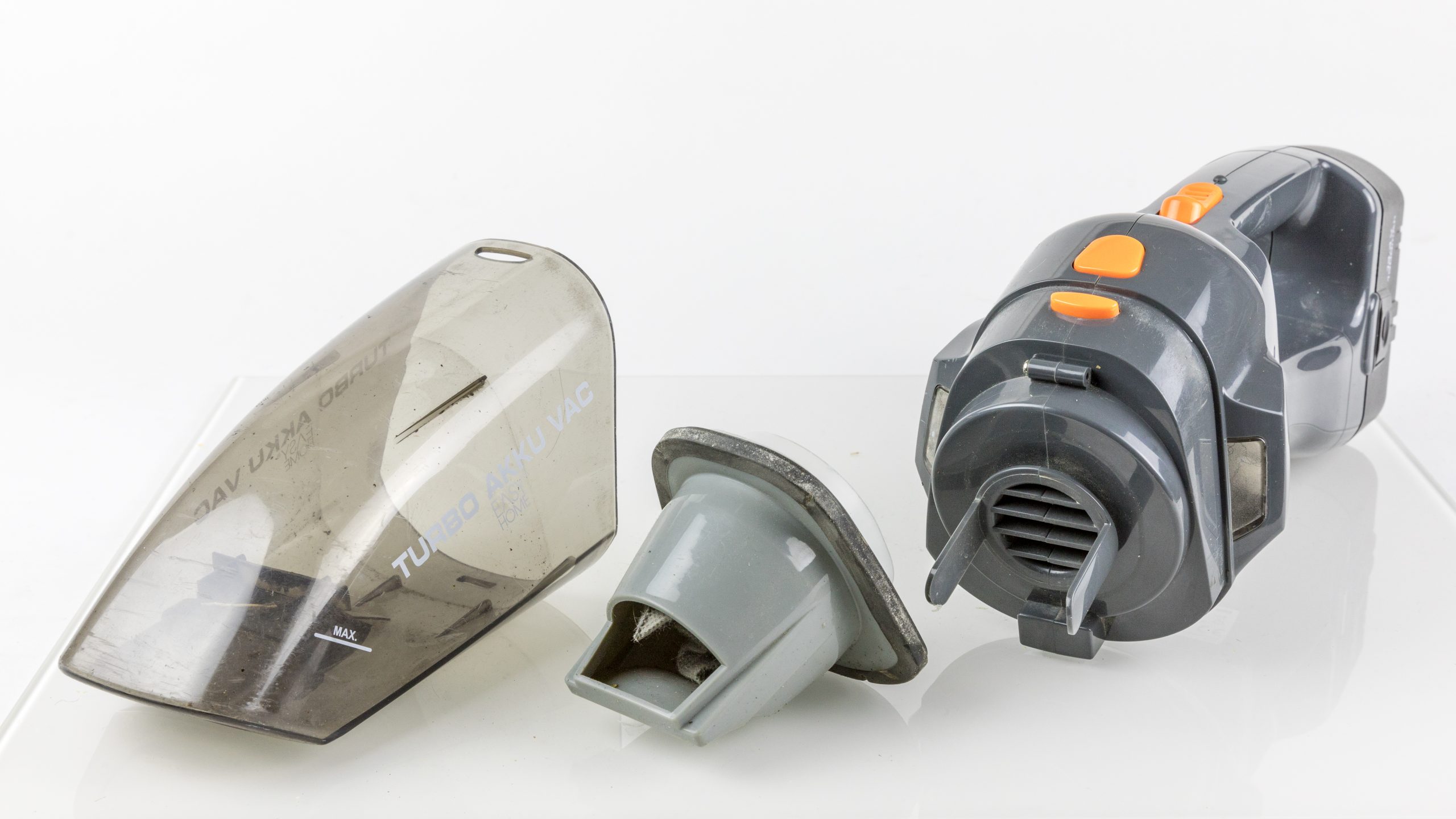
An open vacuum can reveal a dust container, a filter, a surrounding frame, and the main machine body within the same small area. Their proximity does not mean they share a washing method, so identify the exact component and its instructions before introducing water.
Start with the vacuum’s complete model and the filter’s part information, then find the appropriate manufacturer guide. A filter that looks like foam or folded fabric has not supplied permission for washing, detergent, heat, or reuse.
This article uses an inspected US Dyson V8 SV10 manual as a specific washable-filter example. It does not extend that example to every V8 variant, another Dyson series, or a filter from a different vacuum brand.
Use the example to understand the questions a manual must answer, while following the complete instructions for your actual component. A maintenance article should not replace a manufacturer’s removal, washing, drying, and refitting sequence with a remembered generic routine.
Give every removed part a name
Find the guide’s component diagram before deciding which part is the filter and which part is a bin, seal, screen, or housing. Similar-looking removable pieces can play different roles and have different care requirements.

Place identified user-removable parts where they remain distinguishable during the instructed process. Do not combine them with an older spare whose compatibility or previous condition is unknown.
Write the part name beside the manual section you are following. “Filter A” and “filter B” are useful only when the named guide actually uses those identifiers for your machine.
The inspected V8 SV10 guide identifies two washable filters with separate instructions for their removal and washing. That distinction is a reason to read each relevant section, not to assume two filters can be treated as one interchangeable item.
If the replacement part number or guide does not match the installed component, resolve the mismatch first. Provide the machine and component identification to the manufacturer rather than trying to force an approximate spare into the documented procedure.
Look for explicit permission to wash
Find a direct statement that the identified component is washable, along with its actual cleaning method. A product category such as HEPA or microfiber does not by itself answer that question.
Read replacement guidance separately from washing guidance so an end-of-life instruction is not mistaken for a cleaning recommendation. An item that appears intact may still have a manufacturer-specific condition or schedule that calls for replacement.
In the V8 SV10 example, Dyson specifies cold water for the named filters and describes different handling for each one. Do not substitute an added cleaning product, a different water temperature, or a dishwasher process that the procedure does not permit.
The same manual treats cleaning the clear bin separately, illustrating why washing permission cannot spread from the filters to nearby components. A part being removable has answered an access question, not a general water-compatibility question.
If the manual is unclear or unavailable, ask the manufacturer using the exact model and part number. Until that question is resolved, do not make a successful-looking rinse the evidence that the component was intended to be washed.
Arrange the full maintenance window
Before beginning, consider when the machine will next be needed and how the instructed drying period fits that timing. Starting immediately before a large cleaning job can create pressure to reinstall a component before its required conditions are met.
For example, put a Saturday-morning care session and a Sunday-morning vacuuming plan on the same note. If the component has reached a stated minimum time but has not reached its required dry condition, move the cleaning task rather than treating the calendar entry as permission to refit it.
The inspected Dyson guide requires complete drying for a minimum of twenty-four hours for its named washable filters. Both parts of that statement matter: reaching the minimum time is not proof that the actual filter is completely dry.
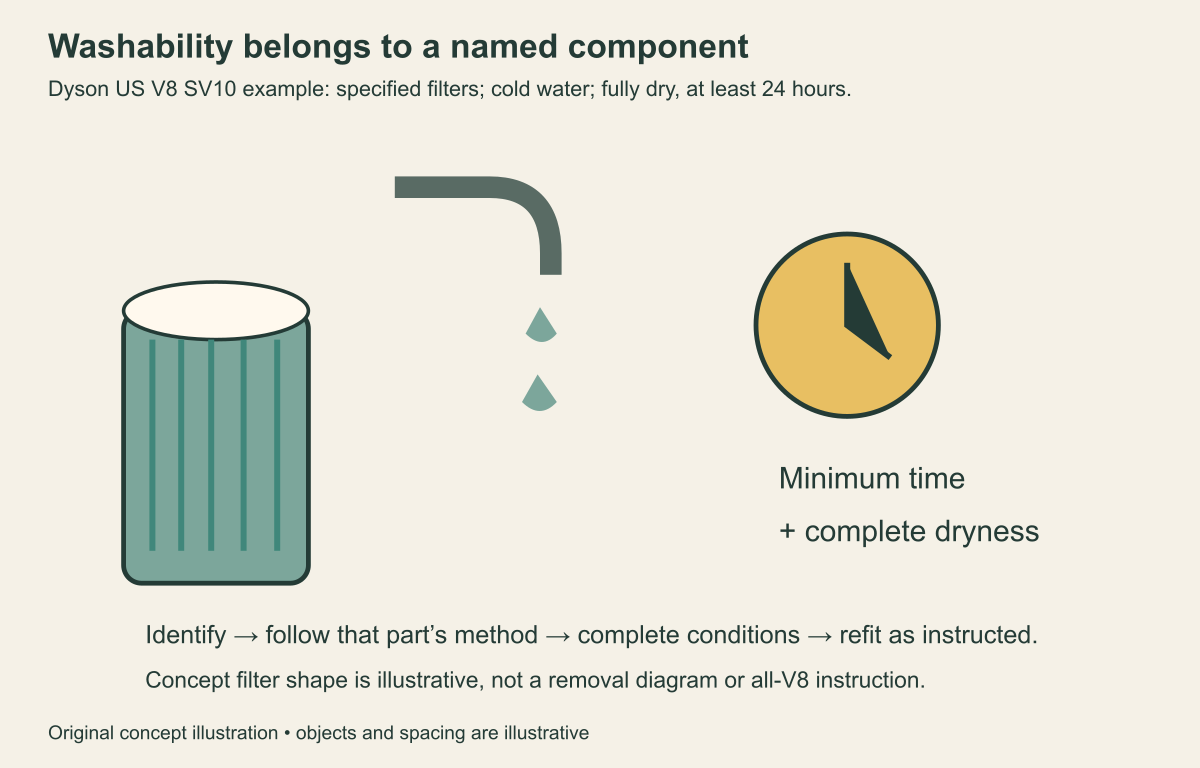
Choose an arrangement that follows the component’s prescribed drying position and conditions, keeping its identity clear. A note recording the washing time can support the process without replacing the final condition check.
Do not assume another vacuum’s drying interval applies to this component. The required time and method come from the exact instructions, not from how quickly a different filter felt dry on a previous occasion.
If the task cannot fit the required maintenance window, reorganize the cleaning plan rather than rushing the component back into operation. Another correctly identified, manufacturer-approved arrangement may be an option only if its compatibility and use are confirmed.
Keep heat and machines within the instructions
Dyson’s example excludes putting appliance parts in a dishwasher, washing machine, dryer, oven, microwave, or near an open flame. Those exclusions close off obvious attempts to accelerate or automate the stated procedure.
Do not invent a substitute heat source because it is not the appliance named in an online shortcut. The complete manufacturer conditions still govern the part rather than a household guess about what seems gentle enough.
Keep the battery and powered body out of a filter-washing operation unless their own instructions explicitly provide another care method. The task concerns the identified removable component, not washing the complete machine around it.
If a component is damaged during removal or care, stop before reinstalling it simply to complete the schedule. Ask the maker about the correct replacement or next step with the part identification and observed condition.
A tool that survived an improvised method once has not established that method as permitted. Preserve the actual guide’s instructions so future care does not become a chain of unverified household experiments.
Read frequency without forgetting condition
Find the actual machine’s prescribed care frequency and any conditions that change it. A schedule copied from an unrelated machine should not replace the requirements attached to the identified filter.
Keep the machine’s actual use and relevant instructions in the care record. A vacuum used occasionally in one room and a different vacuum used intensively need not inherit the same schedule from a shared storage location.
Record any change in behavior separately from the routine care date. Poor pickup, pulsing, or another symptom may have its own troubleshooting path rather than being automatically resolved by washing every visible component.
Do not wash a required non-washable replacement component merely because the calendar says filter day. The first decision remains the part’s identity and permitted method, followed by its prescribed frequency and condition criteria.
If the component’s identification label or the household note becomes unreadable, restore the correct information before the next care session. The maintenance routine should remain connected to a real part rather than a generic basket labeled filters.
Refit only under the complete conditions
Follow the named machine’s refitting instructions after the required care and drying conditions are satisfied. Check the component’s seated state through the documented procedure, without forcing an unfamiliar part or bypassing a retaining feature.
Keep a record of the part used, the completed method, and any unresolved observation before returning the machine to normal service. A useful handoff identifies what is ready and what remains out of use.
If the machine behaves unexpectedly afterward, stop and use its proper troubleshooting or service path. Do not omit a required filter to find out whether the symptom disappears under an unsupported configuration.
The practical result is an identified component with a permitted care process fully completed. Water-washability, complete drying, and correct refitting are separate requirements, and all need answers for the actual part.

Sources and scope
Sources checked October 14, 2026. This guide uses documented information; it does not claim independent product testing or professional inspection.