Find the code for the piece in front of you
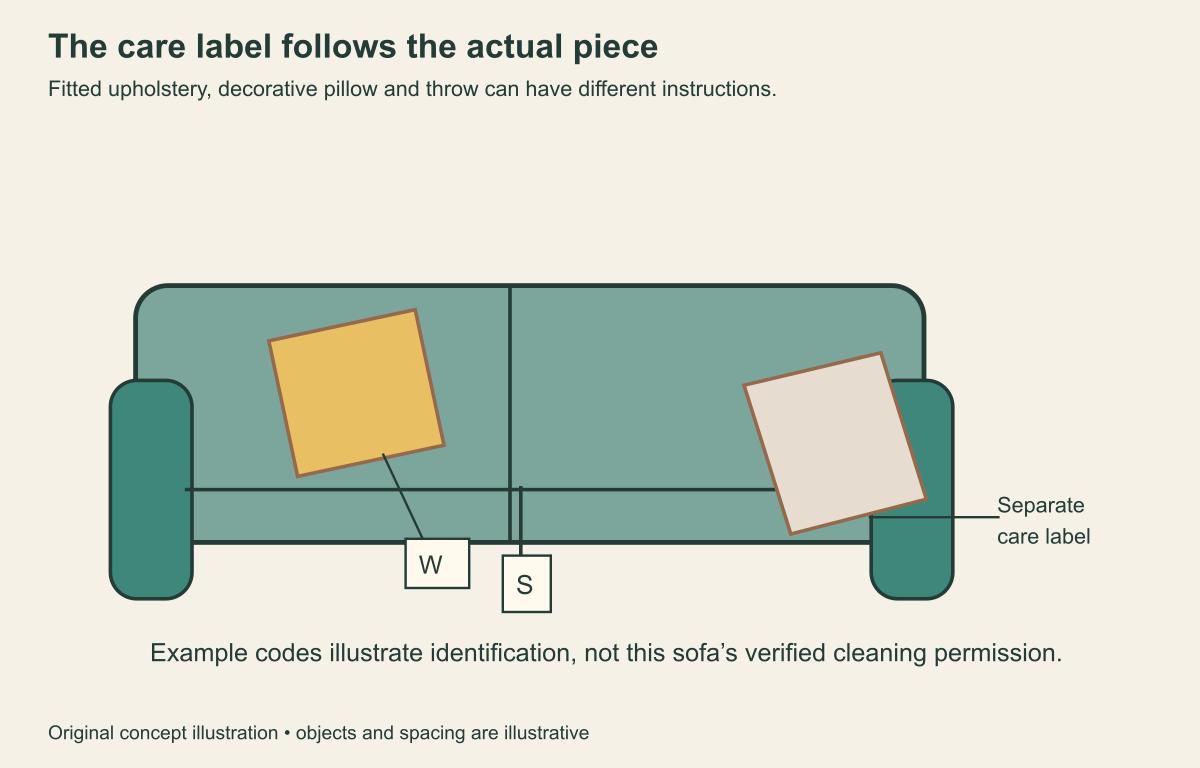
A sofa cushion has a zipper, a small mark, and a tag that says S, while the decorative pillow beside it has a separate laundry label. Those details describe different care questions, so the zipper should not become a shortcut to treating both covers the same way.
Find the actual upholstery cleanability code and the furniture maker’s instructions before selecting a product or machine. A fabric’s soft feel, visible weave, or washable-looking appearance does not identify its permitted cleaning method.
Allsteel’s public textile-care guide defines W, S, WS, and X as different cleaning-method categories. La-Z-Boy supplies its own detailed W, S, and W-S instructions, illustrating why a code begins the decision but the actual manufacturer guidance must finish it.
This guide helps interpret that decision, without providing a solvent-use recipe or permission to machine wash an unknown cover. Use the code with the specific textile, furniture construction, and complete care information.
Separate the sofa from its removable extras
Identify which tag belongs to the upholstery, which belongs to a throw, and which belongs to each decorative pillow. A loose accessory may have a different care process from the fitted upholstery beneath it.
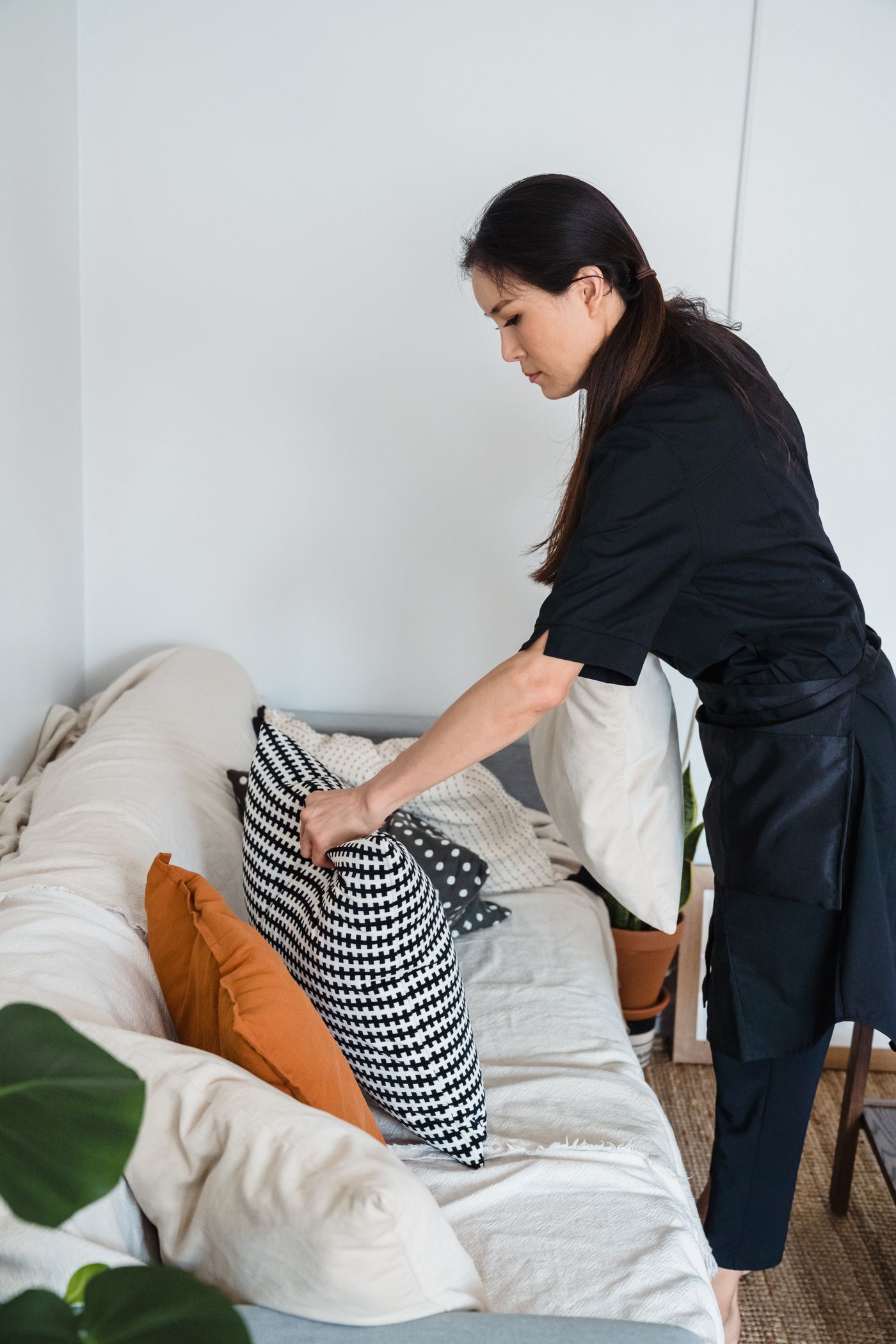
Keep those labels connected to their actual pieces while preparing the task. If several patterned cushions look similar, note their original positions rather than assuming every one has the same cover or care instructions.
Check the furniture’s documentation if the tag is missing, unreadable, or does not match what you expected. Provide the model and fabric identification to the retailer or maker instead of deriving a code from photographs of a similar sofa.
Do not cut off an inconvenient tag before recording its relevant information. The label may be the easiest connection between the fabric you own and a future cleaning or replacement question.
When a piece has been reupholstered, ask about the actual replacement material and its instructions. The original sofa model’s fabric guidance may no longer describe the surface being cleaned.
Read W as a method category
Allsteel defines W for fabrics cleaned with water-based agents, while La-Z-Boy’s W guidance specifies a water-based shampoo or foam upholstery cleaner. Neither description means every water-containing household cleaner or soaking method is appropriate.
Find the actual approved process, including its product conditions, preparation, and completion steps. A code letter on its own does not supply the amount of liquid or establish that a whole cushion can be immersed.
Distinguish ordinary loose-soil removal from the separate spot-treatment question. A planned vacuuming task and a proposed wet treatment can have different tools and instructions even on the same coded surface.
If a test is required or supported, follow the specified hidden-area method and conditions. A small test should assess an otherwise permitted process rather than create permission for one the maker excludes.
Keep the selected product’s label beside the furniture instructions while planning the treatment. If they conflict or leave a necessary condition unresolved, ask the relevant maker before continuing.
Read S without improvising a solvent process
Allsteel defines S around water-free cleaning solvents, and La-Z-Boy’s S instructions specifically say not to use water. That limitation makes a wet household shortcut inappropriate simply because the spot is small.
Do not choose a solvent from the garage based only on its ability to dissolve a similar-looking mark. The actual product, textile, precautions, and complete procedure need manufacturer support, with professional help where appropriate.
La-Z-Boy’s S guidance also says cushion covers should not be removed and dry cleaned. A removable-looking cover therefore does not override that manufacturer’s instruction for the identified coded fabric.
Ask a qualified upholstery professional about the specific S-coded item if you cannot establish an appropriate household process. Provide the fabric code and maker’s instructions rather than asking whether any dry-cleaning bottle should work.
Keep the unresolved spot separate from ordinary tidying of cushions and loose accessories. You can organize the room without turning the absence of an approved treatment into permission to experiment.
Read WS as supported choices with conditions
Allsteel defines WS as permitting water-based agents or water-free solvents within its stated care guidance. The two categories are alternatives to interpret under the instructions, not an invitation to mix products or perform both procedures automatically.
La-Z-Boy’s W-S section distinguishes treatments according to the type of stain and gives detailed manufacturer instructions. That example shows why the spill’s identity and the maker’s complete method still matter after reading the code.
Name the actual mark or spilled material if you know it, keeping uncertainty visible when you do not. A guess about the stain can send the process down the wrong branch of an otherwise valid care document.
Do not let the broader code become a promise that a textile tolerates every machine, chemical, temperature, or repeated treatment. The selected procedure remains specific to the actual upholstery and its construction.
For a handoff, record which supported alternative was selected and which product was used. The next person needs that history rather than a general note that the sofa is coded WS and can take anything.
Treat X as a real limit
Allsteel’s X guidance limits care to vacuuming or light brushing and excludes water-based or solvent cleaners. The code therefore closes off ordinary liquid spot-treatment assumptions rather than identifying another kind of bottle to buy.
Check the actual furniture’s permitted tool and contact method before choosing a vacuum attachment or brush. A general dry-care category does not guarantee that every powered tool or stiff brush is suitable for the textile.
If a mark remains after an appropriately supported dry process, seek advice about the identified material. Do not add a little water because the liquid restriction feels inconvenient or the mark looks easier to remove that way.
Keep X-coded upholstery clearly distinguished from a nearby W-coded pillow or washable throw. Their similar colors do not make one piece’s care label transferable to the other.
When the instructions leave uncertainty about the exact X-coded construction, contact the maker or a qualified professional. A code can identify a boundary while still leaving the appropriate next assessment to resolve.
Make the cleaning plan small and readable
Write a note with the actual furniture and fabric identity, code, chosen permitted task, and relevant care document. Add a separate line for removable accessories whose labels require a different process.
For the sofa-and-pillow example, the first note might leave the S-coded spot for professional advice while sending the separately labeled throw to its own care method. That is a useful plan even though the whole seating area has not received one uniform treatment.
Make the note concrete: identify the left seat cushion’s tag, the removable patterned pillow’s separate label, and the throw draped over the arm. Those three pieces can return to the same sofa after receiving different permitted care, without losing the connection between a label and its actual item.
If only the pillow’s label is readable, limit the current task to the supported work on that pillow and ordinary organization of the rest. Mark the sofa fabric’s identity as unresolved and obtain its guidance before a later spot-treatment session, rather than using the one available label to stand in for all three.
Keep required drying, testing, and return-to-use conditions in the plan if the selected method includes them. A visible improvement before completion does not remove the remaining instructions.
If the material responds unexpectedly, stop adding products and retain the actual sequence for the manufacturer or professional. A documented first attempt is easier to assess than a succession of unrecorded mixtures.
The code is useful when it stays attached to the right item and its complete instructions. Read the letter, identify the piece, choose a supported process, and let an unresolved material question remain explicit.
Sources and scope
Sources checked October 14, 2026. This guide uses documented information; it does not claim independent product testing or professional inspection.