Follow the finish before choosing the liquid
A wood floor beside a pet bowl may need a prompt spill response while the rest of the room only needs routine dust removal. Treat those as separate tasks rather than deciding that the whole floor needs a wet mop because one small area became damp.
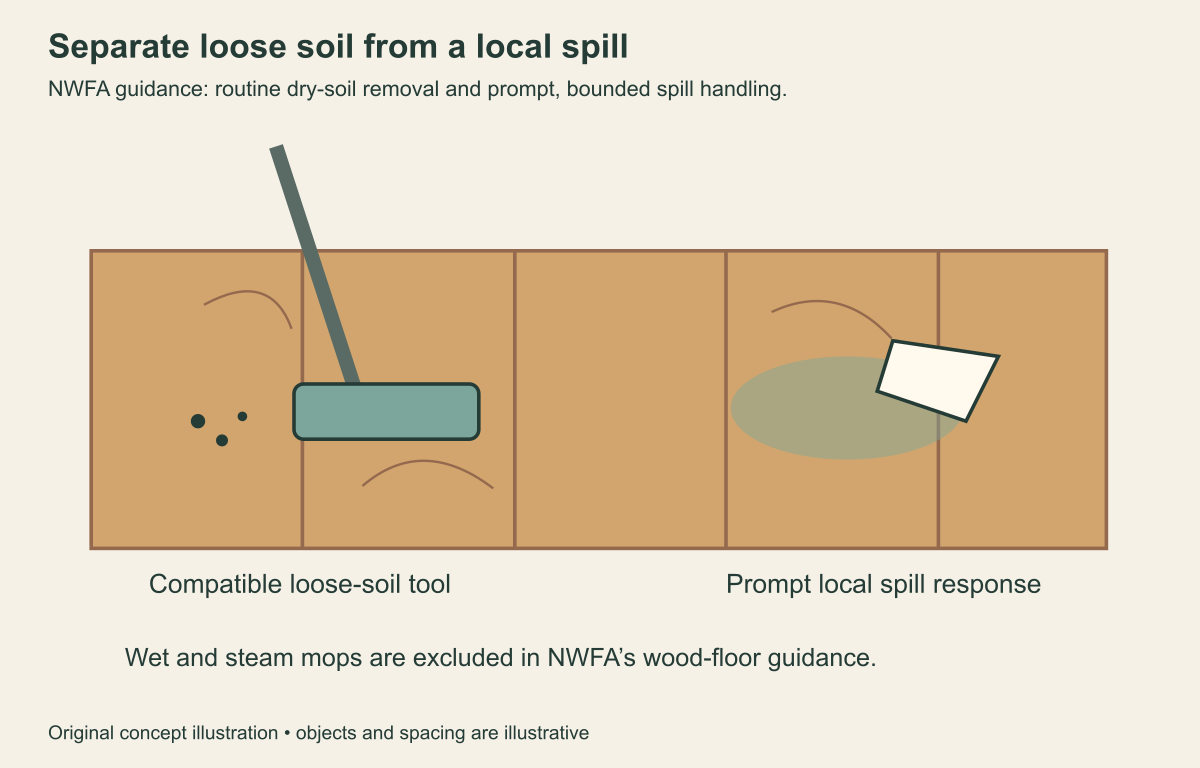
The National Wood Flooring Association recommends routine sweeping, dust mopping, or vacuuming with a bare-floor setting. It also advises immediate spill cleanup with a dry or slightly damp cloth and warns against wet mops and steam mops for wood floors.
Those general boundaries still leave the exact finish and cleaner to identify. NWFA recommends a cleaner made specifically for the floor’s finish, with the flooring professional as a useful source of that recommendation.
Start by finding the installed floor and finish information, especially if you moved into a home whose previous care history is unknown. A surface that looks shiny or matte has not supplied the full identity of its finish.
Distinguish a spill from routine soil
For a known ordinary spill, follow the appropriate floor guidance promptly rather than leaving it until the next weekly session. Keep the response focused on the affected area and the method the actual instructions permit.
Record the location if the same problem happens repeatedly, such as beside a pet bowl or an indoor plant. Repeated moisture at one place creates a practical household arrangement question in addition to the immediate cleaning task.
Do not leave the source problem out of the plan after the visible liquid is dealt with. A repeatedly spilled bowl or a planter whose leakage is unresolved can keep returning the same concern to the floor.
For an unidentified chemical or a spill that requires special precautions, obtain the relevant product guidance and appropriate help. This article’s routine floor-care framework is not a chemical-spill treatment method.
Look at the surrounding condition without assuming that wiping has reversed any existing damage. A changed board edge, discoloration, or persistent surface problem deserves a separate assessment of the floor.
Remove loose material with a suitable tool
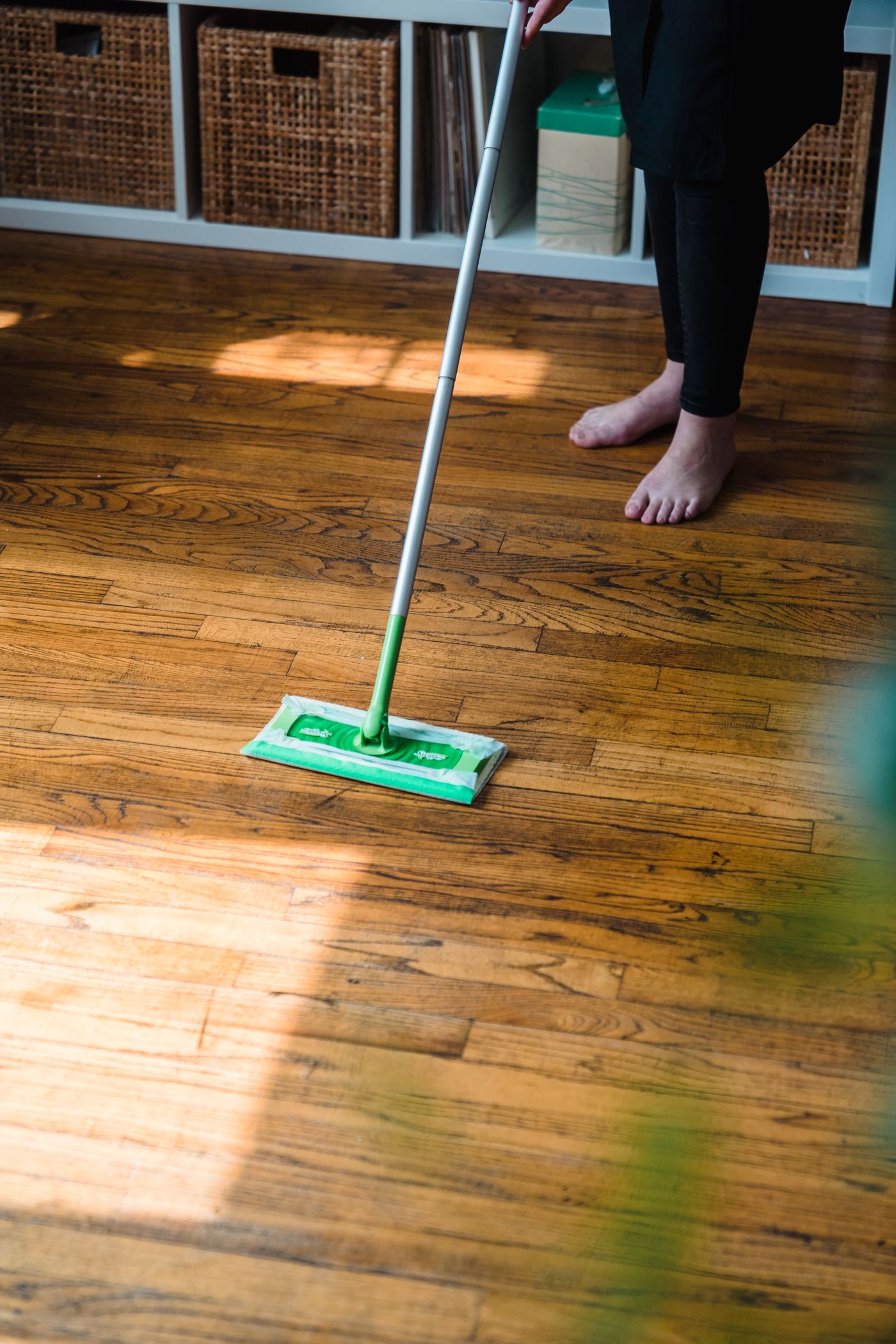
Choose the tool and contact setting that match the floor and equipment instructions, then work through an accessible area. NWFA’s bare-floor vacuum example does not mean every vacuum attachment or rotating head is appropriate for every finish.
Inspect the cleaning tool’s contact surfaces before use so retained debris or a damaged component is not ignored. A familiar vacuum used yesterday on another surface still needs the relevant setting and attachment today.
Keep the cleaning route clear enough to use the tool normally without dragging unrelated objects across the floor. If a furniture item needs a separate handling plan, leave that task explicit rather than forcing it into an ordinary cleaning pass.
Pay attention to entry points and places where ordinary loose material gathers. Their actual use can help you choose a practical maintenance frequency without claiming that all rooms need the same daily procedure.
Do not assume a disposable sweeping pad and a reusable cloth pad have interchangeable care or use instructions. Identify the tool and replacement material before deciding what belongs on the floor.
Read the cleaner’s finish scope
Place the floor’s finish information beside the proposed cleaner’s complete label and instructions. The match needs to cover the actual finish, not just a broad description that the bottle is intended for wood.
If the finish information is missing, ask the installer, floor maker, or an appropriately qualified flooring professional before using a new treatment. Give them the installed product details and what you know about previous cleaner or polish use.
Keep products intended for cleaning separate from those intended for polishing, recoating, or another finish-related procedure. Similar packaging does not make those tasks equivalent or permit switching midway through the routine.
Follow the specified preparation and amount rather than adding more liquid because the room looks dusty. The loose-soil task and the permitted finish-cleaning task should each have their own appropriate method.
Do not use a hidden-area experiment to bypass a known prohibition in the floor or product guidance. A small test, where supported, helps assess a permitted procedure; it does not create compatibility that the instructions exclude.
Control the route and completion conditions
Plan the area you can clean while following the actual product instructions and keeping necessary household movement managed. In a narrow room, the path to the door may determine a practical sequence more than the shape of the mop head.
Avoid leaving a cleaning tool or treated area in a state the instructions do not support while you answer a call or move to another room. Finish the bounded task and return products and tools to their appropriate condition.
Do not infer a universal drying time from how quickly another room’s floor became usable. The product, procedure, and conditions need to be assessed for the actual completed task.
If an instructed method produces an unexpected amount of moisture or a changed appearance, stop and review the setup. Record the cleaner, preparation, tool, and observed result before changing the procedure again.
NWFA’s warning against wet and steam mops is a reason to resist turning a stubborn mark into a moisture-intensive experiment. Ask the relevant flooring professional about the specific condition instead of using heat or extra water to make the task feel more forceful.
Check the boundary between rooms
A kitchen and living room can share an open plan while having different installed materials or finishes. Identify the transition so a cleaning method chosen for one surface is not automatically continued onto the next.
The same issue can arise at an older repaired section or a newly refinished room. If the finish history differs, keep that distinction in the care record until the professional confirms the applicable routine.
Provide the people who share cleaning duties with the actual surface information and identified supplies. A message that every plank-looking floor uses the blue bottle is too broad for a home with different materials.
Keep the tools’ care and prior use visible during a handoff. A suitable pad still needs to be in the condition required for the next task, rather than merely returned to the same basket.
When the installed information changes, update the routine at the same time. A refinished floor should not inherit an old product choice automatically because the room name and furniture stayed the same.
Know when the question is about the finish
NWFA explains that dull wood floors may be renewed through recoating, a process involving a new coat of finish. That is a flooring procedure distinct from adding an ordinary cleaning pass, so a persistent finish concern needs the right assessment.
Photograph the area in consistent light and include both a close view and its location in the room. Describe the change and the recent care sequence without claiming you have diagnosed finish failure from a phone photograph.
Tell the professional about previous products, repeated moisture locations, and any difference between the affected section and surrounding floor. Those concrete details support a better conversation than asking which stronger cleaner will make the floor shine again.
Keep a record of the recommended care method after the concern is resolved. Future cleaning should start from the confirmed finish and instructions, not from the last bottle that happened to be used successfully somewhere else.
The everyday goal is appropriate soil removal and prompt, supported spill handling while respecting the finish’s limits. Identify the floor, keep moisture-related tasks bounded, and leave a changed surface condition for the relevant professional question.
Sources and scope
Sources checked October 14, 2026. This guide uses documented information; it does not claim independent product testing or professional inspection.