Build the caddy around the next room
A cleaning caddy earns its space when it carries the supplies for the work you are about to do without hiding what each bottle contains. Filling it with every product under the sink makes it heavier and makes the next decision harder, especially in a home with several different surface finishes.
Start with one small route, such as the bathroom vanity and its surrounding mirror, rather than a whole-house collection. Identify the surfaces, the mess, and the permitted care method before choosing the bottles and tools to carry.
The useful arrangement is a transport kit for an identified task, followed by proper storage when the task ends. A bucket with a handle is not automatically a safe storage system for every chemical it can physically hold.
Imagine a bathroom with a stone counter, a painted cabinet front, and a mirror above them. Those objects occupy one room, but they may have different restrictions, so a bottle labeled for bathrooms should not make the surface decisions for all three.
Inventory surfaces before products
Write a short room note naming the counter material, cabinet finish, and mirror or glass care instructions you have actually found. If the counter’s material is unknown, leave the product choice unresolved rather than calling any pale slab marble or quartz from its appearance.

The same note should identify the task: remove a toothpaste spot, clean general soil, or address another specific need. Product selection becomes easier when you are describing a result instead of shopping for something broadly described as powerful.
Ask whether a soft cleaning tool is appropriate for each finish, and keep required accessories with that task. A brush chosen for a grout joint should not automatically become the tool for the cabinet front just because both are within reach.
If an unfamiliar surface needs the installer’s or maker’s guidance, record that as a question before loading the caddy. Carrying an extra bottle does not resolve missing information about what it will touch.
Keep the note brief enough to read beside the supplies. A useful line might identify the counter, link its care information, and name the permitted product rather than listing every cleaner owned by the household.
Preserve the bottle’s identity
Poison Control recommends keeping cleaning products in their original containers, preserving their labels, and storing them separately from foods and medicines. Its container-transfer guidance explains that children and adults can mistake transferred chemicals for drinks.
An attractive matching bottle is therefore not a good reason to remove the information that identifies a product. The original label connects the contents to directions, precautions, and the correct help if something goes wrong.
Do not put a cleaner into a beverage bottle to make it fit a narrow caddy slot. Change the organizer or carry fewer products instead of making the chemical resemble something intended to be consumed.
Place bottles so their identifying information can be read without removing several neighboring items. If the caddy makes the label impossible to see, its arrangement is working against the check you need before use.
Keep household notes separate from the original labeling. A note that says “bathroom” can describe the intended route, but it should not obscure the bottle’s product name or become a replacement for its directions.
Give clean and used tools different destinations
Picture starting with two clean cloths and returning with one damp cloth that has been used at the vanity. If it lands among the remaining clean cloths, the next person must guess which item is ready for the next job.
Arrange a clear destination for used items during the task, with their subsequent care governed by their own instructions. You can use a separate labeled container for that temporary collection without treating it as permanent storage for damp material.
Keep the tool’s assigned task visible when it leaves the caddy. A small household label for a cloth or brush can be more useful than a complicated arrangement whose meaning nobody else knows.
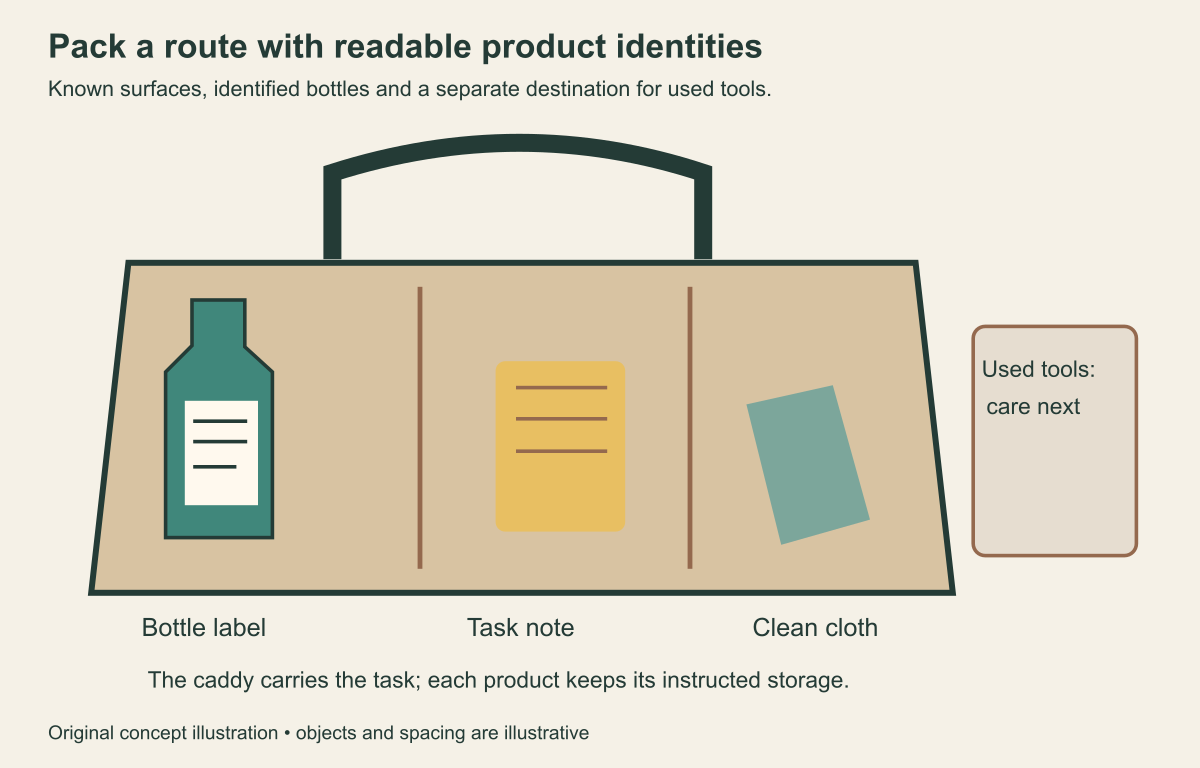
If a task needs several fresh cloths, count that requirement before starting. A single decorative cloth folded over the handle may look tidy but does not explain how you will handle the actual sequence of surfaces.
Leave space for the tools to be returned without pressing them against bottle labels or closures. A crowded caddy that requires force to replace a brush is likely to become disorganized as soon as the work begins.
Test the shape with the actual contents
Put the intended bottles and tools into the empty caddy while everything is closed and ready for transport. Check whether tall bottles can remain upright, whether the handle can be held normally, and whether any required item cannot be reached without shifting the rest.
This is an arrangement check, not a chemical-compatibility assessment. The products’ storage directions still govern what can be kept together and where they belong after the cleaning route.
Carry only a load you can handle comfortably over the actual route. Stairs, a narrow hallway, and a closed bathroom door may expose a carrying problem that a photograph of the caddy on a counter never revealed.
If the kit is awkward, remove supplies that are not needed for the planned task or split the work into separate trips. Do not make a bulky caddy into a reason to balance bottles against your body while opening doors.
Decide where the caddy will sit while you work, away from food preparation and places that need to remain available. A transport arrangement has not finished its job if it blocks the only clear section of the counter being cleaned.
Keep the task card specific
A practical bathroom card can identify the vanity’s care guidance, the cleaning tools needed, and the destination for used cloths. It should also name any surface you will leave alone until its material or permitted treatment is confirmed.
For the kitchen, make a separate card rather than changing one word on the bathroom version. A food-preparation area, painted cabinet door, and appliance face introduce different care and finish questions from a toilet or shower.
Do not describe one bottle as the household’s all-purpose answer unless its actual directions support all the intended surfaces and tasks. A product category on the front label does not list every finish that exists in your home.
If the work includes a separately required disinfecting task, identify that process using the actual product directions. A caddy organizes supplies; it does not turn ordinary wiping into a verified disinfecting procedure.
When another person takes over, hand over the task card with the kit rather than assuming the contents are self-explanatory. “This cloth is unused and this bottle matches the confirmed counter guidance” is more useful than “everything you need is in the bucket.”
Reset the caddy at the end of the route
Return each product to the location required by its label, with closures secure and identifying information intact. Poison Control’s guidance about separating household cleaners from food and medicine still applies after the room looks clean.
Send used tools to their proper care process and replenish only the items that the next identified task requires. That reset prevents a previous room’s used brush or unknown leftover bottle from becoming the next person’s starting point.
Inspect the organizer for anything that would compromise the next trip, such as a broken handle or a bottle that no longer stays upright. If there is a spill or unidentified residue, follow the relevant product’s instructions rather than adding a second cleaner to the organizer.
Update the room note when a surface, finish, or product changes. A counter replacement can make an old caddy arrangement unsuitable even when every bottle still looks familiar.
The finished kit should be easy to understand without becoming the permanent home for every supply. Keep the purpose narrow: known surfaces, identified products, clean tools, and a clear reset after the work.
Sources and scope
Sources checked October 14, 2026. This guide uses documented information; it does not claim independent product testing or professional inspection.